Equity crowdfunding explained by VP at Community Round Fundraising (Wefunder), Jonny Price
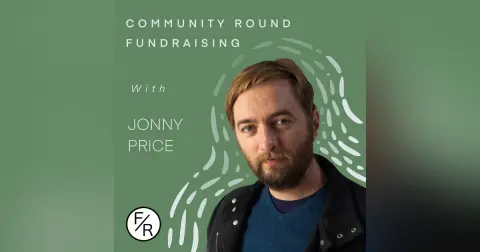


Jonny Price, VP of Fundraising at Community Round Fundraising (Wefunder) in this episode talks about equity crowdfunding, process that founders need to undergo to have a successful crowd-funded round and more. We've also talked about the major pitfalls in said process and how to prepare for those.
Jonny's LinkedIn: https://www.linkedin.com/in/jonnyprice/
Community Round Fundraising's site: https://wefunder.com/
SPVs (Special Purpose Vehicles) explained by the CEO of Assure: https://www.fundraisingradio.com/Jeremy-Neilson/
Extra resources that Jonny shared with me:
Blog on how to raise $1M on Wefunder: https://twitter.com/JonnyCPrice/status/1503515916285493255
Podcast episode on fundraising strategy: https://www.spreaker.com/user/wefunder/justin-renfro
Community Round website: communityround.com
Wefunder Raise page: wefunder.com/raise
Wefunder PBC charter: wefunder.com/charter
Twitter: @jonnycprice; @wefunder
0:05 They're releasing to fundraising video a podcast about fundraising for early-stage startups, the major rule that we follow here is no bullshit on this podcast. No music to relax. You know, advertisements of our sponsors. We only talk about fundraising here and nothing else. So let's jump into the episode and today's guest speaker have joining price VP of fundraising and we funder and for those people who don't know What we funder is, is one of the largest Equity crowdfunding Platforms in the United States. And this episode, we'll talk about Equity crowdfunding. How does it work? What kind of legal changes happened in the past couple of years that allowed pretty much every single person in the u.s.
0:47 invest in any startup? And as little, as $100 per Investments and we'll also talk about who should actually consider those Equity crowdfunding platforms and why? So Johnny Let's kick it off by you, giving us some background on yourself and on, WE funder, yeah, great to be here. Thanks for the invitation Johnny Price. I'm the VP of fundraising, we funder from the UK. Originally, as you may be able to tell from the accident there, I started my career in management consulting. Then in 2009, met an American girl who brought me over to San Francisco from London. We got married and then started working for a non-profit. I called kiva.org.
1:30 We did is how crowdfunded microloans for entrepreneurs around the world and I came in to launch and run our us team, did that for seven years. And then in early. 2018, for years ago, joined the team at we fund under was one of the one of the first employees and have been here for four years. Ever since we found this, a platform that lets anyone invest in startups, they love not just rich people. So so normally, as you know, when startups are raising Capital there Ray From accredited investors BC's Angel Investors. And with we funder, you can raise from your customers and Community from 100 percent of the population. Not just the Apes and other population, he's a created. You can also, Mark it Market their rounds on social media and email on a podcast like this one. So it's a really interesting kind of new way of raising money that it's kind of much more community-oriented way of raising money.
2:26 So that's what we're up to over here at we funder. Awesome. There was a very brief and a lovely story. I should win. Congrats on moving to. All right, you know what? UK Jokes Aside. Now going to go into that direction. First question here is actually about you or official role so you are the VP of fundraising would does that mean what do you do as the video fundraising? Yeah, so I lead a team as about 15 of us, we funded that 70 people is about 15 of us on the fundraising team. Our role is to go and connect with found this. Meet with Founders and work with them on, just kind of, you know, understanding the pros and cons of, we funder.
3:09 Why they would use us to raise money versus the other options that they have, you know, and definitely not an either/or thing, right? It's not, it's not either. You go the community around route on, WE fund up, or you raise from VCS, and we're seeing more and more startups who say, I want to raise most of this round from PCS, but I want to allocate part of the round to my customers and community. So our job is to find Founders chat with them and hopefully, persuade them, that part of every round, they should let their customers invest. So it's kind of pretty pretty early in the process. And then we have an account management team that usually my team partners with to do the kind of legal, legal filings, financials to put together a page for fundraising strategy. So we're kind of pretty early in the founder Journey, developing relationships with PCS angels I write this as well as lots of conversations with Founders themselves. You put together, you mentioned the strategy for the fundraising.
4:08 So you actually do help Founders, who are one boarded on your platform to fundraise, to actually add fundraise. Absolutely interesting. Fight, a lot of support and, you know, Franco's and trying to figure out. Okay, what's the what's the plan here? What's the strategy we've got some great resources? Well lots of case studies now we've helped over a thousand startups rates. Capital now, so many examples of what works and what doesn't work. And yeah, just really try to help help found this, you know, whether whether they're, you know, Mercury bank or replicate, who recently raised five million dollars in a day on WE funder for him, that's that's pretty easy. Usually, the strategy is just, you know, send an email to your customers and watch the millions of dollars role in most startups. Sadly, it's a little bit more challenging than that, a little bit, more of a Grimes, little bit more hardwire and so with them, you know, it's her Them think through OK, what's the pitch pitch?
5:02 That gonna look like? What's the page look like? What are the tactics around, you know, starting with pitching angels and people that are close to you and then increasingly doing more kind of marketing tactics, and Outreach one. It one of the cool things about this way of raising money is that you can publicly promote the offering, right? So you, you can now run a pi campaign around the fundraise, right? And you can, you can can try to get variety going by engaging, your explore hundreds of investors as they're coming in and getting them to share the rounds with their Network. So the law this law or regulation crowdfunding is. Yes. You see exemption that we use and this basically helps it's just kind of in a few ways, like helps make it a little easier for Founders to get the word out about the round and actually raise money, a little bit more easily, sure does.
5:58 So, before we go in and talk a More about this strategy that boundary should use in order to fundraise through Equity crowdfunding platforms. Like we funder, quick question on, WE fund your platform, how many companies that start raising money? They're actually close their round successfully. Yeah, so it's a little bit of a complicated answer to that question. So we kind of defined as the start of a refund around is when you do the legal paperwork when he's crazy. And basically you can you can kind of what's called test the waters before you do that oh you can start start fundraising like start to pitch people kind of in a private mode and then if you're getting traction and pick up then we go ahead and file the form. See And so because of that, we're pretty close to a hundred percent of the companies that end up filing, the legal paperwork with the SEC.
6:51 Interesting, it's pretty close to 100% that then go on to, you know, successfully closed out maybe. So one thing with we funded you set a minimum goal and a maximum goal, right? Yeah. Might set a maximum goal of 5 million and a minimum of, you know, two million. And so when I say, 95% I'm talking about people that passed the minimum goal, not, he reached the maximum great, Maximum might be more like I don't know, 30 40 percent would be Mike. That's that's still pretty good actually. Speaking of testing the Warriors those very very interesting subject and I get caught. I entered that. That question is quite frequently Asked here on fundraising radio. How how do they test the water?
7:35 How do they know that? You know, the investors will actually put their money where their mouth is, because an investor is saying that they're interested in investing and investors who are actually writing checks or Completely different people. How do you know that this you know water testing is actually valid. Yeah, so if you launch that testing, the waters campaign on. WE fund our we actually hold money. We take it out of investors bank accounts. We charge the credit card and we hold it in an escrow account and so it's a reservation, it's not a binding commitment to invest, but we do take the money and say in our experience.
8:15 If you look at the conversion percentages because because we take the money, those conversion percentage is very, very high. Yep, that is a good strategy and is definitely better than you know, just getting a verbal commitment that? Yeah totally. It is very it is very moving on, let's talk about the strategies that you usually use. So you've mentioned that, you know, there's kind of this flow of starting with pitching your Friends and family than Angel Investors and then just moving on.
8:57 So can you tell us a little bit more about how that flow looks like we're doing that or where do founder start, and why? Exactly. Should they start their friends and family? Yeah, so I think there's a question there of kind of how the and we using the Brand's Community round. We recently had a launch of community round.com website and with the website launch will say kind of rolled out this new nomenclature of running a community rounds is Use the word Equity crowdfunding at the start of the podcasts, which I kind of bristled with, with pain, adds more UK jokes. But, you know, we, it was always called Equity crowdfunding, iceo wrote a blog post. If you Google, Nick, Tom Morello Community, round blog.
9:40 We funder. You'll find it really awesome. He's one of the best writers I I've ever read. Honestly, just in terms of clarity and kind of it just inspiring, like, moving powerful or words because brilliant. And so he starts it off by saying, I've always hated the term equity crowdfunding, and so we really love this repositioning towards running Community rounds because crowdfunding think they think Kickstarter right Equity, crowdfunding seems like something you do because real ambassadors went invest in you whereas a community around like, raising money from your community seems like something that every startup founder would want to do. It's a really powerful example. I think we're changing a couple of words, just really elevates that the And The credibility and just aspiration of what we're trying to do.
10:28 But anyway, the point is, once your question that, you know, this kind of two levels of the sequencing and the plan, right? So, the first question is, okay, you're raising a series a, right? How does the community around element of that fit into that? So sometimes Founders will raise their whole rounds through, we fund. Oh, right. So, for example, it's a bridge round, right? You did a seed, you know, the growth is a little bit slower. You want to get More traction, you know, more growth before you kind of come back to institutional, investors in command evaluation, you're looking for. So you looking for a bridge maybe do the whole bridge on WE fund are right but if you're doing Chen to accompany yesterday they're doing at 25 million series a and they want to raise 20 million from be seized and then five million from from their customers and Community array. And so there, I would say the standard approach is you get the VC lead, you kind of get the VC kind of checks lined up but then you allocate For in that case five million of the the of the rounds to your community who come in kind of towards towards the back end of the process.
11:32 So Mercury bank, they did a 120 million Series be led by CO2 and Andreessen and then opened up a five million dollar allocation, so that customers. So that's that's how they did it. You can do it the other way round. So you can kind of, you know, start especially if you're kind of trying to find that lead investor, right? Maybe the round is is moving a little bit more slowly because early centuries CE is a little colder in 2022 than it was in 2021. And you're trying to kind of build up, you know, the momentum on the ground break that inertia sometimes like starting with the community rounds, component of the rounds can help to create leverage, right, can see investors coming in like starts to create some feeling of pressure and scarcity and fomo so you can do it either way. But so this firstly the question of how the community Randall month fits into the larger round and then, secondly, okay, within the community round.
12:30 So in that example, 25 million series, a five million for the community. Now, how am I going to launch? The refund around raised up five million and so yeah, you start in private, right? Intestinal, what is in private and I always talk about concentric circles, right? So you want to start with the people that are closest to you. So maybe maybe you go to, you know, some angel investor. So you have relationships with, we We have what's called a lead investor within the we fund around the lead investor helps to set the terms of the refund around they are voting for the shares of the individual investors in the SPV and so lining up that lead investors a great signal ideally they're putting in five percent of the round so you know the amount they're investing is a signal who they are as the signal you know and so on all the investors on the page can see you the lead. Investor is see why they're And so you know, it's lining up the lead investor trying to trying to line up some Angel tracks early on and then I always say you know I would make a spreadsheet treat investor management as you know funnel management for customers you know have a CRM and you know put a couple of hundred names.
13:42 It spreadsheet like track track when your email and them track. If they invested follow-up, try multiple channels and you kind of starting their with inner concentric circles, right? People that you're close to because then when you go to the more outer concentric circles, so then maybe you send email to all your customers, right? Or maybe you kind of put it on social media, linked in and then kind of, once you, once you kind of going going outwards and once you building up some momentum on the round and private, usually, I say you want to try to Target raising a third of your goal in private before pushing the button and doing the public launch and then when you do the public launch, a couple of things on, on the founders side, That's when you do the press release, that's when you do the kind of social media push, you know, and you kind of get all your ducks in a row to create the biggest bang possible.
14:33 But then you also another benefit. We haven't talked to you so far about we fund. There is you know, we have 300,000 users on the platform that have made an investment that will put you in front of right and typically those those we funder investors account for about a third of the round. And so when you when you kind of push the button, go public then you're going to find We funder and buses as well. So that gives you another Beast. Say that, that framework of kind of concentric circles starting with people that are close to you, you're going to have a very very high batting average on the personalized emails personalize. Our each and every time kind of going going to people that maybe you don't have a stronger relationship with Stephanie is the the way to approach a we funder, we found around.
15:17 I love that version of the approach. Honestly, I think that's pretty much the golden bullets and I know hope silver bowl down. I know that if my team hears me, say, silver bullets, at least, once again, they're gonna murder me. But I think that there are very few of them and this approach of creating this, a ram and then just taking it pretty much as a full-time job basically. And just doing it very meticulously, it's going to work out there is like 90, alright, not 90% chance but a very, very high percent chance of it working out. That's definitely just as well. Say that Hustle hard with my colleague Justin. So if you Google we fund their Adventure Capital podcast, hustle hard, you'll find out one that's okay, the hour and a half long conversation about potential stories and tactics that really goes deep and then I wrote a blog post called how to raise a million dollars on.
16:10 WE fund are. So if you interesting with with Johnny Price, you've is like a 15 Step plan. I saw what I did to break it out into more detail. So both of those are pretty good resources, people want to go deeper, interesting. Interesting, interesting. Of all right that's perfect. I'll make sure that people don't have to Google and actually include all those are no a link to know exactly what you're about to hear that repeated numerous times and I'm going to repeat it at the end as well. There's there's no escape from this statement. Johnny nowhere to run but you know it's going to be old there. So people who have very short memory, just check it down there. It's going to be all included.
16:51 All right. So now let's touch about Something that I found super interesting on our pre-interview call, and it's the fact that we funder is actually a b Corporation. For those people who don't know, B Corporation is a benefit corporation, which means that there's basically a government stamp saying that we found her is good for people. We funders good for community and economy and pretty much everything around them. So Johnny. Oh, let's talk about that. First of all, how did you manage to get that status and secondly, did you actually like go for that stuff specifically or it's just one day, your Or, you know, the executive team of we funder looked around and then they realize that they should qualify for B Corp which is by an accident.
17:32 Yes it's kind of two, two elements of it as she. So we fundraise Incorporated, not as a c-corporation but as a public benefit Corporation in Delaware PVC. And so that is how we are legally Incorporated. So, C Corp is legally obligated to maximize shareholder value, right? A PVC is legally. Obligated to uphold our Artur, our PVC Charter and would love to talk a little more about what their charts are means. But it's so we have the PVC element has kind of legal teeth. That is how we are legally Incorporated the company in the state of Delaware. And then there's also the B Corp thing which is basically an accreditation of badge that this this company called be lab does. And so you go through a survey and you fill out a bunch of questions and then it's kind of like an exam and we pass the exam and so they gave us just kind of Label. Say we started, we incorporate the PVC and then several years into the journey.
18:31 We got this, be called label. So we're both the PC and a b Corp. And yeah, in terms of what our Charter is all about, it's a big part of the reason I work for we funded previously, I was working for this nonprofit kiva.org, you know, so kind of pretty, I would say, mission mission oriented person. I think most of us, we found, her are probably most people that work at startup. Sorry. But for me, I mission is kind of on both sides of the marketplace, right? So on the founder side of the marketplace, we basically want to get more Capital flowing to Founders. We think it's cool. When people start companies, it's leads to more things in the world, more progress.
19:13 It's fun. It's You Know, Rich at life of learnings and love and so we like startups, we want to want to give more Founders the chance to take their shot. But then not just in aggregate but also if you dislike her gate, right, like less than 3% of venture dollars last year. When it's a female only Founders versus over. Eighty percent are male, only found this one percent went to Black. Founders. 77% of BC dollars were concentrated in California, New York and Massachusetts. Hmm. So we believe that a more democratic approach to investing. Letting everyone be an angel investor not just Millionaires and billionaires will lead to a more Equitable allocation of capital where we go. More Capital flow into women of color and States like Tennessee, where I live.
19:59 So that's kind of on the founder side and and then on the investor side, it's pretty simple, right? It's basically, like, why should only rich people get to benefit from the wealth that startups are creating when Uber IPOs? Why should it be? That only Millionaires and accredited investors? Get to make more money? Why shouldn't it be the case? That the driver has? There were there on day one? They come new millionaires, right? And so, You could big problem in society over the last few decades is that wealth has been yeah. Concentrated in the hands of a smaller and smaller number of people, and basically, our solution to that problem is okay for the wealth that's been created by startups. And startups are creating explosive wealth, let's try to share some of that wealth around more broadly so that the earliest supporters customers champions of those startups that are making it big get get the benefit. So that on both the founder side in the investor side. It's kind of what our PVC Charter is all about nice and yes, it does sound beneficial to the society. So we'll learn.
21:03 And by the way, I'm sorry people I said that b Corp status is something that government gives you I completely forgot. This is actually another corporation that does that but it is quite reliable. So pretty much like a government or maybe even better this note. So let's let's move on and talk about the good thing right before the call to action. Action AKA last question of these episodes and the good thing being the exits that happen after raising on WE fonder. So when this gosh I keep forgetting the name for it. Rex EF CF was passed a lot of investors were like yeah crowd funnies for those who can raise from real investors and it's obviously bullshit and they were proven wrong numerous times and no one ever says that anymore.
21:52 But Let's talk about real numbers here, which is, you know, how many Aang's is? Do you see happening after companies raise money on WE funders who? How many of those people who actually invest in those companies early on get to experience that Uber IPO type of deal. Yeah. So, right now, the number of exits. We've had Acquisitions with, certainly IPOs. Is relatively small said, certainly, no, kind of Uber, Uber Louisville exits at this point, a couple of reasons for that. I think one, you know, the Lord just passed in 2016, right? So it's only five or six years old. Yeah.
22:33 And the number of companies that we had. The launching in May was a very, very small number, right? The other thing. I'd actually maybe push back a little on what you said like it in May of 2016 both because the laws were initially very unfriendly for found this like in 2016, we would put 1,000 people. Your cap table. Now in 2022, we put one SPV on your cap table, so it's a lot more friendly in 2016. You could only raise 1 million. Now, you can raise five million, right? So now it's a lot more interesting to the founders, but in 2016, there was actually an adverse selection partly also, because it was new and no one had ever done it before. And now in 2022, you have companies like Mercury, like, Rome research, like, replicate like love was, you know, very, very fast growing success.
23:24 Successful Venture backed companies who are doing this. Not because they need the money and don't have any other options, but rather because they, you know, want to let their customers and Community invest alongside VCS. Hmm. So I think it's much less adverse selection now. And obviously, we've had great companies. Do we fund it down the years? But there's much less adverse selection now and so the quality of the portfolio and equality of companies launching, you know, now versus even, you know, a couple of years ago is really, really exciting, which is obviously, See that you know codes bodes well for future future kind of investor returns. But I bet you if you look at the cohort performance you know by year of We funders R XE F portfolio.
24:05 There's going to be a significant increase in 2021 going forward because of the SEC Law changes that were rolled out around that before. 2016 is all we fund. A I was was doing regulation D crowdfunding well that kind of the AngelList model and we have a pretty good like I think Looking at a, we have a page. We funded.com / results where we try to be transparent with investor returns and unrealised. Net irr from a wrecked. E-portfolio is 23%. We got into checking code bioworks, rappy zenefits. So, some some pretty nice companies. We went through YC in 2013, so that helped us get into some pretty nice companies. So that's what ways he does.
24:52 That is why C does On this optimistic note, let's by the way, one more thing before we jump into the very last question, is that the word SPD was dropped here? Quite a few times for people who don't know what special purpose vehicle is. I'm going to include the link in the description of this episode where I have interviewed the E CEO and founder of assure, which is the largest syndication platform in the entire United States. So if you want to learn about spb's, how you can Actually use them for your own run around, even if you are not doing the equity crowdfunding or Community rounds, should I say thank you still can use that stuff. And actually might be quite useful. So yeah, check out the link in the description. And on this note, let's go and touch on to the very last question.
25:42 If today's episode, which is the call to action. So Johnny, what do you want to listen to do? As soon as this episode is over, So I'm going to break the cardinal rule of ctas and give you two versus y, okay? All right, you know, if you're a Founder, would obviously love to connect, if we can help you raise money, right? Either again to Value puffs of. We fund it one. If you know, you, you around needs a boost. We can help you raise more money more quickly. And then, secondly, if you around doesn't need a boost, you can easily get funded but you really like the idea of letting your customers and Community invest, then we'd love to chat with you. So we found the dot-coms / raised, you can just go in, you know, and some information and connect with our team or I I'm always giving him my email, it's Johnny at we fun.com jj0 and then why are we found out a special Journey? That if you've, if you've listened to the me droning on for this long, then you must be really interested in what we're doing and your reward is, my email address is not that much of a reward but that's on the fan of side and Then on the investor side like you know and anyone can be an investor now for 100 bucks.
26:55 Yeah. That they love on. WE fund are so we found that our construction Explorer you can browse through hundreds of startups that are raising. See if one takes your fancy and give it a whirl you know and try it out and become an investor and startup for the first time for a hundred bucks in a couple of minutes and then maybe you can help that help that found out. Maybe you can follow along for the journey. We never like to frame this as Like do this to become a millionaire you know it's not up to you love because it's true statements to me, interested mr. Mica, well, fundraising, that's right. Yeah, everyone can become an investor really easily and and we wanted to take the number of Angel Investors in the US or whatever it is today, you know, a few thousand to like a few million actually over the coming out. Now, I'm very interested.
27:42 What's the number of Angel Investors here? Put it in the show notes. I was just do a quick Google search and it's actually about 300,000 people. You were a tiny bit off, right? A Thousand Angels. Yeah. Actually, that's honestly, that's a believable number. You cannot imagine the amount of people who are just chilling. Those Angel groups guy know they have is like a hideout wasn't snow. I'm telling you, man, that they have thousands of people there and that's it's insane. Anyways, on this very optimistic, note now people I know that there are 300,000 Angel Investors out there so we've got plenty of people to reach out to and raise money from and adult a queen but that's going to take that number from 300,000 to hit badly.
28:29 Millions, exactly. Right there. The point still hold the point. Does still whole. Yes, absolutely does. And for everyone listening to this obviously old and notes are going to be there, so if you already forgot half of the things that we said here, that's completely fine. I redid as well. That's why I'm taking accurate notes and you should check them out in the description of the sepa do, and as usually have a good day, thanks guys.