Build a financial organization in 3 weeks. By Duy Vo at Productfy
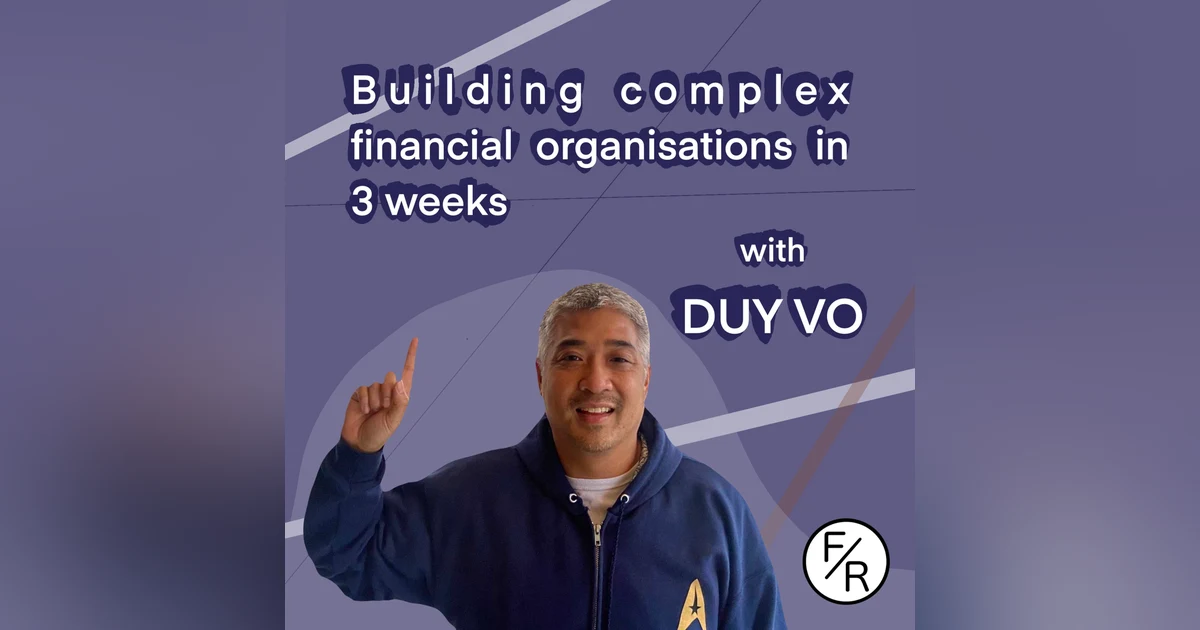


Duy Vo, Founder and CEO at Productfy talks about being a sole founder and yet having great Co-Founders (in a way) who have helped him lead the company to the success instead of selling early on. He also explains how Productfy works and how it can transform any organization into a complex financial organization in a span of a few weeks.
Duy Vo's LinkedIn: https://www.linkedin.com/in/duybvo/
Productfy's site: https://www.productfy.io/
Course on fundraising for early stage startups: https://www.fundraising-courses.com/
0:05 They're releasing to fundraising video a podcast about fundraising for early-stage startups, the major rule that we follow here is no bullshit on this podcast. No music to relax. You know, advertisements of our sponsors. We only talk about fundraising here and nothing else. So let's jump into the episode and today's guest speaker, who have you bow, founder and CEO at product five. And in this episode, we'll talk about mold All things such as reaching out to Abyssal random people on LinkedIn in order to test out the idea for the company passing out on the Acquisitions and so on and so forth. And of course, we're going to talk about the fundraising so you let's kick it off by you giving us some background on yourself and on product fi.
0:50 Yeah, thank you. I'm happy Thursday. Thank you for having me. So, you know, my background is started out as a developer and Over the years, having been given the opportunity to run product, engineering and operations. Team you know a lot of its in regulated space mostly fintech Health Tech super passionate about financial products and services, really felt that Financial Services has both a tremendous opportunity and huge moral obligation to do societal. Good. And we as an industry have left a lot of vulnerable people behind. And so really passionate about, you know, wanting to address the the issue at its core.
1:31 And so started product fi in 2018 with the thesis that Financial Services is moving towards the edge. That means more and more non banks are going to be looking to offer Financial products and services. And, you know, we've been spending the last couple years building that our platform technology programs. And you know, we're at a point now, where I think that we're on the cusp of really proving out, what it would take to build a decentralized financial. Structure on Traditional Bank. So, building d54 Traditional Bank if you will Rate. So the first time we met on our printer recall, I was extremely confused by that explanation. So let's go into a little bit deeper explanation and maybe go over an example of how to use project fi just so that all of our relations are on the same page and they will all understand how cool the product is. So you can give us an example of how to use product fight or just one use case of it.
2:29 Yes, sir, we'll be happy to do so. So if you think about, you know, Where where Financial Services can really add value, you think about someone like my mom, you know, she she goes to church several times a week or at least she did before Colbert and for her she has a deep deep relationship with the church. So what if that church could create a credit union like experience for her right? Being able to offer a debit card secure credit card and fdic-insured account where she can deposit money. What if that church have the ability to turn around and And and lend money short-term. So that their congregation don't have to take our short day, paid a short-term payday loans.
3:12 And then what if the church is able to do basic services, like, being able to do, check cashing? And so being able to enable that type of organization to offer Financial product and Service as a credit union like experience, you think about a university being able to offer secure credit card to its students so that they can help them build credit and help. Them rein in spending, you think about, you know, a gaming studio, being able to issue a card to its user, so they can leverage that that relationship and turn around and give points that can be used towards digital assets. You think about programs that, that, that really serves retailers through private label cards.
3:57 So, it's really this opportunity of seeing Financial products and services, not as a standalone offering. But it's about banking Financial Services. It's a way to help build a better user experience and it's embedding Financial products and services into an operational workflow or an offering like Lyft being able to pay their drivers with a debit card like creating a debit card that can hold your key lock funds. When you refinance, it's to be able to create a credit union, like experience at a CBO, a community organization, religious organization.
4:38 This is what we think could be really amazing, love it there day behind it is absolutely wonderful. The moment, I realized what exactly prompted fight does on our printer called? I was like, all right, this guy definitely goes on the podcast as soon as possible. So yeah, now that we covered that now that everyone understands what exactly prodded Phi is How cool it is. Let's go and discuss the major subject over the entire podcast which is fundraising. And let's start with the fact that I believe you are the sole founder of product fire. Is that right? Yes, sir. So Founders that is I'm not going to say it's very rare but it is quite rare for soul Founders to raise so much money because produc fight I believe up to this point raised overreaching and dollars and that is not as common as one might think. So from your perspective, If you know being a sole founder, do you think it is okay to run a company by yourself or do you wish you had a co-founder?
5:37 You know, I always wished to work with amazing people and so, you know, for me. Yes, I am technically the co-founder. But, you know, I, you know, my very first hire someone that I, you know, Grew From like a junior engineer all the way to someone who ran UI engineering at my previous company, right? So I, you know, I was able to bring him On like, you know, early on and he's been with me for like the last you know I've known him longer than I've known my wife, my wife was there. Every step of the way you know, she, you know, she did our payroll, she did our billing, she did, stay filings taxes, all of those things.
6:18 I had investors who I could call on a Saturday and they'll spend 30 minutes, you know, explaining things to me, you know, Thomson the best angel investor And possibly get for a fintech, you know, e spends countless hours with me on the phone and so, yes, I am technically, you know, the only founder but in no way was I ever alone in this journey and I could never have made it without the support structures. That all these really Extraordinary People brought to bear with me. All right, person will love the sound of that. So let's talk about how you managed to find those amazing investors on our print recall. You mentioned that you, when you got the idea for a product for you, literally reached out to completely run some people on LinkedIn and some of those eventually became your investors.
7:07 Can you tell us a little more about that process? Why do you decide to just go with random people instead of trying to Target some particular type of LinkedIn users, yes, sir. So you know I basically look for enterpreneurs. Yes, you know, like people who have done it and I just reach out to them and I was like, hey I have this idea. I don't know how to do this. And what I've learned you know, early on in life is is that people are generally very kind to you if you give them, you know, not everybody, obviously, but most people are claiming to be given the chance to be right. You know, I was homeless in high school until I found, you know, my best friend's parents decided to take me in, right? They help make sure that I go to Let's write every step of the way I had people who just showed me kindness in a way that I was I didn't deserve.
7:57 And so that carry with me. It's you know, I had an idea, I thought was compelling, I reach out a bunch of random people and, you know, a bunch of them got back to me and out of that, a subset of them became really involved and and and you know a smaller subset became investors but but really it's just about we just about realizing that, you know, more Often than not, you're going to run into kind people and just put it out there that you need help and and and you know, you'll generally get back, pretty decent reception 100% that is guaranteed the street especially in disturb industry. If your story now it's if you're the founder or if you're one of the co-founders you reach out to random people until I'm curious.
8:42 What I'm doing, I need help with XYZ people will legitimately help just because they want to help out someone who's starting out. So yeah, definitely go for it. So let's go and actually talk about the militia my voice and you need water. No I'm good. I have we're right here, I'm fully hydrated. Do you know where about that? So let's talk about the acquisition, part of it, on our printed call, you mentioned something that really caught my eye there, which is the fact that you actually had quite a few Acquisitions. Down the road or earlier in this year's. Can you tell us a little bit more about those? How did Those come up. Where did they come from?
9:22 Or who offered you? That was Asians. Yeah. So I mean I'll talk about two that I think are the most poignant because they just illustrate like what you really need on this journey. The first is, you know, we met with this company where you know, the CEO was with someone who you know had a very very well-known brand and and didn't come from fintech but had a well-known brand could raise a ton of money and and you know that that you know he'd already raised And he basically said, hey, like let's team up and I said, yeah, like, you know, would love to write. I don't, you know, I don't mind, like, teaming up and working together, I believe, you know, in collaboration, but, you know, somewhere along the line, it became kind of clear to me that that conversation wasn't going well, because he doesn't really understand the fintech space.
10:10 And certainly doesn't feel as deeply about it. As I do, there isn't this Mission driven part of it but you know, they've got person said something to me that, you know, kind And of made me rethink things. It's like look you you don't understand you're not the caliber, I am. I can get meetings and have conversations that you can never have. And at that point, you know, we didn't have a lot of money. This is before we read, this is our up to this point that we've raised a hundred and eighty thousand dollars total and so and so, on the way home, I called up Thomson, the angel invested I mentioned earlier I called up Ben who's who's our First Institutional Investor out of 500 and I called up my wife, you know, David and bow who were Me and unanimously.
10:52 They all told me, no. Like, I was ready to sell out. I'm like look like, you know, that guy's right much higher caliber than me. You know, you know can raise money from a VC. I simply don't know how to do that, but unanimously outside. No, don't do it. Like, like you have a vision? You know, let's let's see this Vision through and then the second one was, you know, what was from in organization that we have you know, relationship with And, you know, they, you know, they were looking at an acquisition, at a valuation that is like very, very low. But at the time, I didn't know it was very low. Like, it was, you know, like three million dollars was far more than I've ever seen in my entire life.
11:37 So it was, you know? And so it was like, it was like a like the acquisition of a company for 3 million. Seems like a slam dunk for me and you know, we were thinking like yeah, I don't know how to fundraise. So why don't we just do this? And luckily you know, they took a while to get the paperwork together and by the time that that happened, we'd already had a venture firm reach out to us and had made us an offer to lead our seed round. So you know, with the first time it was the courage that I found in my network to say no and with the second one it was just you know the other person took too long. The other organization took too long and we got a better investment offer and we went with it.
12:22 A lovely story of how bureaucracy saved the company. Basically they're interesting. And yeah, it can be useful. Apparently never, if would think that's the case, but yeah, let's let's talk about the fact that you had no idea how to fundraise. He really didn't know, we know where to go next, but you still managed to raise over eighty million dollars? So let's talk about that Journey. Um, and let's start with a very first round. I think you mentioned that initially, you raced just about 80 Hundreds a thousand dollars and you were leaving for over two years on those two hundred, eighty thousand dollars. Do you think that was a good choice? Do you think it was a nice strategy of bootstrapping /? Slight influx of cash or do you wish you had couple more millions in your bank account at the time? Yeah so um you know we actually you're right you know you're absolutely right that we did raise 280,000 over you know two year period but we actually raised a hundred and eighty thousand dollars for about a year and a half and then we race the extra hundred thousand.
13:21 You like the second like the second half of the second year. So for a year and a half we have survived on 180 thousand dollars that was our initial raised. You know I'm not good at counter factual's but what I can say that do that was a reality. We lived at do you wish we had more money? Absolutely. Yes I mean you know I just gave him my wife and I had just had a baby daughter and I was leaving a decent job running engineering for a tech company to do theirs. So yes sir, I definitely wish we had money. Um, is it a good strategy? I have no idea, but that was the reality before in. And and the thing that got me through it was one of the best advice I ever got from from starting a company and arguably the best advice I've ever gotten and again, no, surprise that came from Thompson, most startups, die by Suicide, not by homicide.
14:12 And so it was like all right like as long as we can live to fight another day, we're going to do it and it forced us to be so incredibly focused. August it forced us to have to work crazy hours. It forces us to just appreciate every single hour of the day and and I don't know if that would have been the case. Had we been flushed with a lot of capital because we've seen companies in our space, raised a ton of money and not really make any progress. But, you know, it made it easy or, I guess, when we did our series, our seed round, because people are like, oh, wow, Already have all this stuff building.
14:53 You already have a client and in our series, a comes around. It's like, oh, okay. You already have all this stuff bill. So, you know, like we have time to figure out a lot of issues and so, yeah, I mean I don't know if it's the right thing to do but those were the benefits of not having a lot of money. Absolutely. There are definitely huge amazing perks of not having too much money or not too much pressure from your investors and I love this quote. Most starve die from Suicide or by Suicide not by homicide love it and definitely going on my Twitter which I haven't touched in ages so good work props to your investor there. So the majority of the listeners of these podcasts or Founders who have never raised money before or who have raised, maybe appreciate ground from friends and family, what would be your advice to those people?
15:44 What is your major learning from your own experience there that you would like them to know of Um, like really stop and ask yourself why why you're starting a company. Because if you have a mission look, if you think that you're starting a money because there's some big payday down the line that you're optimizing for, maybe that's what will keep you going but I don't know if it would have for me. So like for me having that mission having this like life purpose doing something you feel you know gives you a sense of comfort. That is what's going to get you through, because that's what's going to force you, to not like give up, right? Because when the investors laugh, you out of the room, When they don't think your idea makes sense, when none of it works, like like the only thing that's going to get you going, is that do you and your network quite honestly? Believe that there's something here and you just keep building and building.
16:46 And you have to believe that someday someone outside of you and those closest to you are going to see value in it. And like I said, if you're just optimizing for like a Payday someday, that is going to be a whore. Hard that you're not going to make it through the night if you do it that way. So so so have a greater purpose and that greater purpose will give you the the tenacity to pull through, and the ability to do what, what, what will your job is, to help investors see what they don't see. Mmm, and if you yourself don't see it, the investors aren't.
17:28 And so have purpose. I think that's going to go a long way. Yep, that is definitely come advice. What people if you're starting a company? Just because you think that's interesting and that's a way to make money that has worked in the past as well. I have interviewed quite a few Founders who had curried Acquisitions. Who started companies legitimately because they knew that you know this company or this sort of company is going to do. Well there is a financial viability of their investors are going to love it so let's just do it. There is no No career, good behind it but is just going to make money and it did work out for them quite well. So if that's the case, it just might work out on this note. Let's go back a little bit because I forgot to ask you the question.
18:14 I actually wanted to ask you very much, which is paying yourself salaries and you've mentioned that, you know, you had a baby and you wish you had more money in the bank account. And on this note, let's talk about pain. Yourself, a salary as a Founder. At what point did you start paying yourself? And how much was it after we sign our first client? And it was four thousand dollars as a contractor per month. So like, not like, Which is less than, what you would make, if it was like salary for 4K. So it's four thousand dollars as a contractor per month. Nice and how did investors react to that? Did you slowly? That's that's the reason why I'm asking too many questions when that work when I'm drilling down and that is because a lot of Founders get confused about paying themselves. Some of them pay themselves way too much. Some of them just try to starve themselves to death. So what do you think?
19:08 Is the Silver Line there? Where how much should a Founder pay themselves? If they're leaving off purely Capital that they just raised and let's say it's Series. Actually, let's say it's a seed round. All right. So um, you know, for me, I think the question is like, at the stage we were at. It didn't really matter because it was like, well, we ran out of money. We're going to keep working. Anyways, it was more like this ritual of like every month seeing money disappear from the company account that forces you to refocus, right? It's not. It's that like they're there is a, there is A very very clarifying effect to know that every month you are.
19:56 Losing this percentage of a chance to fight now. And we didn't have money. Will we keep going? Yes, but just seeing that disappearing every single month and then seeing, you know, less of it disappearing because you're getting some Revenue right? Like that, that is the mental games that you play to give yourself you know the wherewithal to Continue all of it on this extremely, extremely optimistic. Note, let's move on to the very last question of today's episode, which is a call to action. So you would do you want to listen to do? As soon as the episode is over? Yeah, you know, I got to where I am because there's a lot of kindness out there.
20:40 You know, for me, you know, if I can be helpful, if I can pay it forward, like, you know, I kind of owe it to the to the broader Universe, if you will You know each out like connect with me on LinkedIn but when you do, you know please actually tell me why you're connecting on LinkedIn, right? Like if I just think you're like a random you know person who's just trying to make a sale then I'm probably not going to connect to you. But you know, if you're like, hey like this is what I would like some help with. Like, I'd like to pay it forward. And of course, if you're part of a company that needs any type of the ability to offer Financial products from like card issuance to deposit accounts, two wires the money transfers or whatever. Kyc, of course, come check out product side. Ayo and you know, that's product find out IO and I would just Absolutely love to chat with you.
21:28 Love it. Love this cultivation and love the whole pay for the idea of the startup World. It definitely works. And people are definitely very nice to each other because most of them got where they are because someone else help them. So, yeah, on this extremely optimistic note, we'll wrap it up. My call to action is as usually check out the description of this episode, I'll include a bunch of links in there. Specifically Linked In off. You it. There is also going to link to product Fayed. And there's also going to be a self plug there for our newly developed course of fundraising. So, if you're curious how to reach out to investors, what kind of tools to use, definitely check it out. All of that. Good stuff is going to be in the description of this episode.
22:09 And as usually have a good day,