Fundraising for non-profit is easier than for a for-profit company? HOW? Dylan Kendall explains
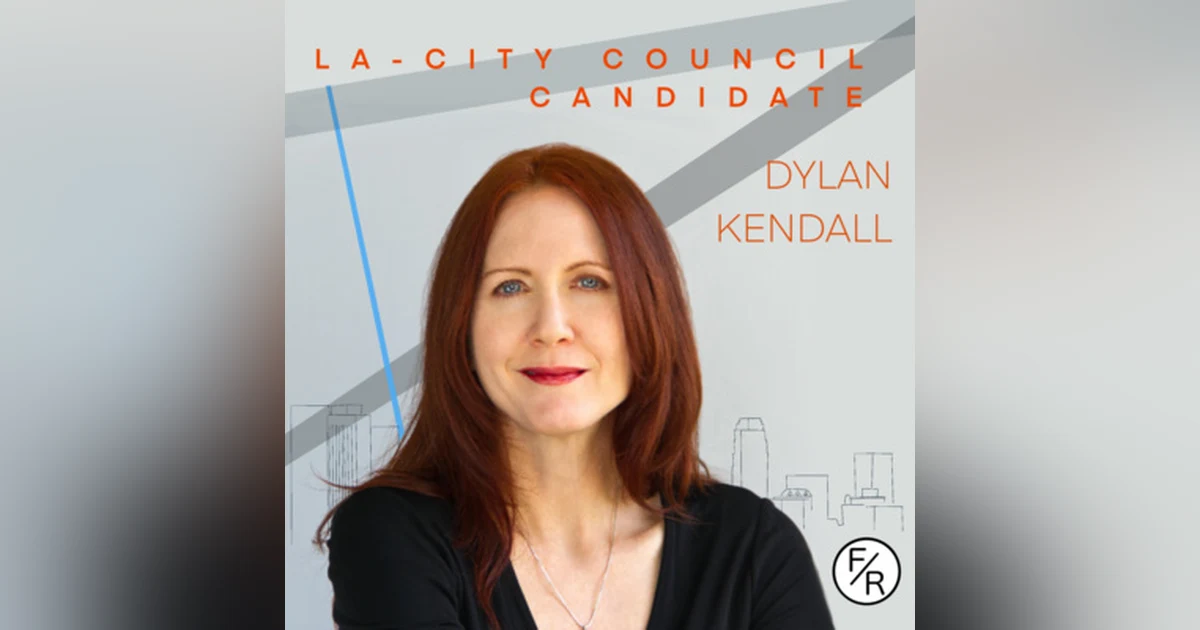


Dylan Kendall - candidate for Los Angeles City Council District in 2022 and a Founder of a for-profit and non-profit in this episode shares her experience of being a founder in Los Angeles. She explains how did it happen that fundraising for a non-profit turned out to be easier than for a for-profit company and how she got into politics.
Learn more about Dylan as a candidate here: https://dylankendall2022.com/
Relevan episode where Claudine Emeott explains how impact funds work: https://www.fundraisingradio.com/Claudine-Emeott/
Some of the questions covered in this episode:
- you said that fundraising for your non-profit turned out to be easier than for a for-profit, how did that happen?
- can you briefly tell us about your experience while raising for your for-profit? If you could go back in time and change that raise, what would you do?
- you are the candidate for Los Angeles City Council District in 2022, how did you get into politics?
- what do you think is the major strength of LA as a tech hub? Are there any particular government programs in LA specifically that can help startup founders at the early stages?
- you've mentioned that one of your frustration with city of LA is that it's government is very slow and falling behind the development curve, how do you plan to fix this?
- do you think there are any particular cities that have done a better job at this? (not necessarily in the US)
0:05 They're releasing to fundraising video a podcast about fundraising for early-stage startups, the major rule that we follow here is no bullshit on this podcast. No music to relax. You know, advertisements of our sponsors. We only talk about fundraising here and nothing else. So let's jump into the episode and today is a guest speaker have doing Kendall founder of a for-profit and a nonprofits in LA. Actually, you know what? I'll report that part. So you were founder of a for-profit and nonprofit sand this episode. We'll touch on to fundraising for both and the differences for the both. And also Dylan is the candidate for Los Angeles city council District in 2022. And also, today we have Eliza our new upcoming co-host who will be participating in the future Interiors as well. So doing a let's kick it off by you giving us some background on.
1:00 Self. And on the, let's start with your for-profit and nonprofit and then at the end of the episode, we'll move on and talk about your candidacy for the LA City Council District in 2022. Great, perfect. Thank you. Good to have like be here and talk with you both at least good to meet you. I just, I met consoling last night, good to meet you this week. So yes, I am in a morgue unique position in terms of my entrepreneurial history and that I founded, why I I went backwards. Everyone reminded me later. I probably should have started the private company first and then use those resources to start the nonprofit, which is a more typical people, you know, disparage their soul for decades in the private sector and then they decide they want to do something good for the planet or four people and humanity and then they start their nonprofit.
1:47 I did it backwards which isn't as if I zvl because you definitely have to lift harder for the nonprofit than you do without those resources from the private sector. But yes, In 2005, I founded a non-profit and it became quite successful. It was self-running self-funding when I left it continued which is always a testimony to the entrepreneur because frequently nonprofits will implode after their Founders move on to different things. I founded the only School in the nation to use what we call Progressive on-demand Arts based learning for transitional age homeless, young, adults, which is 18 to 28. That's A category of homeless of some sort of people within the homeless sort of rubric they're called Tay transitional age youth. They are technically considered adults because they are over the age of 18 but they are emotionally much more. You know, they're they're emotionally stunted so we would give them their own special category and they are really difficult to work with because they have all the attributes of an eighteen-year-old, you know, married with all the attributes of a much younger human being and they don't want to go into the adult.
2:57 System, so they just fall through the crack. So I created that school and raised a lot of money had a very strong board of directors. And then after five years of running it, I became a foster parent, my foster son at 17. He and his girlfriend gave me a grandson and so it became just a little emotionally overwhelming to be running this school working with a lot of traumatized, young people. I mean, I would argue that everybody on the street has How trauma that led them to the streets or if they just again fell through a poverty crack. Now living on the streets is traumatic so I would say that we have a massive, we have lot of crises that are impacting our social service systems here in this country. But I think one of the biggest ones is we have a massive trauma crisis.
3:47 That doesn't always get attended well in any case, so there was all that spinning around me and then a baby or into a couple 17 year olds, so I stepped down. Needing to find a way to create a little more balance in my life. And then I started the private company and and that was a eCommerce brand started in 2010, and I always say, for your listeners, this was before Shopify. This was before Ali. Baba, this was before, all the tools right now, which make DIY entrepreneurialism, so much more accessible and Democratic, I was working in international manufacturing at a time. When I don't think anybody, I knew had more than three letters in their name, like Tom Mark, right? Like it was a Male dominated industry. There was a lot of space for women back there. Back then, in international manufacturing, the Chinese factories weren't overwhelmed, working with women. Again that's changing a lot.
4:37 We're finding even in China now, I have more female managers that I work with compared to a decade ago. So, yes, I pivoted and left the nonprofit space to go into the private sector selling bulls with feet. If you guys have, you know, the chance to go to the website, you'll still see them. I'm still making them. We launched with 600 that I made an a small u.s. Factory and then we went viral again much easier to do in 2010. When there wasn't as much content saturating the internet and we had like 80 thousand dollars in purchase orders and only a couple of weeks and to this day I'm that's what I'm still doing we now sell internationally we nice. Yeah. Probably 9k trees on the deck and humans all over the world seemed to enjoy waking 100% good time. So yeah, let's move on and talk.
5:27 Out that for-profit and fundraising for that for profit on overprint recall, you mentioned something that can instruct me quite a bit to, which is that you found out that fundraising for nonprofit, actually turned out to be much easier than fundraising for, for profit, which is very contrary to it. If so, can you tell us briefly about both of those experiences and how did it turn out? That's fundraising for for-profit company, which generates money back to the investors who, who gave you money, turned out to be harder than January, is that in fundraising for nonprofit. That was such an interesting experience for me. So, I think in general fund, raising is hard. Fundraising requires a lot of confidence in yourself, that requires not being afraid to separate money from people from personality.
6:12 I think, a lot of times, you know, when you get a no on it, you take it very personal, right? And we, I think, in general, women have not been particularly trained to either a, have a pretty fluent and strong relationship with money or People and asking for money. So I think, you know, it sort of starts at the root where we don't necessarily prepare women to oversee their financial sort of portfolios and systems. I mean, again, this is all she's changing and shifting, but let's look at it within the historical context. And then second, we certainly don't, I think women have not been encouraged. Is it silly to ask for money, you know, it goes really to the point that men like to give money to men, right? I mean, there's just, this is the boys club scenario, man, give money to men. Women tend to give money to women, right? I mean, I Don't think when yeah yeah, act towards one side that women women female entrepreneurs to support. But you know, that's just a little bit of this, you know, unfortunately, the boys club culture that this a lot of this country's been founded on and it certainly bleeds into the Venture space or even the angels face, I would, I would posit so, but where we?
7:23 So, I think number one, if we can get women to be comfortable asking for money, we overcome that obstacle. Right out of the gate where I had no natural fear of either mostly, because I don't fear much of anything any longer in my life and certainly not asking anybody. So when I built my nonprofit it was my second nonprofit. I learned a lot from my first one which ran for about a year but never really grew in scale or in reach. So but I learned from that nonprofit that might board of directors would be critical to my agency's success. So I focused very heavily on starting with a strong Board of Directors for now. Nonprofit number two, the one we're talking about the school or the educational agency but also I never particularly felt. I think you know again I think that the fear around fundraising is because we self-reflect on it, right? Like oh it must be that I'm a bad person or my ideas are no good.
8:15 And we don't, I think if we can overcome that we had forward and I really believed that what I was doing with this school or educational agency. Would be a game-changer would be solution-oriented. So, I went forth and fund raised with this strong board of directors, as sort of testimony of what I was doing and in just found money, flow flowed, money flowed. And I think that I then translated that experience into what I would find when I was building my private company and nothing could have been further from the truth. And when I go, it was very difficult to raise money for my private company and even when we were in the Heyday of, you know, we were hundreds of thousands of Dollars every year and plus, we were still strut.
9:01 We had International, you know, we had so many Distributors on board. We had so many marketplaces like Bed Bath and Beyond and yet still, we were struggling to raise investment capital and I found that so surprising and not at all, what I would have ever expected. And in hindsight again, the only thing I can take it back to is that there's a gender bias. Again attached to fund raising money and who likes to give money to who normally women give money to nonprofits, right? I mean, If you look at like a high net-worth couple, the woman is, you know, frequently tasked with like deciding what, you know, fulfill a ramp so philanthropy, the family involves Somethin. So I had a lot of lunches with women, right less lunches with their husbands, or with men or and there was just this.
9:47 I think, again, a culture around the idea, that women help children, women help, you know, women help constituencies that are in need, write, whatever they are from the environment to an animals. And so even though there's no at all return on that and like investment or on that contribution in the nonprofit space, with the exception of whatever, the individual may be able to write off on their taxes. There is this idea that okay, we're going to help kids so we're going to give to a woman because a woman's a nurturing soul and she's going to be a better you know, a good. We trust that she'll be able to use our money wisely and then we may get an anecdote back from her in like some sort of Neil overboard or newsletter.
10:29 That says, I'm a happy kid and I thank, you know, thanks for your donation. I was able to take these number of classes and that's it and you know, we all operate on the reality. This is all true and verifiable right where the private sector. As you know, there are literally black and white numbers, right? This is entirely an objective play. There is no subjectivity and its ability to be successful. And so I thought, you know, you give me a dollar, I'm going to sell. A widget that's 20 cents that cost me 20 cents for 40 cents and I'm going to you know, and I've got a nice little either net or gross margin depending on how do we want to go? And from there I'm going to be able to give you a penny back or whatever at some point right? And that's so mathematical to me that why would you not? But this idea that I was you know I was patronized, I was called basically like little girl a couple of times by investors.
11:28 I was, you know, of course, hit on every woman knows that it doesn't matter if you have a part for sure, let me let me jump in here and ask you a question. Did you were you looking for VC funding specifically, or do you try to go for business loans or lines of Praise through the banking? Because you were reason for e-commerce, based on my experience of years here? No one really invests in e-commerce because it's not really the seed back space. So I we were looking we would be way too young for any Venture Capital funding. So this was really Angel space. These are people who like to invest in startups, who know, consumer products. Well, but yes, to get the company off the ground.
12:11 We did not, we used probably three different, alternative financing models, to get the company off the ground. So we use factoring, which is where you can take a purchase order from a sea from a credible. You know, a dozen Bradstreet credited. Accredited retailer. Get a loan from A bank or an individual so factoring but he's so we use factoring for some of our bigger purchase orders to manufacture out of the gate. We used microloans. I think we got three micro loans from the SBA so they're very women in minority initiatives. Those are tiny loans are usually seven to ten thousand. Now I actually have a call on Monday to learn where they've increased that budget around the microloan so it can go as high as 50 k now which is what? Yeah, much more because the you get the one you know, You're like okay but I need 30 and then you got to go back and do a whole Grant application for another micro loan. And so it sort of was a time-consuming process. But so I think we did three micro loans and then we did crowdfunding which in 2011 was a pretty new fun funding opportunity for folks.
13:15 It was Kickstarter was the only player in the game now. You know, because of recent investment, you know, protocol shifts around investment. You can even do proud raises for funding for investors, which you do not do. Thousand Eleven. But so we did. I think five crowdfunding campaigns 45 crowdfunding campaign Kickstarter, Indiegogo. We did. I think those are probably the three ways we and then we did, I don't think we really got any other startup capital from other people. I'd have to go back. It's been 11 years and remind myself that. I think those were our I didn't bring a lot of my own money to the company. I had been in the nonprofit sector and I Add a kid in a baby and so I sorry, I'm all these texts are coming. I should have turned off, so I had to really heavy lift out of the gate to find money.
14:05 It wasn't something like go to my husband or go to my, my parents and say, hey, can you write me a fifty thousand dollar check? So I can get this off the ground. It was very much like slowly kind of cobbling it together to make it happen chat. So looking back at that, fundraising for your for profit. And going back to reason from Angel Investors, I've seen numerous raises, I've seen numerous e-commerce businesses and I Guessing like one or maybe two cases where an e-commerce actually reached VC funding, or even an angel funding because angels are very much like smaller versions of BC's, less experienced less Capital, but they're still operating on that. VC model where they have to see some kind of potential massive payoff in order to compensate for all the failures.
14:48 So looking back at that fundraising, maybe you just didn't go for the right cap it. So what do you think if you want to for other investors, or for other source of capital, maybe it would be be easier for you to raise. Yeah, I don't know, there are that many other sources of capital, I mean, between the angel and Venture Capital space, you know, it's shifting. I think that when we were raising money, we were raising money for the brand not necessarily for the fact that was on e-commerce. Especially, you know, consider 2010 e-commerce was a really new space back then and we were like on Amazon back then, but you know, there wasn't even a Seller Central. It just, you know, things have really moved that light speed in the past decade so the reality that you're sort of experience. Right now is not the reality. I was raising money.
15:29 And in 2010 we were building a brand because we were going, we were looking for licensing opportunities. So our goal was to create a brand that we can then. Because licensing is obviously the, you know, much better play right than dealing with inventory and you know, all of us on our own. So we were, we were definitely pursuing funding in in the form of an outside third party investor. But it wasn't so much like, hey, we got a little e-commerce brand and can you, you know, at that point we were selling internationally. So we showed that we had a lot of scope we had because we had licensable attributes. We were showing that we could easily be attached to anything else from luggage to, you know, I don't know, like a something else, right?
16:19 Whatever else that would be a great home kitchen Arc and so I think that was really where we were hoping the long-term play would be in licensing and There was a minute where we definitely we were in, you know, contact with a number of Licensing. It was sort of chicken and egg, right? Like they wanted us to have more gravitas in the area, but to get the gravitas, very we had done the investor. So yep? Yep. Yep. Yep. Is there a painful? Chicken-egg problem to watch. That is very much true. So let's on this, no doubt now that we've covered your both for profit and nonprofits and fundraising for those. Let's talk about your candidacy for D, LA City Council, District. In 2022. I don't think we've ever had any political figures on this podcast before.
17:02 So this is a very interesting subject. So let's talk about that. How did you get into politics in the first place? How did you get there from being a Founder? So politics actually came first, I wanted to make the world better, right? I you know, I wanted to make the world better and it from my very naive point of view that would be through changing systems, which would be done through politics. Again, this is a very naive idealistic view in 2004. So again, a while ago, I didn't have a particularly pedigreed upbringing, I didn't go to college right away. I didn't go to college until I was 30, I definitely went to UCLA but that was only because I wrote one of the most you know heart-wrenching tear pulling personal essays about wanting to make the world better. I didn't get into UCLA because I had massive SAT scores or I had this, you know, right out of college. Three-pointer 4.0.
17:58 I was a bartender and I had an impact in a really high poverty neighborhood. That left a serious impression on me. I mean, it always been sort of oriented towards what we now, call social action, but just this idea that we have a part to play in making our world more fair for all. And so I had this like I said, this very tree like sort of shocking experience in high poverty neighborhood and I decided to leave bartending and like Ceramics and other fun things I was doing. She met World better. And so I went to, I wrote that all in an essay to UCLA and nobody was more surprised than I was to get that acceptance letter because I was too old to go to college. And second, you know, never negate the personal narrative, right?
18:43 I mean if you have strong convictions about something a lot of times, that's what makes, you know, universities take. So, I wrote that essay. I was accepted and I and I started UCLA, and then when I finished all of my schooling, I know the Masters At 34, I I did a leadership training program called Cora, which is not as relevant, any longer as it was again. It's had its Heyday as well, but it launched like luminaries like Dianne Feinstein and in California all Expedia. And so I, I was invited to participate in this nine month program and I did right after my mat, or I think at the same time I was finishing my masters. And and then when I was graduated, You know, my I was sort of on a path to go right into politics and I was really excited about that and I was hired as a contractor to work on a project with the county and, you know, unsure why?
19:41 Maybe? Because I didn't have a traditional pedigree to upbringing. I had I've never seen the world Within These constraints. Are these constructs that everybody else does. And so this project has contracted on I was hired to write the Strategic plan and it was about a new arts program at the county and new But they wanted to create and I envisioned something very different than what they were envisioning. And my vision was supported by these hundred interviews I had done in a feasibility study, and when I brought money, it was not well received. So I didn't know. At the time I was very young and idealistic that I was, you know, threatening the, I was threatening the throne in a way, right? Because we've always done it this way and people climb a ladder are expected outcomes on that ladder and if something comes in and attempts to disrupt the power that Get at each like rung of your ladder. It's very unwanted.
20:32 I don't know if she was intimidated or threatened, but it certainly unwanted that I can say without doubt, and she made her unwanted known to me, and no, no, with no shortage of words, and so II that point was, like, so disappointed. And this, I mean, the idea was so good and it was, like, I said, backed up by all these people, in my feasibility cons study. So I, you know, I sort of licked my wounds right eye. I retreated and I licked my wounds and I thought now now how do I do? Because I got to see for the first time that I'm a really high jumper, and government has really low ceilings and that might not be the best place for me to create the change that I want, right? You you smile like I just, you know, my poor head was getting these massive headaches, all the time from trying to do things that were Innovative and government. And so, I then picked it and created that school though, when we mentioned earlier, right?
21:24 And at that time, in 2005, you know, Allah Allah. 88,000 people according to our homeless Census count in 2005 living outside and again, we've done nothing. I mean now we have more shockingly and not because of covid, but there's been a failure of the political of the of the political leaders to acknowledge and move with urgency button. So I pivoted and I took on this problem you know tragic decades and a half before anybody else in city council was like, huh, maybe we should do something about how the people who are living outside in our city. So I got I was lucky in that. I was, you know, I don't think of any better example than that. In terms of how this idea that I think we do need to disrupt these systems. We can't continue to allow it to go as a status court because it does nothing.
22:09 I mean, look where we are. So I I loved running the school and then, you know, again, if we go back to the history of, then I got, you know, my grandson and so I there was never any issuer interest or really for me to go back into politics and after one brief, you know, I'm pleasant experience in. We have this interesting thing happen in our last elections where we had in a woman from out of nowhere, come and challenge an incumbent and she won. And I started to think oh maybe it's not the same landscape that it was. You know, what was that? 17 years ago? Maybe have changed and I think a lot of that is technology-driven and you get to see like a lot of the young activists coming up and like we now can hold people far more accountable than we've ever had that ability to do so with government and I think this is really A exciting and I credit a lot of these younger movements like Sunrise movement, like food and water, watch that are coming up and really demanding that we do things differently than we've done before.
23:07 Like the status quo is not, anybody want a massive climate crisis, a humanitarian crisis. So I thought, okay, well, I've had a good run with my big Converse brand with my brand, right? I mean, I love what I do because I sell joy and so that's a really fun job, right? Like, You know, emails me that I have a lot of customer engagement. I get a lot of pictures of troubles with cute dogs. That, you know, I wake up to in my mailbox everyday. So, I have a, I have a really fun job. It's very outward facing, and I make a lot of people happy, it's great. I'm not just selling widget, I'm selling a bit of Joy right to people, so, but I thought, you know, I love this city and I know every candidate says that, but like, I really do.
23:51 I rooted in La. I think it's an incredible City. I love its energy. I love that. It's like, You know, back when I was really growing up myself in the 90s and LOL, it felt like just a gigantic lab where people would come with their crazy ideas and their dreams and their, and, and it could happen, right? You know, your waiter was working on a script. I loved that about l.a. I loved that we were sort of an anything-goes City and yet and then we've lost that, you know, because now that Talent can't come here and find housing, you can't come here as an actor and try to find your way. Where are you going to live? Like where you end up sharing with three other people in these overcrowded, you know, small Studios that are three thousand dollars or maybe 2,500 and it's just not, you can't get to work easily.
24:38 Like, you're supposed to be like this was Hollywood. You're supposed to be able to live and, you know, maybe just drive a few minutes or get on your bike and go to work, but not be stuck. In this incredible traffic because my cloud cars to run our city. So it's really shifted and changed and it's unfortunate and and it's ugly. Like our city is not You know, we fail to sort of keep up with some of the environmental trends that we needed to do. Our Greening efforts are behind what other cities are doing and you know, you can't ignore all the tents. I mean, tourism dollars are being impacted, it's so heartbreaking. You know, people come to LA and it's showing her lot and they get here and they're like, oh yeah. So after grilling a leaf or a little bit.
25:18 Let's talk about some of the good stuff that Lee has to offer. And yeah, a lot of Founders choose to not go to LA because again they move there is extraordinarily expensive, not that mean even Others are there unless they're already of course in the entertainment space, in which case Ali's definitely see for them. But yet a lot of Founders choose not to go to Italy because it's expensive and doesn't really offer that many benefits. So let's talk about those benefits. So doing it from your perspective, from your knowledge of the government's from the insides are there. Any specifically good programs, that'll a CD specifically has to offer to the incoming Founders, or to the founders, who are actually reside in l.a. right now? So this is, that's the question we're Constantine's Army.
25:59 The questions that have I took notes. And I have some because even I didn't know, I mean I think that. So when mayor Eric Garcetti took over eight years ago, he really positioned himself as the tech friendly mayor as they say. Girls startup mayor. I think in some ways this is played itself out correctly and in other ways it's been kind of actually more of the same and We haven't, we haven't seen massive diversity in the space either here in Los Angeles. I think, you know, there's a I think we need to do a better job in Los Angeles. Oh yeah, I did prepare like a list of all these different agencies or at a lot of different but some there on my other computer over here different opportunities, a lot of them are, you know, coming out of the SBA obviously at the federal level, no, coming down to community block, grants here, at the local level, we have. He's owns where if you I think Hollywood has actually now an opportunity Zone which is just tapping on to legislation. That's about 2 years old.
27:00 That allows investors to start businesses in specific neighborhoods and get a lot of tax breaks for doing that for they don't, you know, they get a capital account capital gains tax break and and there's you know I think there is I think one of the big issues is that we don't have any sort of there's like, I had to Snoop around right. There's no consult, I think one of the biggest challenges for Los Angeles is a failure to mark that all of its programs. That's really and I think a lot of us because it's government and government doesn't think about marketing. And you know, it's this idea that we build it they'll come but they won't come if they don't know it's there. And so I think, you know what are the initiatives I wanted to undertake in my office as a beta for how the whole city could be doing is let's see about how we communicate with our constituencies better including you know startup entrepreneurs and not just the tech space. But you know I trained I teach a few nights a week formerly incarcerated or currently incarcerated, men and women. A entrepreneurial skills because they don't have a lot of job options when I release.
27:58 So how do they get funding, right? What kind of funny do we have for black and brown at what level? And so I'm cooking out of that space. So yeah. So I did a deep dive it and again we do have resources in Los Angeles but they're not particularly well organized. You also have to remember that in Los Angeles is massive. So the Tech Community right now that's in l.a. is pretty centralized near the water right? Yeah, I know. Was a sort of an effort at one point and this is where, you know, the district by the way that I'm running for. So I'm running for Council District 13 which includes some of our most historic neighborhoods, like Hollywood, yay. Nice silver metallic Echo Park. Large flat out what her Village.
28:38 So I think that's always been a missed opportunity with Hollywood. You know. Periodically. They the various the chambers of. It's like there's this sort of like let's put a tech, you know, Center in Hollywood, right. And then I just sort of like ghosts fellow and it doesn't happen tonight. Like I said, I was interested to see that I think it's an opportunity Zone. Right now, which could with some proper marketing, actually be really good for that particular because Hollywood is both a concept in a neighborhood. There's a literal neighborhood of Hollywood right now, which is just awful, right? Yeah. Ugly. I was gonna say, yo. So I'm thrilled that that is the area is that I'm running for. Because I think these are really vital parts of our city right there. And the right now, the Tech Community tends to be pretty isolated by the water and they have their own sort of ecosystem. And I'll share, I don't know much About that ecosystem because it's Kelly's big, that's a good 40 minutes for me in my yeah.
29:30 Get there. So I don't I don't know a lot of those folks down there and what they're needing to get but I think our mayor is pretty active down there and sort of showing what kind of services that the city could offer. There's a real have a tech news out of that. I'm a big fan of called dot la, which was started. I can't remember who started. Yeah. But so there are graded, sort of Earning kind of what initiatives are out there in the public space and, and so on and so forth. And then, we also have which I'm excited to see, I probably within the county over 35 accelerators and then another 35 incubators. So, depending on where you are in your, in your startup story and I think those are great and I know a lot of them right now are really actively recruiting underserved communities.
30:16 Where entrepreneurial ISM wouldn't have been necessarily a first thought, like, you know, poor communities, brown black right? Marginalized communities and divisionist. Men of color. So that's exciting to me as well to see, a lot of these incubators form because they can really help someone overcome the hardest parts which are really like, how do I build it? Like, I have this great idea. How do I build it? And then the final thing is, we have all sorts. I'm just sort of thinking of what I was making notes on the Department of Water and Power has an initiative, which Eric our mayor Eric authored La, the LA cleantech, which is specifically focusing on cleantech initiatives, but that's another great program, which I love and the founder or the gentleman who runs it is awesome.
31:03 He's really great, super high-energy, very smart. So yeah, like I said, we're doing stuff. I just think we need to do a better job of sharing that with people, so they know that if they come here, we will will welcome them. And I think the other, the initiative that I wanted to launch many, many years ago, which was shut down by government, was this idea of Cross-sector councils where people from different categories of professional lives, or coming together to share ideas, and we don't have a lot of those in Los Angeles. We have a couple of conditions but we don't have like committees that are really working to inform because one council person is responsible for about 300,000 people. It's not like that in other major cities, they have more, you know, more the borough model.
31:46 So we have a lot of people that are all dating stuff from our Council and there's it's really an almost impossible task to be as tempting as we need to be into all these different categories of government like small business, like beautification like, right like residents like rent, control Healthcare. So, what one thing that I really wanted to do as a business owner, myself is actually create this committee within the Council Office of small businesses, which truly Outreach is and has their finger on the pulse of and listens to what's slowing down small business growth in our city. I think it's one thing, you know, to say we're small business friendly, and then we go out and hand out these five thousand dollar pandemic checks, but that actually doesn't really help a lot of our small businesses which are like our anchor businesses, not the targets or the, you know, I think targets of one of the biggest Employers in our city but like the smaller ones.
32:43 I think the covers the small cafes the Vintage resellers like it doesn't 5,000 dollars doesn't really help much when they're like dealing with broken sidewalks or they're dealing with the tent, that's in their front door. Or where they're dealing with a market. Rent that continues to go up. You know, it's every year because a Target does move down the street which then Jack's the property values up for everything around it. Right? And so, you know, we have no commercial rent control in the State anywhere they tried it actually once and, and Berkeley, and they're reviewing it now in New York, but we don't, I don't know. We have a lot of Protections in place for, for small businesses, that have to weather the realities of, you know, being a brick and mortar in a city. So that's something that I think we don't we don't talk about. Unless we really have council members who have had that stress of running a small business who have had that stress of like, oh, what happens if you know a third of my revenue is going to support a person who's on house, who's living in front of my restaurant who will otherwise not, you know, customers won't walk past that tent.
33:48 So if I don't support that person, right? I mean a lot of, I think our small business owners are feeling like they're wearing the mantle of so A worker now as well and they're seeing that Revenue drop from their own line items. And again we wouldn't know that I happen to know that because I'm a small business owner but I don't think a lot of council understands the real challenges that are affecting our anchor businesses, and Allah, and would potentially affect a lot of startup entrepreneurs as well, huh? So most of our listeners are have a capsules because I mean it's called fundraising radio. So majority of them would not support the idea of government supporting businesses because it's just not the way capitalism usual work. X. So your idea is actually to help out those small businesses instead of just watching them getting trampled by the or change like Target. Yeah, pretty much only it again.
34:35 So when we look at how we create a livable city, right? The first thing that everybody wants, regardless of age, regardless of skin, color, ethnic Heritage is, we all want a livable neighborhood. We all want to be able to walk to a coffee shop. We all want to be able to have our, you know, most of our needs met with them. We called All the 15-minute City model is a an idea that's gaining, a lot of traction in Europe, and it's just beginning to see, its way here to the United States. And in order to do that, in order to get us out of our cars in order to have you know to simultaneously bring down crime and increase the quality of life. For people who live in a neighborhood we need to have these little walkable Villages or you know commercial walkable commercial corridors, right? And you know it does so much more for that the You of the housing around it.
35:25 I mean, at the same time, we have to put caps in so we don't displace. The people who are living around these, which is a huge possible threat when we when we provide a lot of incentives into a zone so that we can keep small businesses there, we don't want it, you know, everything has its trickle effect like that target comes in and Rise as the makes the property of the value of the land around it. Yeah but but I would say to people who worry about government coming in and doing things like this, is that again at the core when we elect to live in a city we want to live in a city. Because of that density, right? We want to live in a city because of the diversity because of the fact that everything is within a certain distance and unfortunately in Los Angeles, otherwise you go you live in the suburbs, right? Like if you're not that person, you don't have an inclination. That's great.
36:09 There's plenty of places for you to also live, but if you, you come to Los Angeles and you say things like, I love getting Ethiopian food on Fairfax. Well then you have to understand that those people in those restaurants also need to live in our city, right? Like we don't get to just truck and diversity. Tea, and then forget the right that for a healthy vibrant City, ecosystem to thrive, we need to be able to support all of us and we need to be able to support those restaurants. Right. So when there's the open restaurants are getting and I'm just not, I don't actually know the story of any particular Ethiopian restaurants. And this is an example, you know, smaller businesses. These real mom and pops, right?
36:49 Start to have variables that impact, the amount of Revenue that they And bring into their business to both support their staff and their, the step their family, the families of their staff, as well as our own families. We as I think as the public entity need to help them better than just handing them a five thousand dollar check. And again right now we're not really doing that. We have privatized so much of that market. That it does really become susceptible to the unfortunately, the economic trends of the time and that's very stressful. And again, it's a system in which you can't Tease out one component and just say Well they're fine, let's let them handle it on their own because if that Ethiopian restaurant closes because they can no longer Thrive or survive or support the people that they're responsible for sporting. Now we have an empty building and an empty building. Does no good for anybody again empty buildings, have a direct correlation to things like Prime, right, abandoned building show neighbors are neglected crime increases and all the people around that Ethiopian restaurant who have, you're used to walking to it because it's in a little village or commercial. Or now have to get in their car and drive to there where they want to go eat, right?
37:58 The long chain of horrible events is started, but you said that, you don't think that giving out five thousand dollar checks is a good way to help those businesses. So, what would you do instead to support its own? It's not really looking at the entire problem of port or multiple problems of what's Impacting the the strength of small business. And so I'm beginning to sort of. As I said, I want to create a committee of we have a small Commission on small business in La which is attached to the economic and Workforce Development that again. I don't think they're, I don't think what they're doing is accessed easily Enough by small businesses or even understood by small businesses. So the first goal for me is to create a committee within the Council Office of small businesses similar to what they They have a New York as a council committee. I would just do an ad hoc committee within the council office so that I can really understand where are the pain points and how do we address them? I mean, I was just talking to a business owner the other day. So we want a green Allah, and we need to Green LA, because our city is so hot, right?
39:09 We have an obligation both to the planet and to the people who live in LA, to bring our air temperatures down and there was a great right. And there's no other way really to one of the strongest ways to do it. And it's certainly not an exclusive way, but because we have to both decarbonise and not, Reese as much Greenhouse right. Got to be kind of work together but one of our best tools to decarbonize our obviously plants, right trees and plants, right? So la has amazing growing mother, right? Because we have Sun year-round, we can do some strategic plays around water conservation. That would not impact the amount of green we grow, but those trees have Roots, right? And those roots, I was just talking to someone the other day who was showing me a an invoice for The amount of money he had to put into hiring a plumber to pull all the roots out from his sewer system in his restaurant. Thanks.
40:03 All right, right. So that part that's a burden but it's and it's the issue of right? We've got lots of things at all. Need to be happening simultaneously. So, but so it when I was hearing the story, my first thought was like, gosh, I feel like you got forgotten in that move, right? Like we want the trees and their City. Trees. Right by the way, let me clarify. This was not a personal truth, you plan. It was a city Tree on a sidewalk that had was massive and gorgeous and everybody loved it and he loved it as well because it provides shade, right? It has value to the community. But again it also comes with sidewalk disrupt, like it breaks sidewalks open, which then he's got to figure out how to write and then in and I never even heard of the going into treatment, of course it makes sense.
40:48 I mean they go into our home, right? It can obviously impact sewage in a home. Why wouldn't impact you at dinner? The restaurants from. Yeah. You know it's things like that that I wouldn't have even thought of where I had not really you know taking the time to sort of like let's go deep and see what why are you not hitting your bottom line every month? Right? What are the reasons? Put it aside because covid-19, exceptional event. But how do we how do we look at that? Like and again, you know, a lot council is only one of 15. So there there are some discretionary dollars within the council office that, of course, can be given out without having to go through. Through full Council review but legislation and things like that. Require consensus among 15 or 14, other electives.
41:29 But, you know, I would like to think that again, we all know that to revitalize Los Angeles, we had got to really support these businesses and in a way that I don't know that we've entirely done yet. I mean, I could continue on the number of businesses that are moving out of Hollywood right now because they're spending so much of their time managing the tents, you know, right. I got distracted by your cat. If you're in the background but on this no hook. Yeah, like three times and just bump downstairs. Lovely sight. All right. On this note on this very optimistic note. Moving on to the question before. Last Lisa, had a question about something that we've touched on to earlier. Yes, my question would require us taking a few steps back to the point of the difference between men and women in business.
42:21 That question consenting would never ask, but I'm just take advantage of me being here. So you mention that men tend to give money to men and women to women. But is there any difference in the approach? You need to maintain with men or women in order to succeed when they are like a potential investors. What is a great question. So from the point of view of the entrepreneur, do we is there an approach that we should take differently between men and women as an entrepreneur? And as a woman, I would say no way. He'll know, we should not have to adapt how we do things. We shouldn't have to pay attention to what we wear.
43:03 We shouldn't have to pay attention to, you know, hair. We shouldn't have to pay attention to any of that. We should be able to go forth and simply have a good idea. As I did with my nonprofit and as we did with our private sector, you know, our product and allowed the narrative that idea to be, what's examined? Of course, we know that's not true. We know though that people give money to people, right? I mean, it is crazy. How much money as I have? Been a student of entrepreneurial financing for over a decade. How many mind-blowing lie? Dumb things? I see get money and to your point earlier constant about e-commerce. So there is a shift now, I think, Any Commerce were more. I'm seeing actually a lot of you see Firm support product, maybe it's simply because I'm primarily looking within the women, LED movements or like Bumble and there's a couple, hello Alice that are funding women-led an ish. I'm tracking those more and they are actually funding a lot of product.
44:02 But I do your question Lisa. Like I am seeing some of the most absurd things, get funded right? Like absurd, like really? And so again it comes down to Two. Where we would love this, all to be very objective, right? Like again, which it sells for 20 - for 10 cents, sells for 20 zones, something like that. A lot of times it comes down to personality, right? Like, do you like the founder? Do you have confidence in them? They will be able to weather the storms of own entrepreneurial path and not give up and and so on and so forth. So in terms of with women I find that thankfully a lot of that can be, you know, put behind But I do find.
44:45 So I'll say two things, I found the number one when I secured my first significant amount of Angel capital, I was so grateful. I had been many, many, many years in the coming that I I I lost a little bit of my backbone. In terms of saying more of what I thought was the correct path to follow with the funding and that was a man who'd given us the capital and I sort of I got a little weak around that because I was just so grateful that we finally had this infusion of cash and I don't know if that's every woman. Does that or not? Or maybe that was just because I had such a store like a long history to finally, get that kind of cash we would need to grow but I think in terms of a general approach you know, look I wish there really was a book that someone just said, if you're a woman you're going to go raise money for you know a man wear your hair up wear turtleneck like the woman being sued right now. They nose or whatever, right?
45:43 Like desexualize yourself as much as possible, Right? Like make yourself into a man, right. Look as masculine as you can, basically, I guess in short. I don't know. Like I said, I don't know if that is really the right answer or not. I mean, you know, again, the value two women raising from women is that they're no one cares about any of that. You can be a mom, right? Because, I mean, again, that's something also to talk about. We haven't really talked about this days for moms trying to raise money. I mean, the, you know, a A lot of times that's a big issue because found you know investors think oh you're not gonna have the time to devote your company because you're going to be raising children or you know right you're pregnant so you're not going to be able to. So there are just you know, it's a there isn't just a hard-and-fast.
46:28 I mean I think a lot of the onus is really on the investor to stop like yes. We want to like the people we work with, I get that right. You're not going to maybe give money to some entrepreneur. Who gives you their idea and they're just me. An angry all the time, right? But in general, I think there should be a better, you know, we need to sort of remove all those filters and just say, look this is a good idea and it doesn't matter what gender of the person, pitching the idea to you is, that's not a hard and fast and again, I'm I don't know what younger female entrepreneurs would tell you because I haven't really had to raise money in a couple of years. So and it has begun again. It's shifting pretty quickly now with us really holding people accountable publicly for bad. Behavior when it comes to giving money to women. So I think even men now are being more thoughtful than they were even.
47:17 Probably three or four years ago. All right, the climate in the startup world is changing rapidly. And there are tons and tons of successful female Founders who turned into investors. And there are many Founders who have dropped out of their Prestige jobs and starting their own companies, and I'll be sure to include a few episodes with those female investors in the description of this episode. So, if someone's curious to hear about that, Definitely check it out. On this note, we're going to the very last question of today's episode. So Dylan, what is your call to action? What do you want the listener to do? As soon as this episode is over? Gotta just filling Kendall 2022.com and buy a t-shirt or well yeah, by dear contributing for a t-shirt or contribute to the campaign costumes wearing one of our t-shirts, I wish there. You know, money weren't involved in politics, I wish we had a system more.
48:12 I can do like they do in Europe or you know, in France where candidates are publicly funded because it would really democratize who gets to play in this space. Unfortunately, that is not the way American politics of Have been established. And so what regretfully that leads us to our candidates who are either wealthy themselves so they have a wealthy network of people who can write significantly larger checks. So in l.a. our cap is 800 for a City Council election, 1304 mayor. But still, I mean, to have a lot of people who can write a ten dollar checks, you're probably in a different economic class. Then, you know, someone younger, maybe or someone not married, or you have to, you know, try to do the Howard.
48:53 D model, and get a whole bunch of people to give you ten or twenty five dollars. Howard Dean was. This is moveon.org model from like what? Maybe 15-20 out of over 50 years ago. Anyway. So it's exhausting because then if you have to go through the low model where you just are trying to get a bunch people to give 25, you have spent a lot of time asking for that $25, right. It's so much easier than 800 dollar contribution. Right? It's much quicker. Yeah. Unfortunately, because we don't have Public Funding for city council for elections in this. Entry candidates will spend a ridiculous amount of time fundraising instead of doing what would make them better candidates like listening to people meeting people, right? So, I'm no different from them.
49:35 I mean, I'm not, I'm not a particularly wealthy human being, I'm okay, but I'm not up to him, not like up there with the private school class. And so I'm, you know, having a fundraising and It it's exhausting and it's plus you know candidates are usually also doing their job. So at the same time I'm not you know, again I'm not I'm not a candidate who was able to quit work to run a campaign. So fundraising remorsefully keeps a lot of people out of politics and a lot of really good people who don't have the situation, both financial aid, a lifestyle to be able to run a campaign. And and so yes that's Call to action that if you like this idea of an entrepreneur, someone from the business sector moving into the political space.
50:29 Because we think again differently we think without the parameters that are traditionally applied, then status quo establishment, then I would, you know, love your support. And what I always say to people is I know it City Council election, seems like it doesn't have any impact on you, but especially with your Angeles, it will. Because and even if you're not because of the fact that my particular District includes Hollywood, which is arguably Only the most famous neighborhood in the entire world. Yeah, you should care. This should have been a historical landmark. In my man should have been in my opinion a world heritage site after World War Two. We should have locked that but we did not. So everybody should care about Hollywood because this is this is you know are one of the things that makes our country attractive to people to come and check it out.
51:14 And so, maybe that would be motivating enough for people who are outside of Los Angeles or people who were you maybe also chunk of our listeners are Finally, because that's where this podcast was started. So hopefully, our lay residents, and specifically, Hollywood residents will check out the website that you mentioned and I'll be sure to make to include it in the description this episode. So people with short-term memory, like, mine can still find it after the episode is over. And yeah, that's gonna be my call to action. My call to action is, as always, check out the description of this episode, we will include a ton of information there. Specifically more about the programs in l.a. that can support startup. Hers or people who are just moving to Italy to start their businesses here.
51:57 And of course, there's any website to dealings campaign where you can learn more about her plans and about buying t-shirts. Like, but this, all right, that was $25 to use 3D printing for tiny homes, where we're turning our merchandise into Political statements. 100%. And this note, we're going to rip it up and as usually have a good day.