You don't want luck-based marketing - Karl Hughes about proper content marketing.
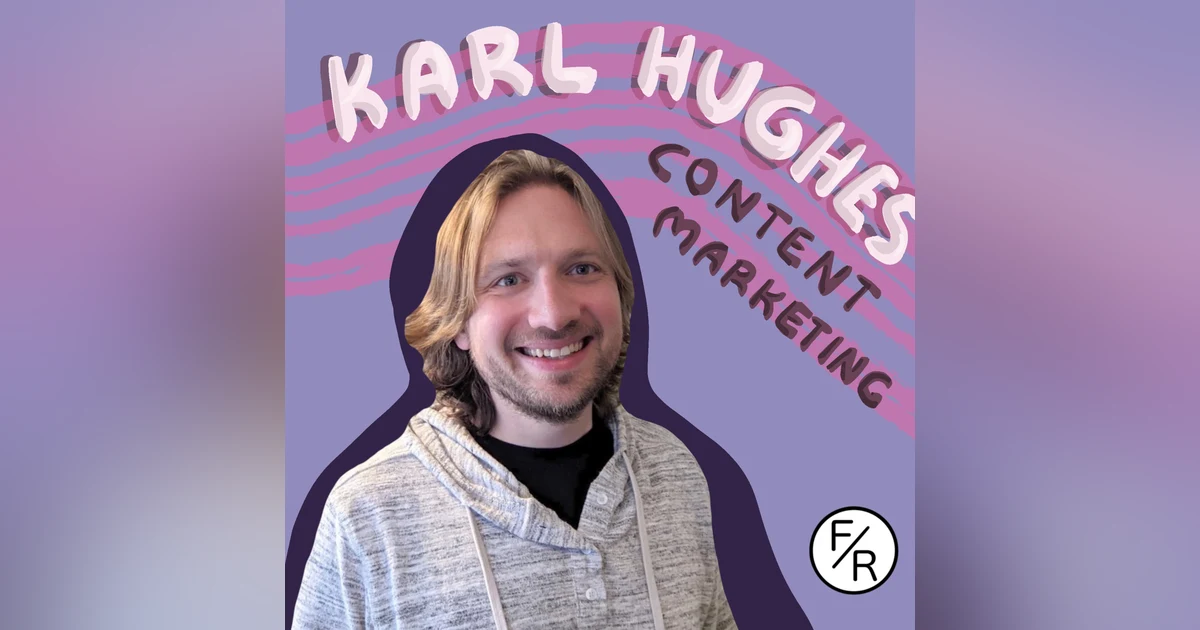

Karl Hughes, Founder and CEO at Draft.dev talks about content marketing, specifically focused on targeting developers. We discussed some strategies that can be applied and budget for good content marketing along with some use-cases.


Karl's personal site: https://www.karllhughes.com/
Promotion checklist: https://draft.dev/learn/promotion
Low-cost content marketing ideas (forgot to mention this, but might be helpful for early-stage founders on a budget): https://draft.dev/learn/low-cost-marketing-ideas
0:05 They're releasing to fundraising video a podcast about fundraising for early-stage startups, the major rule that we follow here is no bullshit on this podcast. No music to relax, you know, advertisements of our sponsors. We only talk about fundraising here and nothing else. So let's jump into the episode. And today is a guest speaker. We have Carl Hughes founder and CEO of draft death, and in this episode Episode, we will talk about content generation as a source of margin. And I remember last time I mentioned that the previous episode is about that. This is the actual episode about content marketing. So if you want to exploit the strategy, definitely check this out. So Carla, let's kick it off by you giving us some background on yourself and on draft death.
0:53 Yeah, thanks for having me Constantine. So I'm a former software engineer and then most recently, my last Always like head of engineering and then a CTO at startup companies here in Chicago where I'm based. I went full time on draft Dev last year, though, in a pretty, big career switch. I kind of switched from being all technical writing code all day too. Well, first writing full-time doing content, marketing writing for tech companies. And now working with a whole team, we have over 60 writers, I believe, who are active in a given month. We've got a team of editors and the team of account managers. And so, It's a, it's a real little business and I'll just in one year while being bootstrapped, so I know we'll talk more about some funding things later. But yeah, for Content marketing specifically, to kind of give you a little bit more into like, what draft does and how we're different.
1:44 Most content marketing agencies are kind of generally focused across a whole, maybe a whole sector, like B2B or SAS or something like that, we are super Niche. All we do is B2B content aimed at software Developers. So if you're not in this field, you may not even know that it exists. But essentially, if there are a lot of companies out there, they're trying to reach software developers with content marketing and it's especially tricky because software developers are they're smart. They're in a very Niche field where they know all these different coding languages and Frameworks and things that most marketing people just don't know and wouldn't be able to write about. So to give you a really tangible example, we work with companies that build tools for software developers, like, say, Mitch web hosting company and for them if they want to write an article about how to use their web hosting tool to deploy some kind of application out into the web and scale it up. They really need a software developer to write that kind of content and their developers are busy building. The platform, their marketers are have no idea how to start on that.
2:46 And so what we do is we come in and help bring the subject matter experts to them to write content. So it's just highly technical marketing content. Perfect, awesome. And we'll get into the details of Colin Morgan. Just A bit first, let's figure out who actually needs it, so that people who are lies that might not need it. We'll just switch on to the next episode. So from your perspective, correction, we needs cons and marketing because a lot of people try to pursue it because they think it's free is really not free. Have to dedicate my sources in the form of your time, in a form of time of your employees and things like that. So, who do you think actually should be like screw this? This is going to be one of our main marking tools. Yeah.
3:29 So So I think it depends a lot on the founder and the stage that the company is at. So I'll kind of the way I've always thought about startups is like in the early days when you're just trying to find product-market fit, you really only need one one, maybe two channels, that that actually work for you and for some Founders that is content. If you're a Founder who loves writing anyway, then you might naturally be drawn to doing content marketing and just be kind of doing it, organically on your own and that means like use that strength basically. I think that Get the furthest in the early days when they use, do things that they're strong in already. So you kind of want to start their get if you are good at content. Now, for your question of like, who shouldn't do content, and who should, I think if you are an early stage founder, and you've never written a blog post before in your life and you don't have somebody on your team full-time, who's going to handle marketing and promotion of this content and planning, the content. It's going to be very difficult for you to sort of like, find Value and content marketing.
4:28 So really early stage, Knees. Don't have this naturally embedded in their culture and DNA. Probably want to just hold off until they get a little more mature and they've got the resources to hire a full-time content manager or head of marketing, that knows that world really. Well. Now companies that are further along, I would argue that almost everybody who's in B2B, but probably be to see as well should be doing some forms of content marketing. And the thing there is that content marketing is a huge field and you could sort of, like, lump it in with a lot of things that are not just writing blog posts for. People posting videos on a platform like YouTube or Tick-Tock, that's really a form of content marketing, you're creating content with the intent of it being marketing material.
5:08 So it's a lot broader than, I think than some people assume. Now, you know, that's the hard question is, like, what is the form of content marketing? We need to do not. You know, should we ever do it? It's kind of, like, how do we narrow down where our strengths are and where we want to focus? Nice and we'll definitely touch on to tick tock because that's the field. I want to go into but haven't figured it out yet. So there will be a bunch of questions. Just for my curiosity, hopefully, only seniors are interested in that as well. So one more question on what you've mentioned earlier, which is the fact that you have about 60 active players per month. Can you elaborate a little bit on that? How big is your team? Are those full-time?
5:49 Are those contractors? Do hire them for like specific jobs. How about how big is your actual team? A full-time team. Yeah. So our full-time team is 5 and we're hiring to and actively right now. So we'll be at 97 in the next month. Yeah. So that's our full-time core team that includes like account managers marketing myself doing sales, a couple people doing editing. And so that's kind of the core and then from there we have a big pool of. We have some freelance editors who work anywhere between 10 and 30 hours a week on their time and They have availability and then we've got a lot of those people. The bulk of those people are freelance developers, / writers and the way it works with us because we're all of our clients are trying to reach really a really technical audience. All of our writers are subject, matter, experts, that means they're all practicing software developers who just do this on nights and weekends essentially.
6:47 And so, they're kind of like, they're more like gig workers, you know, closer to like, how an Uber driver picks up a ride, these writers are kind of Picking up articles every week depending on their availability and how much they want to take on and what they know. So we kind of send out a list of topics that might be good for them and then they everybody in our writing pool, they kind of respond as they want and as they have time, nice. That is an awesome structure. So let's talk about the mistakes. That Founders, make that decide to choose content marketing, as their marketing strategy. Are there any major fails epic fail specifically that you have seen in the field? Yeah, I think there's a few things that I've seen.
7:29 The first one is like, not being strategic with content. So in other words, a lot of times I'll talk to Founders who are really early on and they say, like, you know, we've heard that content can work really well. We see it working at these big companies like digital ocean, and OCTA, and Amazon and they're saying, you know, we want to be like them someday and so we should start writing and that's that's fair. But to be honest you've got to think about a lot more than Just writing for the sake of writing early on. So, who's the audience for this content? And do you have that really narrowed down? Are you trying to aim at the actual developers writing code or you aiming at their bosses, who are deciding which tools to use? Or are you aiming at C Level Executives, who want a totally different kind of content and you have to think about the kinds of content, those people are consuming and what frame of mind they're in when they're consuming it.
8:17 So, you mentioned Tick-Tock and I like I think this is a great example. Like for b2c companies, things like Instagram, and too. Tick-Tock and Facebook have all been really, really strong from both paid ads as well as organic content reach. And it's because that's when people are in these modes of just relaxing and watching Tic Tac videos. They might go buy a, you know, a t-shirt or whatever. But when you think about like be to be purchasing, which again, we're mostly working in B2B, that's not how people make those decisions, right? Like how doubt many software developers are watching tic toc and then going oh yeah I should go you know use this this cool hosting tool, right? Like It's just a, its kind of the wrong frame of mind. So you want to think about frame of mind for people. The other thing that Founders miss about, you know, when they're not being strategic about content is how people will actually find that content.
9:05 So there's kind of a misconception and especially among Founders who aren't familiar with this world of content. Is if we just start writing really good blog post, people will find it organically those are somehow somehow get there. Unfortunately there are probably Millions if not billions of blog post published every month and so You that's just not true, you're competing with essentially world of content that's flowing around people. So having a plan to promote content is important, but also planning for things. Like, are we actually targeting keywords that we could possibly rank for in the first, you know, few months of putting this piece out? That's a really important piece that some Founders mr. Lyon. Hmm. So, those are the biggest, like, I feel like those are the most fatal errors, a lot of the other stuff than kind of like kills you in the long run. So the other big one I mentioned is consistency. Over time.
9:55 One thing I found and we were kind of talking about this briefly before because I think we both see this is that people that you know do things like start a podcast or start a blog and then don't stick with it for months years and longer. They don't get nearly the value out of it if people do who stick with it for for the long term and so content is exactly like this you've got to be able to commit to it for months years and probably decades if you're going to build a long you know You're really working on a big company and so building like high quality content consistently for years is a lot of work in the think. A lot of people forget that they're not going to see results in the first three to six months. And so there's really a lot of like, it can get discouraging. It's kind of like, you know, when you compare two things like early stage, tactics that people use like let's say you send cold emails or cold LinkedIn messages. That's going to get you some hits pretty quick assuming you've got your messaging, okay?
10:50 And you're not, your product is actually needed. You're probably going to get a Well, within two or three months, I mean, if you're if you're any good at closing deals, so that's really exciting because you see, like, okay, there's an immediate result between when I sent this email and when I got a yes on, you know, buying my product content isn't like that though. And so, you have to kind of be ready for this long, long slog to give you like a really tangible example. It's in my mind. We, when we started draft Deb last year, I knew that I wanted to invest in content for the company, but I knew it wasn't going to pay off for four months and maybe He years. So just last month, we started getting our first sales calls directly due to content that we've been writing.
11:30 We've been writing a blog post a week for a year and highly focused on keywords who rank for and promoting the stuff that we're doing, all the things you have to do, it still takes a year to build up your first sales from content. So you kind of have to put that in your mind. It's like, it's this long term investment that eventually it just works while you sleep, which is awesome. But it takes a long time to get there and you have to think like it, Company going to make it for a year while we build up our content marketing engine or is our content is our companies like so on the brink that we would just need cold sales to get ourselves. Some some bandwidth and some movement on percent. I mean I work in as they are so cold sales is my bread and butter so I always recommend a cold sales, VP work. The you can track them, their numbers, their it's more collectible than freaking content. All right.
12:17 Yeah. Yeah I mean you're right like in the early days when you're just trying to get like 10 or 100 canas to act, Really use your thing and tell you it's good or bad like don't build content, you know, like the only thing I'm not ready for that. Like you need to get on the phone with these people. You need to have like in-depth relationships with them and yes, it's like a little scary. I think this is one of the things too, that draws some Founders to content who are averse to sales, like they're just afraid of sales and her son. Yep. It's, you know, I don't want to knock content at all. I think it's great but like you also you can't do it just because you're afraid of talking to people or you're afraid. If the time's going to take to schedule calls or like you don't want to be rejected in a cold email like, dude, you got to get over that because this is being a Founder, you know? Yeah, if you have a fear of being rejected on a cold email, then you have some issues, I definitely did. Yeah.
13:10 Like everybody's afraid like I'm afraid of it but like you have to get over that fear. Like there's a I think and the same is kind of true with content to actually see this pretty often with Founders where they're afraid to publish a Blog. Plus, because they kind of look at. And they like, yeah, I literally, my last year, I worked with a Founder directly to create this huge, like, 5,000 word guide. I ghost, wrote for him. And I mean, I thought it was awesome. I was, this is like one of the coolest things I've ever written. And he just could never bring himself to publish it. Like, you know, I hate this like I write professionally so I know good writing like it was good, right? No, I got it. We're doing well at this.
13:50 So I know it was good but he was just like, yeah. Afraid that, you know, people might judge me if I put my name on this boy. So weird. Yeah. So you have to get over that fear. No matter what kind of marketing and sales strategy used for sure. Absolutely, I would like to say that. I don't understand, but I actually do or a few of video episodes that we've never released because if video content is just not the thing, I'm quite over with yet. Yeah. No judgment for those Founders is just something you have to work on and just talk to yourself a little bit, you know, before bed. And Sooner, or later, you'll get to terms with yourself that. It's not gonna be perfect and you're just like, it's Korea. Oo, pasta. Anyways, anyways, now that we covered that. Now, that would pretend that this founder who was hesitant for months, finally publishes that 5,000 words guides. And how do they promoted?
14:42 What's the best way to promote it? Is it paid sales? I mean, is it paid marketing? Is it like Facebook? Instagram is it just focusing on SEO that hopefully will pay off in a couple of months. Yeah. So this is a again, kind of one of the big mistakes that people make is they start content marketing. They think that. Oh, we're just going to write something and then it'll just naturally, get people see it naturally. Or maybe I'll put it on Twitter once and, you know, my audience will read it and they'll share it because they love it. So great that your skin gets shared that is just extremely rare and by only by promoting it very minimally. So you just post it on your own Twitter and Linkedin once and that's the end of the story, you've given it very little chance to succeed. What?
15:24 You have to think about is like, yeah, sure your article is going to resonate in some tiny percentage of people who read it and they're going to share it. And so the goal is get as many people reading as possible so that you can get as many shares as possible and then it might just get that Viral Loop going to kind of like, I mean, it's rare to get that, so you have to really push to do that. So, what I have a big checklist, I'll send you the link and we can you can link it up if you want, but Harper. So big checklist of things that I do to promote each piece of content. And it includes things like, Posting it to the most appropriate subreddits and read. It can be a little bit of a tricky world if you're not familiar but it is a good place to get people out there, reading your stuff. If you're writing really good, authentic material, using your own Twitter and your company's Twitter and your employees.
16:08 Twitter's if they're okay with it to share content and then share it repeatedly. It's not just about sharing the link once and being done with it. You can also turn each piece of content into a thread. You can share it multiple times over the course of a quarter or a year, we share, we kind of have a huge rotation. Of our content. You know as we're writing a piece of every week that piece gets shared once when it's released but then it gets shared every you know month or two. After that for many many months and it kind of you know, recycled forever and then you can reach out directly to newsletters to see if they'll promote it. If you've got you know cash and you think the article is maybe at a point in your funnel, where you're going to get some Roi on it then maybe you can run ads to it as well.
16:49 I think that's a expensive way to start because content is Equally aimed more at the top and middle of your funnel red and the bottom. And so when you run a paid ad to a sales landing page where people, it's like buy it now, you've got a pretty, you know, High close rate. Whereas if you want to add to a piece of content, you know the in the the call to action is just like, you know, sign up to get this big piece of content. Maybe you get some people, maybe you don't really big mature companies, do this, a lot because they kind of know, they have their whole funnel lockdown. They really know how to do it, but I think smaller startups, kind of be a little wary of spending, Earning a lot behind each piece. I'll say enough. Yeah, say another thing. That some of our clients do kind of related to paid spend and content is running retargeting ads based on people who look at your blog. So just to kind of like back out like if the goal of your blog post is to get readers and then make them aware of your company. The next thing you can do is run retargeting ads on anyone who's read a blog post over the next month or two to just say, oh, remember us, You know, you read that blog post by us, like here's our bar link again and here's where you can actually tie it for a services and all that. So retargeting is really powerful. Like, addition content that gets under utilized a lot. Absolutely.
18:06 Absolutely 100%. That's something I've been struggling with for a long time. We've spent quite a bit of money on useless more game that brought us like, what to subscribers. If we're already read it, which generates zero dollars. Per year is nonprofit. We tone make money here. So yeah, eventually we switched out to the from that strategy. We've tried. Red as well. Write it is. Extremely hard advice from someone who was stealing with myself, reads the rules of the sub-race. They all are different. They have like 10 15 rules every time you post something, you mentioned your company, most likely they're going to blow. Yeah, it's yeah. And what you can do though, to get around some of those, you, if you take a piece of content, actually, we work with our marketing. Person takes pieces of content and slices them up into smaller bits, and does things like and the others cancer. Questions with the content or answer Reddit threads with the content or post the threat, the content on a Reddit thread. So you can kind of like you have to think too with each big blog post you write.
19:08 So you write a 2,000-word blog post. That might be like 20 different little pieces of content that you can share across social and other platforms throughout the month or year, but a lot of people under invest in this promotion side. So they invest a ton Ton writing the content and then don't spend anything getting it out there. And that's that's really a Surefire way to make sure nobody sees it. Absolutely hundred person. So let's talk about some free content generation and specifically even the one that might actually pay you a shark tank and similar company. Yeah, it's completely honest with you, I don't know many competitions like Shark Tank. I know dolphin tank if it even exists anymore, I know.
19:49 Anyways, there are multiple competitions like Shark Tank. Some of them are most of them, I They are smaller than shark tank. But question is, does it, is it worth the time that is required? You know, to apply to prepare the pitch for them and to actually participate in order to get this small, percentage chance of gaining. Angel shark tank is the whole process worth that chance of being on the show. Yeah, so I was the kind of backstory on this is, I was with a company a few years ago, called pack back and just as I joined, the founders were on Shark Tank and I was the first employee. So I know. Have the first engineer. So I got to make sure the website stayed running during our Shark Tank appearance and subsequent traffic.
20:30 So shark tank for us was primarily a brand building in Authority building and kind of like added credibility to our name. We were early early on the founders were just out of college. I wasn't, I was young too so like none of us had a lot of cash, a behind us, but getting on there early and we got a, an investment from our Cuban as well. And so, that was It added a ton of credibility made later fundraising a lot easier now was it like you know worth it quote unquote from a Content perspective? Only? I don't know, I mean it brings you some backlinks. So we haven't talked about this yet either, but one of the and I should have mentioned this during promotion because his obvious.
21:11 But what is that? This is the curse of like, you, when you get it. I know this too well and I forget things the. So yeah, so backing up backlinks are essentially like one another website. X to your site or your piece of content or your blog post, it tends to raise that that Pages profile and Google results later. So if I write an article about developer marketing and then lots of companies share that and post, you know, links to it on their blogs, it helps that article rank up higher in Google results and getting a link from Shark Tank and all the press that surrounds Shark Tank. So, whenever you're on a show like that, they, you know, a lot of media Outlets will pick it up and link to your site that does help with getting your site more visibility.
21:53 In Google. So for things like b2c Brands where you're trying to sell to Consumers, you need mass-market appeal. Something like Shark Tank could be really good because when people, search for things like, I don't know, home cleaning supplies and you've been on Shark Tank, maybe you rank higher for home cleaning supplies than other companies that have. But, yeah, it's a, I mean, give you have to think any time you're giving away Equity is. That's a big, you know, that's a big commitment, right? So, if you do, go on there and you really have to think about those deals, There's a there's a lot more behind the scenes that happens, you know, not just the the 15 minutes, they show you on TV. So there is more due diligence on both sides that happens before. So you don't really have to just say yes. And actually say yes that s but it's definitely something to think about and it is, and I think it's certain industries can be helpful to get some credibility and, you know, it's not again not right for everybody. But this, the whole idea of getting pressed is not a bad idea.
22:51 Generally, so to another example that's like, Couple weeks ago, I got a featured article on TechCrunch because, hey, yeah, there's a client nominated us for something. And then, you know, reporter, reach out to me and did an interview and that has been huge. It immediately brought in at least 15 sales calls, which is way more than my normal volume and it had a lot of credibility when I, you know did follow up. So the first people I'm selling, you know, like hey, just so you know, we were mentioned in this big TechCrunch feature and, you know, just seeing If you want to close the deal this week and it really helps a lot when you've got that behind you. So doing some of that can be really, really helpful for credibility. Whether shark tank is right for you or not.
23:32 That's totally depends on your industry. And who you need to reach? I'm still 100%. So, let's talk a little bit about cutting Corners here, and specific way, you mentioned multiple times. You know, most likely, you're not going to be able to identify the strategies working are not for at least six months, you just have to do it, you have to put time dedication, it and hope for the best. Basically, Are there any ways to figure out early on that? This strategy is just not working. Two months in, you are developing, great content for promoting it and are there, are there any tools or are there any ways to just Clearly say that it is not working? Well, that's a good question, I think it kind of depends how you're doing it.
24:16 So if you're going into it, you're not being strategic and you just kind of say, I'm just going to write a random blog post every week. I wouldn't expect you to see results for or for almost ever. I mean, you're used to what's gonna happen is you might every rescue months? Yeah. Well like every few months, you might accidentally write an article that does well in Google because you happen to get the right keyword combination and get some backlinks right? And that's extremely I mean you don't want luck based marketing. That's just a that's a dangerous game. You're just spending a lot of money like that. So the I'll call it the correct way to do content marketing. Especially as you get started, is to use a tool like sem Russia. A Travis that will show you the keyword volume and difficulty, and that'll give you a sense. You can go, you know, they've both got good blogs with lots of tutorials and how to do this.
25:04 But essentially, what you do is you look for keywords in your industry, that are not that difficult to rank for yet, because maybe they're kind of knew or their long tail keywords that your big competitors. Don't care about yet and you start to try to write content around those keywords that are easier to grab and you eventually start to work your way up to harder and harder keywords as you. As you get more domain Authority, and you get better at it. If you do that intentionally, you will start to see like actual, you'll start to get on the first page of Google results within three months. I mean, almost any industry. There's there's maybe some rare exceptions, but generally speaking, there is, there are opportunities anywhere if you know how to work, a hundred percent does, is there a true statements indeed?
25:45 So let's talk about, I'm just trying to make sure that we exploit all the ways of cutting Corners possible. Just, you know, be Fast are there any life hacks are there any other ways that can expedite the process of Brazil's that content marketing brings in? Are there any specific strategies that maybe some of your previous clients used? Or you use for some of your previous clients to drive sales faster than in six months? Yeah, absolutely. So the SEO strategy is the long-term strategy and it's great because it's like compounding interest. Like once you've gotten a critical mass of articles that are focused on certain keywords, you'll start to get just like this reliable. Will flow of, you know, 10,000 visitors a month to 100,000 visitors month and when you see companies get to that point it's like a machine.
26:29 It's awesome. But it takes a long time as to your point to get to that point and so you don't necessarily want to only do that kind of content early on because you got other priorities. Like we've talked about already like getting a sale in the first year or two is way more important than writing a thousand pieces of content. So is it? There's a couple things you can do here around content marketing? The first is to, instead of doing all the content on your own site to build your own SEO, You could sort of tap into existing audiences. You could write guest posts for industry newsletters or industry websites. For example, I write for the stack, Overflow blog, pretty every couple months and stack Overflow is a really popular site for software developers and people in developer marketing.
27:10 And so they everybody knows that that blog. And I get, you know, when I put an article out there, it gets shared a lot on Twitter and I get some, you know, like I get people reaching out to me after those articles every time and so it's a, it's helpful for them, they get caught. Content, that's really good for their blog. It's helpful for me because I'm getting, you know, more awareness and building my own sort of authority in the space and so that kind of relationship with a couple of Publications. Can really help you. If you're getting started, another thing they can get you some results. Early on is building content that helps your sales process out. So again, if you're in early-stage, startup and you're doing B2B sales, you're going to send a bunch of cold emails, you're going to get some yeses, and some nose, and the people who say, maybe you want to push them along the journey, right? Like you want to say you want to say like okay well if you did use our tool, here's how great, you know, your life would be. So you can do things like published case studies, you can have detailed testimonials.
28:04 You could have video testimonials, you could have use cases. We write a lot of tutorials that are like this, where for software developers, if they hear of a new tool and they're like, oh, the seems cool but does it work with with my chosen framework and My Chosen programming language? And that's where we might write a piece of content, that shows them how that happens. And that can be really great. It's called I would call this like sales enablement content essentially. Hmm. That stuff is usually less. You know, it's maybe not as top of funnel. It's a lot more bottom of funnel type content, but it's also really easy to get results from it early on, where as SEO is going to be that long term. Got to do this for six months before we really start getting anything from rehab. So we'll but people keep in mind that that is just as supplements who your sales process. It's is not a sale.
28:49 Yes, on itself. So yeah, absolutely just be aware of that. Apparently there are No shortcuts on this depressing note, we're going to be wrapping up over episode and moving on to the very last question of today's episode, I said episode like three times cheaper so so Carl what do you want the listener to do? As soon as the episode is over? Yeah. If you want to, you can go to Carlisle Hughes.com, and that's my personal website where I've got my email Twitter list, LinkedIn, you can connect me any of those places. And then, yeah, it's Karl L Hughes with a K. So that will That'll get, you will have the link. I'm sure here. And yeah, I'm happy to answer questions about content. I, you know, we do a very specific kind of production for Content marketing, but like I know a lot of people in other niches that could help with other Industries. So I'm happy to make introductions. If you're a Founder, who's looking to get into content marketing and you kind of need, you need a place to start. There's also some resources, I'd be happy to send you, so I love connecting with other entrepreneurs. You know, I've worked with startups for over at least 10 years now, I think.
29:52 And so, Happy to share more about the journey and things that goods and bad's and everything in between perfect. That is awesome. Definitely shrieking to reach out to you later on about our course promotion. But that is a story for another month I would say. So yeah, that's called station, is my call to action. We can do pretty much similar. Check out the description says episode. There's can be bunch of stuff there. Most likely there is going to be just like literally one link to his website that curl mentioned. And also there's gonna be a link to that. Checklist that Carl mentioned earlier. Anyways, I'll follow up with Carl after the episode so he sends me everything in an email so I don't forget anything.
30:32 So there's gonna be a lot of useful information in the description because episode so go check it out. And as usually have a good day,