The story of three pivots and growth management. By Koby Conrad from Rupa Health.
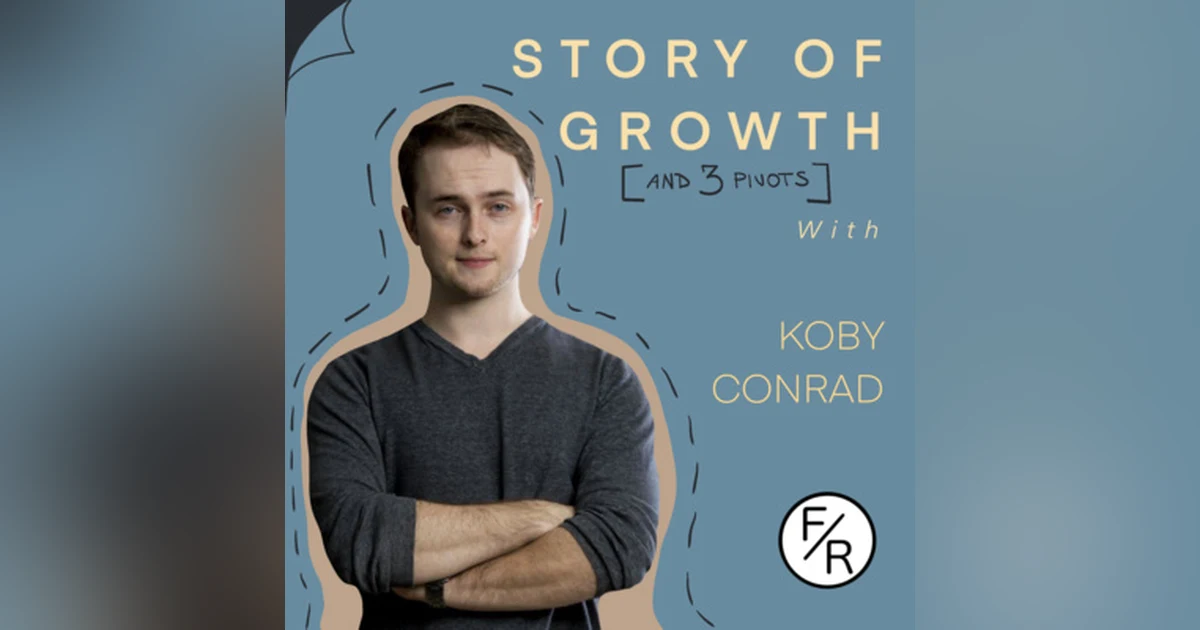


Koby Conrad, Head of Growth at Rupa Health and Founder of Channels of Growth talks about his experience building a company and pivoting 3 times. He also explains what growth management looks like and who should be dealing with that field.
Koby's LinkedIn: https://www.linkedin.com/in/kobyconrad/
Subscribe to Channels of Growth here: https://channelsofgrowth.substack.com/
Course on fundraising by Fundraising Radio team: https://fundraising-courses.com/
Rupa Health's site: https://www.rupahealth.com/
Some topics we have covered in this episode:
- what does your day-to-day as a growth manager look like?
- what do you think are the essential skills for a good growth manager to make growth really happen and to run a successful growth team?
- you were previously a founder, your company got into YC and then you've raised $2 million for a completely different company, why did you decide to pivot?
- how much of the current knowledge of the growth management field did you have back then?
0:05 They're releasing to fundraising video a podcast about fundraising for early-stage startups, the major rule that we follow here is no bullshit on this podcast. No music to relax, you know, advertisements of our sponsors. We only talk about fundraising here and nothing else. So let's jump into the episode. And today is a guest speaker. We have Kobe cornered, head of growth, adds Rupa health, and also the founder. ER, and this episode, we'll talk about Rupa Health, how they have fund raised? How Kobe is managing their head know that? Nope, never mind. Hmm. We doing are we doing redoing the whole enjoys? How Kobe is managing their heads, seriously?
0:45 All right, yeah, my defense in my defense. I'll see them running a little bit low sleep, but hopefully second run is gonna go a little bit better as many times as you want, man. No rested. All right, perfect. Hmm. All right so I can try and today as a guest speaker will have copy convert head of growth at rubra health and also the founder and this episode will mostly talk about, what does it mean to be the head of growth? How to actually group companies? What does it imply on the daily basis and how founders of smaller companies that have not raised hundreds of millions dollars? Can actually hire heads of growth or higher growth managers so Colby Let's kick it off by you giving us some background on yourself and on Rupa Health to get started. Absolutely.
1:36 So hi. My name's Coby and I run growth, a triple Health. Um, what should I say? I don't know. It's been a really fun journey. I was able to come in as the first growth marketing higher out Rupa and it was really fascinating just being able to just build up the team from ground up and then watch as Rupa has grown over time. We went from a twenty million dollar seed stage valuation to we gesture. Announced 110 million dollars series evaluation. We raised about 20 million dollars. And personally I have about 10 years of experience running growth and marketing campaigns. I've worked on campaigns up to five million dollars a month and previously, YC alumni ran a marketing agency for four years was National National advertising director for you as mortgage Corporation and of done. A lot of fun growth and marketing work over my my days. Nice.
2:30 Yeah, it sounds pretty fun. Running campaigns of 5 million per month, that is quite impressive and we're definitely going to touch on to that but a little bit later first things first. How does your day-to-day look like? Because girl, with managers, they do a ton, a ton of different stuff in. Sometimes is quite a bit of a struggle to describe and you may view onto that in one of your posts on sub stack explaining what you actually do and how to explain to other people would has of growth. Do so good. We can Explain to our listeners would do you do as the head of go that route but specifically. Yeah, so my job is changed drastically from when I first came on to where it is now and even where it is now, it's evolving, really really rapidly.
3:17 So when I first started, I was basically a one-man show and with a very, very broad mandates of growing the company. And I think those broad mandate is one of the reasons why why the growth teams between organizations vary. So drastically is like you have like the Facebook OG growth team, where it's very engineer, and p.m. heavy. Ours is definitely focused more on demand gen although occasionally I do get to do some fun stuff working with them the product. So we do a lot of Partnerships, a lot of marketing across Facebook and Google. We also handle the sales. So I built out our onboarding management team and then hand that off to customers.
4:00 It's currently building out an SDR team is one unique thing about Rupa is our education, team runs underneath of growth as well. So we do a lot of live classes. We have one coming up. We have like 700 doctors that are gonna be on it which is really awesome. And then yeah basically it's a really really broad mandate um at the start we did a lot of stuff that was more operationally focused as well. So like how do we like Hire engineers and create a team that like, really good Engineers. We want to come. So I worked really closely with a good friend of mine Ben and our co-founder to be able to, like, build up our engineers and run the hiring process.
4:43 And they kind of have that fleshed out now, which is awesome. So, I've moved into other things. Like, how do we make sure we're working with legal to make sure our margins are maximized in a way that make legal sense for our company, and bunch of fun stuff like that, right? So, From the description, your job sounds like the VP of sales right there. What is the major difference between you and VP of sales? So I think a VP of sales that can get kind of broken down into two like two categories is if you're if you're a VP of sales and you're in a sales LED organization. Usually your primary primary channel is like sales so when I say that I mean it's like it's outbound cold calling or like email sequencing like Str type stuff, it's going to events and like showing up the sales people at conferences.
5:39 But then there's also this like sales category or work. That's like okay. If you have inbound people, how do you convert those people to paint customers. So like actually explaining complicated deals to people. And all that's really fun and fine, but there's not usually a ton of operational components to it and there's not usually a ton of once the sale happens, the job ends. And I think that's one of the coolest things about growth is that the Concord job of growth, never ends at any point in the users life cycle. So we use the AAE our framework, so acquisition activation engagement and retention.
6:19 So how do we acquire as many users? As we can, how do we activate those users? Get them to start placing orders and then how do we increase their engagement? So once our users are en route, but how do we get them to use our product more? How do we get them to place more orders? And then we also, Very, very heavily focused on retention of how do we make sure that those people never leave us? Because if we're, like constantly turning users, because they've had a bad experience, or there's something within the product that they don't like, or something within the product that's missing as you get bigger, you're like basically putting people on the top, which is what a VP of sales might do. But then you're also losing people at the bottom that are like, falling out of your bucket. So it's a lot more Broad in the mandates of what we get to do. And what we get to work with, right? So it sounds like being big head of growth. It's more fun than being the VP of sales. All right, let's see how it is.
7:20 Okay. All right, so let's let's touch on two very interesting subject, which you mentioned which is building out the SD our team. This is a very, very interesting subject for a lot of our listeners because a big portion of them are just getting into the stage of tons and tons of our bound to generate this initial growth and to actually start creating On the inbound, eventually. But at this point, the majority of them are at the stage where they have to actually reach out to the potential customers in order to, you know, get a foot in the door. They don't have that much of inbound. So let's talk about hiring sdrs. First of all, what is The major problem for you in this process of finding you as the ours, where are you looking for them? Are you looking exclusively in the u.s. because rubra health is based in the US?
8:04 Or are you looking all over the world? Let's start with that one. Yeah. So we're looking in the US. I don't have any super major preference about location where we're looking for. Its SDR is probably the wrong word. We're looking for people who are really, really good at Cold sales and can almost whole life cycle. Usually Str, it's more like an appointment setting roll. Yeah. They're, they're like actually owning the whole sales process group is a funny industry because We make a lot of money per user, but there's not that many of them, some, some Growth work, like I mentioned before, like working on a campaign of five million dollars a month.
8:48 That's really cool. Rupa is really cool because it's more about how do you target an audience? That's really hard to Target. So with that logic, where we want to build up a tiny sales, team of really, really good sales. People that are able to go out and basically work through our be with like a fine-tooth comb more than you could do it, like Facebook ads, for example. Yeah. Look in the u.s. looking for anyone who is like just super, super killer a sales, we have a head of practitioner Partnerships called Adrienne and he is it's basically our outbound headed outbound sales role. So he, he's been running an experiment for the last two months basically, testing the waters to see what the results of this role might look.
9:38 Like if we hired someone to do it full time and yeah, we had really good results, so far. So the next step is we ran our experiment, the experiment determines that this might actually be super profitable for us. So next step is go higher maybe one or two people full-time and slowly build up from that nice. That is very interesting. Super excited to see how that goes and please keep me. Posted the next time we're going to talk is probably going to be windy episode is going to go live. So I'm pretty Uh sure you're going to have some updates on that but for now quick question about targeting people who are very hard to start it. But as a very big pain point over a lot of our listeners because quite a few of them are actually in either deep tack or not.
10:23 I forgot the word for it. The big companies, how do you call the big companies? Could we help me out here like, big corporations? Like what do you mean? Yes, big corporations, what do you call it? There, there's a term for them. I'm not sure enterprise Enterprise sales enter politics, that's what I was looking for entry price. So a lot of our listeners are actually working with Enterprises and quite a few of them are not like professional professional salespeople, or at least they're not specialized and Enterprise sales and targeting through Facebook ads. That is just not a way to go there. So, for you personally for your team, how do you, how do you figure out how to find those, you know, hard to Target people? Yeah.
11:08 So for us we basically went out and anyone, we scraped our whole industry is the okay. This way as we basically went through Google and we found any practitioners in the United States that identified themselves as functional medicine and then we scraped all of their domain names and then we put them in a big sell sheet and then we ran that through Hunter I/O and fan Ghostbuster. Okay, and Buster and synbuster, one of the two. Anyways, we were able to pull out all of their contact info from those two things and we were able to create a database of basically, every single practitioner that had a digital presidents within the United States with the contact information.
11:55 And then once we have that contact information, we're able to do a bunch of stuff with that. We re and we actually were able to create Facebook and Google audiences off of that to run ads towards them. We had their Dressed. So we are able to cold call them. This is one of the reasons why we want to hire an outbound sales team is because now we're able to like go having a human work. The leads is a much stronger impression than just like hats or but yeah it's it's Unique for us just the way we did. It was very unique to our industry but there's lots of really cool ways to Target people with my sub sack. I wanted to Target everyone in the United States.
12:36 Who has growth in their title. So I was able to use Apollo and basically just pull out all that information, Founders that want to Target like startups, you could pretty easily go on, like product hunt and Hacker News and just like scrape. The, the list every day of everyone who watches and then run that through similar tools like Hunter. I owe it. We live in this, like, really cool period of time. Where as long as you have the domain name, you're able to get all the contact. And so that's, you know, Mein name and basically just send them cold emails and you can get really high open rates. It's crazy. Absolutely! That is very true and that is how I met Toby and that is how I subscribe to Hibbs. Self stack eventually became the paid subscribers. Yeah, I mean it works.
13:24 God dammit? That's that's why I'm Barry. So on this note I'm gonna last question about sales and then we're going to go back to actually talking about fundraising. But one question I had about seals here. Is it Escape my mind? I'm going to try to grab it. It's gone. No worries. That is unfortunate. Oh well. Oh well, oh, scraping that's the question. I had scraping was personally. So I personally love that approach. I've done it quite a few times but scraping was always the hard part for me. I always struggle with it. I spent hours and hours, find new tools because some of them get banned. And what you'll do you use and how you know, how frequently does it get banned for scraping specifically. Yeah, so there's Over ways to do it. I always just hire someone to do it on. There are a lot of really good people on up work who have awesome python scrape, Python scripts to like, go and do it. If you are a programmer lie, if you're a programmer inhibiting level of programmability, it's actually not that hard to build a lot of trails that are like how to build a python scraper and like a couple hours.
14:41 Also, if you have access to Any engineering resources on your growth team usually, they'll be able to help you out as well. Perfect. And how much would that cost to hire someone? Just so that everyone is on the same page with their expectations on how much they're going to spend on this whole thing on up work, you we usually pay anywhere between like 1 cent 25 cents per record. Okay? So it's four record, interesting, good to know. All right, perfect. And that's, he's, let's move on and talk about major subject over the entire podcast, which is actually fundraising now A worker growth and sales. Let's talk about the company that you personally ran. So you have mentioned, to me, that your company actually got into Y combinator, and then you have right after getting out of Y, combinator, work shortly after you have pivoted and then raise money for it, specifically to million dollars and then you have to it again.
15:33 So can you briefly? Tell us this very, very interesting story and let's start with you getting into y combinator, Yeah, absolutely. Um, okay. So it really started with my little brother. Honestly, my little brother graduated school and went out to work at segments and in San Francisco. And at the time I was still working at us mortgage and my brother was like, you should quit your job and sell your house and should move out to San Francisco and I was like, that sounds like an excellent. Excellent idea. A little brother, let's do that. So I quit my job and sell. I sell my house. I moved out to SF and about six weeks after I get into San Francisco, Evan applies for y combinator and he's like, Kobe. I applied for this, you can't tell anybody. And I put you down as my co-founder and I'm like, oh shit.
16:25 Okay, so we get called, we get called for an interview and, um, it's hilarious. Like we go down, we go down there and we talked to the partners, and it's there like 10 minutes long so you can directly, we get out of the thing. And Unlike collapses, on the couch. And anyways, we get the call later that we get in and I'm like shit. Now, I have to quit my job again. Um, so we got in as a company called cork which was cognitive behavioral therapy on your phone and the the product was really cool people. Really liked it, I think therapy and mental health in general, kind of has a fatal flaw of everyone's really hyped about it, but nobody wants to do their therapy exercises. Has, um, so we were able to grow the app and we were able to get a lot of like initial traction with it. Even even our Apple search ads had a three hundred percent ROI on them, so it was growing really possibly the issue. Was that after 30 days, people's daily usage was that even though they're paying us money, the daily usage of the product was like, less than 1%.
17:37 So we were, we were in this like dilemma of We got into YC with this product and the product was growing and it was very profitable but nobody actually used it. Like, we were basically just making money off of people not cancelling their subscriptions and like feeling bad about canceling, their mental health app. So we went, we went through with you this. We we did this for demo day and we raised like a little bit of money. I think like, 100 200 case something like that, but ultimately like there wasn't really Real product Market fit. We're just really good at selling shit. Um, so we decided to Pivot and we pivoted the company into a company called room, service and room service was a conflict, free replicated data type as a service. So if you've ever used figma or word doc or any product where multiple people can collaborate on it on the same time that piece of software that lets multiple people use it. At the same time is actually extremely complicated to build. Google.
18:42 It takes like a team of Engineers they spent millions of dollars on their system that allowed multiple people to use it. So we basically made that same system and we like let other people use it within like 15 minutes instead of having to spend like a year building this thing. Um, so that is really interesting because I think it highlights one of the really interesting problems of early like fundraising for early-stage startups. So when we raise money for this, we had basically, we didn't have really a working product. We have a working prototype and we had no traction and compare this to court. For example, which we had a working product, we had traction, we had Revenue, we had revenue, and we had tons of users that loved it.
19:33 And when we raise money for room service, it was drastically easier. Like, oh my gosh, it was so much easier to raise money. For room service than it was for court, even though, like, we're raising money with, with no product and no user, no real project, no users. Um, and I think it's one of the most interesting things is that like when you're raising really early-stage funds, so much of the Rays is predicated around the vision and the team we were we were able to sell the vision of like, look at this really hard problem that were solving and look at all of these really amazing collaborative. Addicts. And if we can build a thing here, we're going to be able to make this like really, really huge and rooms and cork on the other hand was, like, kind of stuck in the mud.
20:22 And what I mean by that is, like, once you start having metrics, the people start, looking at the metrics, but we will have an Ethics people. Just look at the product in the dream. God. And I think this is one of the reasons why you see so many startups are like, we just raise this really huge seed round of this really huge precede. You look at them, but they don't even have a product, they have no users and it's a, it's a real thing is when you really early stage so much of the raised starts to revolve around the dream that you're selling. And as you as you go through your rounds, it becomes the dream is always important but the the metric start to become more and more and more important.
21:07 So it's like, doesn't really matter at the proceed on that the seed and it can actually get in your way because it makes the product not look as good as the dream and then we get into your a and your B at the metrics become more and more important. But anyways, I digress. So we raised, we raised almost two million dollars of room service. We had a bunch of really really cool investors came on board that I'm eternally grateful for betting on us eventually. We decided that room service wasn't didn't really, we never really found product-market fit with it. After building it from. A year. So my brother and I we decided to pit it once again. Um, and I'm a grown person if I don't have anything to grow.
21:50 I get a little bit bored and I didn't want to just like eat up a salary and not have me be building anything. So I let would rather continue on with the pivot. I believe a companies currently called strange mood. And I went on, I had one of my best friend's was a co-founder room service and he's like, Kobe should come help us build this. So I came on board with rooms service which had really, really obvious basic pmf and help them grow that googly-eyed. Absolutely love this similarities between your story and the Silicon Valley show Kobe. You should watch that show. I mean, it is a must-have.
22:30 The fact that you haven't seen, it is insane at. This is literally exactly what one of the character was saying. Once you have the metrics, the investors won't keep saying that it's not a good enough for us. If you don't have the metrics that potential is unlimited and it's just, it's exactly that. I remember, I forget wish which investor exactly because like, yeah, we don't really invest in like, three seed companies and it's like, They have a lake. It takes it takes a while to build a good product that people will invest product. And there's like this, there's this Gap in the middle between like having a really shitty early-stage product and having something really polished and until you have something polish, it's hard to raise money on the product.
23:17 So like I it's, it's a dichotomy. It's a hard problem to solve. Honestly, this is epic. I mean, first of all, Again, I cannot stress enough. How important the Silicon Valley show is to every single person in this, Dark Worlds. I keep advertising this show over and over again and I do believe that is one of the best shows for everyone who is somehow involved in the startup Universe. Because first of all, it is absolutely is secondly, it kind of is true. It really is, there are so many similarities they see between real life and this show. But anyways, back to the fundraising process and specifically About how you have managed to raise two million dollars for product that didn't really exist with no metrics and how you have managed to tell the story. So, a lot of our users, of course, don't really have the product Market fit or the remaining product that they've built out on Bubble or something like that. How can they tell a story in a way that can get them two million dollars, which hopefully can get them to a better product and to hopefully product Market fit? So, you know, it's funny.
24:32 Okay, a couple things. So, first of all, there's a lot of pattern matching that goes on investors, especially early stage, investors are looking for a bunch of really specific things. So to begin with the early stage startup world is extremely biased towards people who are really good at building things. My My, my little brother is a software engineer, and he worked at segments, and he's like, very good at Building Products. So, what investors look for, especially the early stage is, like, first part is, who's on the team. And they have things that they're specifically looking for, which is they want a team of Founders who seem like they can build really hard things and we never really found pmf. But my brother, Evan is literally the most amazing engineer I have ever met in my life. He's able to go off and build something like room service, which solves like cutting-edge problems for conflict-free, replicated data types as a service that like are really, really hard to solve.
25:39 So that's the first thing is like pattern, power part of it. The pattern matching is they're looking for specific type of Founders part of it, which, which is important. Like, maybe you're not like the best software engineer in the world but they are looking for people who can build things and that's not Not that hard of a skill set to do. Like it's it is one of the hardest lessons that it took me. I tried to not become a software engineer for about 7 years, but it's not that hard to learn how to code and having just a basic understanding of how to build things allows you to position yourself a lot better. Second thing is a I'm I've written a little bit about this but I'm a huge advocate that one of the clearest signs of product Market fit is when you spam people and they love you for it. Yeah.
26:29 And what I mean by this is like if you send a cold email to someone and people are like, I don't know how you got my email address, but I freaking love you for sending you information, build. Whatever it is that they what you just told him about, and this plays out like a ton of different ways on it, plays out through Facebook, As it plays out through, people tweeting about you on Twitter, it plays out through cold email for room service specifically. There's a nice man called Justin and Justin tweeted about us on Twitter and at the time we were like basically building this in stealth and we had this landing page up, but like we weren't really telling people, we were doing it and it is went viral on Twitter like the he basically launched it for us before we were ready for. Um, and I think Like that is like one of the clearest signs that you're building something that it was worthy of being built, is that like it just, it has a net really, really high engagement.
27:30 Just naturally, we saw with Quark saw with room service. Um so it went viral on Twitter and then um the next step is um creating moments of Leverage YC does. Really well built into YC, right? The concept of demo day of putting Founders on a huge stage in front of thousands of investors and they don't do that. Just to help Founders raise money. They do that to create leverage for Founder's is have a bunch of investor conversations all at once and that's one of the hardest things to do when you're not going through an accelerator is creating moments of Leverage and that's one of the reasons why um You can combine pattern-matching. So making yourself look like an investor or making yourself look like a Founder, specifically a Founder that should be get invested in from the tech world.
28:30 So like be like, I'm a Founder on Twitter and Samm, you're a Founder on LinkedIn and just basically put that into the world. The hey, I'm a Founder, I'm working on the startup and then build something that people have a ton of Engagement with and then launch it into the world. So do your Twitter launched, do your product hunt launch, do you Hacker News launch? And as long as You get a little bit of Engagement, you'll actually get a bunch of investors that start reaching out to you. And I think what a mistake that a lot of people do is they just immediately start having those conversations so people will reach out and then yeah, I'd love to meet with you and then they'll meet with the founder or they'll meet with the VC and they'll basically slowly burn through all of these relationships and what we did instead was we told everyone thank you so much for your interest in investing in our startup, we're actually I'm not raising funds right now but we will reach out to you. The moment.
29:22 We are. So we built up basically this wait list of investors that wanted to talk to us and because we weren't, we had already burned through our demo day. We didn't have another dominant. So we built up all these investors and then we waited we just push it out like a month or two. And then we had conversations with all of them all at once. And we were able to use that to create, basically our own mini demo Day by creating leverage of people that we had built up. And then that allowed us to get our initial little bit of traction in that round and then, um, yeah, combination of all that. Ultimately YC like definitely did help a lot.
30:04 We got intro to some really amazing investors through people. We met through I see. But yeah, perfect. Yeah, I mean fomo is extremely important fear of missing out is the one of the number one Dragon factors for all investors. Every single one is shitting themselves about missing out on an opportunity like investing slack or Discord or Zoom or any of those. Those players that have made it big and because there are tons of stories about Investors missing out on billion-dollar opportunities right there. So if you can leverage that, definitely definitely go for it and stack up your meetings.
30:45 If the investor wants to keep talking for another 30 minutes after your time is over, you should just cut them short save. Sorry I have to go prepare for another meet. I have another meeting with investor and fix a man's gotta go. But lovely talking to you we'll catch up later and discuss, you know? The details. So do that and make them make them move. Otherwise investors just love dragging out shit. That's just what they do. So on this note, go be you want to say something? Go and then we'll move on to the very last question of today's episode. Yeah, literally. That is, um, if you talk to them one at a time, one at a time, you you have no leverage to get them to make engine.
31:27 Yeah. When you're talking to a bunch of them all at once, They'll ask you where are you in the fundraising process? And you can say, oh well, I have 10 other meetings set up this week and they're like, oh shit. Okay. And it it creates it creates, leverage, to get them to make decisions. Absolutely, there are a bunch of different strategies about doubling down on that. Fear of missing out. There is a way of slowly increasing your valuation or the cap for your convertible notes and that pushes the investor further. Even, you know, if they know that there are ten other investors willing to talk to And that if they don't invest. Now, the next time they're going to talk to you, the valuation of your company is literally going to grow within a few days, they will move.
32:09 Its so do that research. It and of course, Shameless plug in here of our course. Because that's exactly what I'm talking about in the course of reaching out to investors one. And one figuring out how to build that fomo explain those other strategies and how to actually locate them from the legal perspective as Well, on this note, let's move on to the very last question. So Kobe would do you want to do? No, wait, no. I'm going to have to re-record that last question. No, wait, what do you want to do? All right, on this note, let's move on to the very last question of today's episode, which is a call to action. So Kobe, would you want to listen to do as soon as this episode is over?
32:53 So, if you're interested in fundraising, I would definitely go and sign up for a Constantine's. Course, I was going through a bunch of these episodes, there's over 300 of them, which is just an insane amount of knowledge that's been accumulated. I think that's really, really cool. I have to give some major props to your content marketing here, think 300, 300 episodes articles or anything like that is insane accomplishment. Um, and yeah, if you're interested, Growth of marketing. I have a subset called channels of growth go sign up. It's join, you get all the Articles or the most recent article for free, and it's like six bucks a month if you want access to all the content. Yes.
33:34 And it is great personally, subscribe to events, and personally, loving this stuff, because I've actually discovered quite a few tools for that sub stack and one of my favorite Discovery. So far is a polo amazing tool 11, it's going to imply going to use it for both my day job at first base and for the side project, specifically distribution of the course and helping other Founders actually spin out their affiliate programs that waste so great place. If you're liking some resources, if you want some extra push definitely go for it. You're going to find some good good stuff there. And as always have a good day.