Fundraising for an open-source startup, how do you explain it to investors? By Michel Tricot, Airbyte
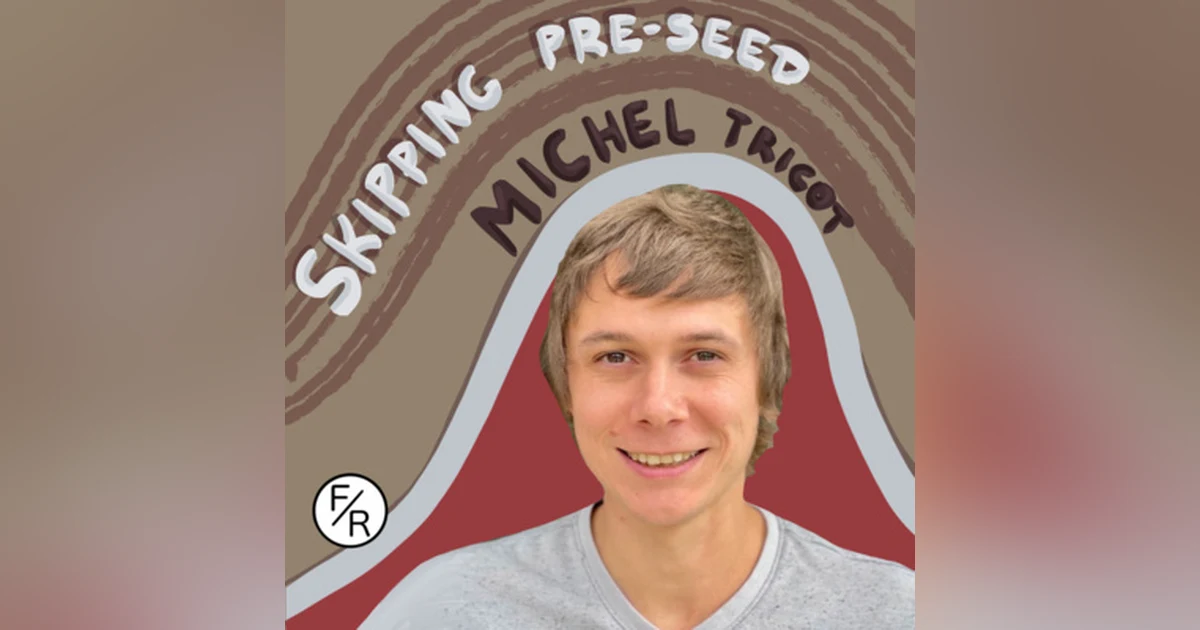


Michel Tricot Co-Founder at Airbyte talks about raising capital for an open-source startup. We talked about how Airbyte plans to monetize and how they managed to get into Y-Combinator. We also touched onto the effect that a good background in a relevant field has on your fundraising efforts (spoiler: it makes fundraising too easy)
Michel's LinkedIn: https://www.linkedin.com/in/micheltricot/
Airbyte's website: https://airbyte.io/
Link to our course on fundraising - The Science of Getting in front of Investors: https://bit.ly/FRpodcast101
Here is a Tech Crunch article on Airbyte if you would like more info on the company: https://techcrunch.com/2021/05/25/airbyte-announces-26m-series-a-for-open-source-data-connector-platform/
0:05 They're releasing to fundraising video a podcast about fundraising for early-stage startups, the major rule that we follow here is no bullshit on this podcast. No music to relax, you know, advertisements of our sponsors. We only talk about fundraising here and nothing else. So let's jump into the episode. And today's guest speaker, we have Michelle to record co-founder and CEO at are B. And in this episode we'll talk about how they raised over thirty 1 million dollars up to date and how much Michelle's background in data space and specifically over 15 years and data space. Help him raise the rounds for are B. So Michelle, let's kick it off by you, giving us some background on yourself and on are bite. Of course, thank you, Constantine for having me. So a little bit about myself.
0:53 So I've been walking the data space for the for the past 15 years, different scale, different type of use cases, whether it's like financial data, whether it's customer related data, are you to data? And yeah, I've been living data teams over the past few years. I would say, one, one of the company where I got the most Battle Scars about what we're building today. A company record live Ram, which I Journal was a very small started. By the time now it's a public company and over there was leading a team of 30 30 people and we basically build maintain and scale thousands of different data integration.
1:35 And that's basically after Labor and went for a different company that a team to solve a similar problem than 2020. That's when with my co-founder we decided It to start our B & and really tackle, the problem of getting data to move from point A to point B, without having to think about the complexity and the technical complexity that goes with it. So that's what it says there. All right. So in that case, the first question is actually about the structure of your company or the structure of the product itself. So your structured as an open source product, which I to be completely honest, after years working in the industry, still Didn't understand how you monetize that thing.
2:21 So let's start with discussing desk, at least understand what's going on here. So first of all, how do you monetize an open source product? And secondly, how do you investor react to? The fact that is open source or to most investors understand how this works unlike me now, of course. So when you think of open-source, I think you can always make the parallel between an open source product, especially early stage. And non across first product where you're going to measure very similar metric but maybe this one's will not be tighter on you, but they might be tied to adoptions in might be tied to contribution and basically engagements of your community to really like show that this is a project and a product that people actually need. And that after that it's a matter of fact figuring out okay.
3:16 Now that I have this huge reduction in We went from zero user to hover 5000 users in a matter of one year and I think that shows a lot about how the market has been evolving around in the product that for Billy. And in general this is a metric that is so impressive that for an investor it's easy to make the piling. It's just now matter of like figuring out, what is the right trigger on? What I have, the type of features that you need to monetize to make Get a paid product. But for us doing, open source, was really a matter of getting adoption and creating the standout for the program or solving and other option is the most important is like getting production usage from your principles project from the open source. Community is the most important is, and now we're focusing on the monetization.
4:08 Nice. That's interesting. Let's, let's talk about the monetization. I will literally start out my purchasing career. I'm not going to call that a career person. I started my packaging journey by interviewing one of the co-founders open open source project and they had about 30,000 active daily users, which is an insane number, especially at the time of like 2008, when not, everyone was using internet and they feel because they couldn't monetize their this product properly. How exactly do you plan to ensure that you do not repeat the mistakes of other people who have tried to, you know, go from open source to monetizing the open source. So in general, when we think about open source, we think about you know, when you you're looking at acquiring a product for your organization, you always have this thing between Bill versus by and depending on what exists on the market and what what are your requirements?
5:07 You might go for building. You may go for by and open source is basically here to replace the build. So it means that it's going to solve very specific you Us cases my solar program for a small team or an individual contributor and that has been our philosophy behind. How we BL are B, which is we want to make sure that everything that serves the need of an individual contributor and a small team is open source. Everything that serves the need of an organization, which is generally. Something you would be buying, then this is not open source and this is something you have to pay for. So weather is by building additional.
5:48 Jurors or like security feature compliance feature user access management. Feature, it's all about whom. Do you want to serve in the organization? Nice. Those. That's true. Yeah, I hope you figure out properly and I will not injure you years later down the road talking about how you fake mistakes there. But let's talk, let's talk about the major subject of the entire podcast, which is fundraising. And what I saw one we were talking with you on the prince recall is that you've actually skipped the precede ground and started raising directly from see grounds. I forgot the exact number that was in the seed round but it was definitely Seed round. How exactly do you manage to keep the precede ground?
6:30 Even though you have an open source product, which automatically makes fundraising quite a bit harder than normal fundraising? So I wouldn't say we skip the proceed. We did some proceed with Angel investment. Most young people that we've worked with in the past because building a software like the one we're doing requires a lot of investment because it's solving a very messy, very big need and it requires a lot of customizability, a lot of features to be fully so that organization can fully adopted and so we did ready to proceed.
7:10 And we actually also did y z in a January 2020. So part of that, part of that initial fundraising, we had like the waist here the way I see it, check That's after that, we started to do a seed last like in I don't know, it was May 29th 2020, but what you did is really and that's what we to make sure we can build the technological asset and its really in November 2010 key that we raised the largest chunk of the of our students and we did it on several stages.
7:55 At that point Interesting. So let's let's talk about how he reached out to you. Those especially proceed investors. We mentioned some people that you worked in with in the past how do you reach out to the angel? Investors who you might have not known as well as your ex colleagues. How do you reach out to them now with like product proceed? I think you need to have people who can we know you would trust you and we only focus on people that we work with in the past. So I don't think we've had The problem of like reaching out to people that we didn't know. So for the proceed, what we are looking for is also to surround our set. This was not just about the film that we weren't getting.
8:37 It was also about the like the fact that the people we want to bring in where people that could also be helpful to us and could advise us on like the product, the company, the problem space. So it was both fundraising but it was also about bringing in Advisors for us. Hmm, as precedes always should be. That's, that's right. Way to do this. I would imagine that for the follow-up rounds. You couldn't just raise from your, you know, Inner Circle, the people who knew very well because I was just too much money and very few people can afford to do this stuff so I would imagine that you did reach out to quite a few outside investors.
9:18 How do you approach that? Do you reach out to a very specific experts in the field? Did you reach out to maybe people who work with data? But not not not necessarily investors and just you know, try to convince them to actually invest or how do you approach that you mean father proceed for the seed and Fallout for the city? Yeah. So I'm just going to focus on the one we had in a November. I think we, we had a very like the industry of data had a lot of very strong exit during 2020.
10:00 You had you had segment, you had snowflake, you had, and you had a few others like that. And I think it has awakened how people are looking at data and the pieces that were unsolved in the data integration. Because the typical example, you had snowflake is a is a super Efficient, great data warehouse. But ultimately if you cannot bring data to it, then that that becomes an issue. You cannot favorite the way you want. And we had some contact with investor that we've created over the past the past month.
10:41 And when they saw the soft launch of the products, they started reaching out to us. And we've received 50 60, 70 emails from investor and that's probably also why Having worked in the dairy industry, having the experience of build like a serving that kind of foreign can help because investors are looking to de-risk, also the investment. So, if they see someone who's been doing it in the past, and have been successful as a doing it, that obviously, make your story a little bit less risky. And we, what we did is we actually asked all of them to to talk to us a few months down the line. And what we did is we basically schedule all this call over the course of two weeks.
11:29 And then we started like we continue to focus on the product until that week of these two weeks of tenderizing arrived, but it was really about grouping everything to make sure that one we keep our focus on building the product because building the products probably, one of the most important thing you need to do but also to make sure Sure, that we have the full picture and the full context and we're very, very focused on this fundraising. I cannot agree with you on building the product and it being the most important part of it, but that, that might be the case in deep Tech or at least closer in deep Tech than, in other fields.
12:13 But yeah, you mentioned, why commentary? So let's talk about that on our print recall. You mentioned that you've actually slightly changed. The idea behind are B after you raise the seed round, which erased during way, see ya. Just attack your series a did Investors were investors concerns. Do you have enough? Do you get enough Milestones? After you've changed the idea to new idea, or was it more like, you know, kind of seed approach? Yeah. So and that's why we're basically grouping the early. See that we've done in 2020 with the one. We've we've done end of 2020, so sorry beginning of 2021, but When we came into YC, John and I had a very good understanding of the problem space that we wanted to address.
13:11 And when we were at YC, we started to build a product. And we're getting some very good traction on the product, and we started to get pulled from from investors while we were at YC. And what happened on May 8th, March, 15 is that covid, hit us. Close down. And at that point it was fire heavy. When like whether it's on like portfolio company of disease or whether it's on the marketing team who were building a tool for marketing teams and we managed to a to fundraise with the, with the early signals, we're getting on this issue of product. But what covid showed us that that one is the product.
13:52 We are building was more of a good to have more than something that people actually need and we were getting Harder and harder time, like closing deals. And at, that point, what we did is we John and I just sat down and said, okay, this product is not going to be is not going to make ourselves is not going to make the the company successful. And you want to make sure that when you have that kind of signal you do the best for what, for what for your investors, and what we did is we reached out to them and tell them, you know, the project that you invested in is not going to maybe we don't believe it's going to be a successful product and we're going to give up and at that point it becomes. A matter of fact I have you picked the right investors because investors especially at the silver level, they are investing on your team.
14:45 They are investing in the files and at that point, I said, okay, fine, that's that's okay. We invested in the gym, like in the process, you have to validate or invalidate ideas the way you, your ability to You to recruit and surround yourself under for with the right people. And in the end, what they want is just to make sure that things move forward. If we were just going in the direction of building in the wrong product, the not going to, I'm just going to do good either. So that's why it's not that was not the issue and yeah and the Futures program to be to be correct in the injury we made the decision to Pivot with like the dying. From our investors, we we we work for 33 months on releasing an MVP.
15:36 And after that, we finished the house around. Nice and yeah, I mean, most investors are very cool that work if you choose investors right? If you're very transparent about the pivot, a lot of them are actually happy about it and even more excited about the new idea that you're working on. So yeah, Founders. As long as you don't just, you know, hide out and ignore your investors, you can Just fine. So yeah, happy to hear Michelle, that it went well. So let's talk about the thing. That was prompting in the beginning of the episode, but have not even touched on to that quite yet. You've been working in the data space for over 15 years.
16:16 Did that actually help you fund raise? Was that a big? You know, like in a huge trip did you put it on your slide deck somewhere? Or do you just, you know, in the first 30 seconds of the pitch, did you? You scream out, I worked 15 years in data industry. Or did you just you know barely touched on it and it didn't have much effect on the fundraising? No, it hasn't. It is important. And now I know that not everybody has had like 15 years in data and someone else straight out of college studying could accompany but definitely, you know, Yeah, that started I said, stop studying a company's how so everything you can do to make it successful, whether it's by having successful, fundraising like, or like hiring the right people, you need to do it. So if by really talking about my experience and my founder, my co-founder experience like if that can help the story of a bite, you have to say it's because it will give you potentially better terms on fundraising you. Have access to.
17:26 Those are type of investors, etc, etc. So everything that is in your favor, you should use it during fundraising because that will give you a hedge. Compared to a certain enzyme might be like one of those often trying to do their product. But if investors you one of the teams and one single, tell them how these two Founders have 15 years of experience behind them. Wrong eyes are building companies are building data product. Maybe that's a better investment than someone who never done it. 100% that definitely helps. I just wanted to hear from you, just as a confirmation. So let's let's talk about one actually, they're right. Maybe two last questions in the episodes. One of which is one of my favorite which is what do you think?
18:14 Were the major mistakes that you've made while fundraising? So you know, if you could teleport back in time three years ago and start fundraising all over again. What would you do differently? So that's a very hard question because the way I think about it is I don't have regrets for the best because I am in the present because of what I've done in the past so I could tell you maybe I wouldn't have dot not done the first fundraising but actually I'm glad that we did it because that's we got access to two people and two teams that we did not have access before and that helped us figure out the our pivot. So, So, fundraising wise, I don't see something that I consider to be something bad that we've done. And I would say that this thing, I would advise people to do when they defend raising is, make sure you understand the The motivation of the people investing because you're basically getting married with investors until the exit of your company and you want to make sure that they are very much on board with your vision, with your team and that that has a lot of that will have a lot of impact on the, on the, the success of your company Kikyo.
19:47 Pick your investors wisely. Absolutely 100%. That is true. Speaking of picking the investors wisely any recommendations on that, because I mean families have to speak to literally hundreds of investors and they also have to build a company. Meanwhile. So how can they make sure that they understand what actually motivates the investor? I mean you're not going to ask a question like hey investor what motivates you in terms of you know why G Investment Company and expect like 100% honors honest answer there. Any advice on understanding investor better. Any advice on game? The driving forces behind the investors decisions better? Yeah, I mean I can't give you my perspective with my Corners. Yeah.
20:31 It's both axial and and Benchmark. So when we when we raise end of 2020, we basically we will not, we did not really need Capital at that time because we had raised a small seed Earlier in the year and what we are looking for is who are the investors that we want to have for either Series be as absurd as a receives a or like to continue our C and you can very quickly. So, first of all, you want to find an investor that understands the like first was that understood open too? Us and help how open source can be a successful business. So like if the first question you get from an Investor's that and you're talking to them about open source and your at the situation, the first thing they ask you is like okay how do you commercialize?
21:32 Yeah this is not right, this is not the right signal because building some commercialization around open source text time and you want to make sure that you're working with people at that patient, that will give you the right advice that I've done it. Also in the past, So that allowed us to basically narrow down our selection. And then, what made the difference, for example, when we when we went with, with a meat ax L was, how much can they push your thinking around your company and your product and your strategy? And, you know, I remember it was a Friday just going on the weekend.
22:14 We received a large document and it was a Walking document with Emmet and we're discussing about all the completion. Like what what's making us different as cetera? And I think the way it was like helping us Like be more precise with how our strategy was a very, very strong signal, because this is what you want from the people you bring on board, you want people that elevates you, and that is make that help, you be better. And that also understand what open source and open source medication in. So, that's how we went for, for example, not for Benchmark.
22:56 It was a very similar process. We we met with Shit them. And the kids are Phantom a few times over Zoom. We had like maybe five or six walking session but it was very interesting not only to learn from the experience working with open. So I mean they've been that mongodb elasticsearch like very successful open source company. And so they've seen some pattern and seeing how this pattern could apply to us and how they were pushing. The reasoning was But also, what basically convinced us to a to start working with them as well. Hmm, right.
23:38 Yeah, that is good advice and on this good advice, let's move on to the very last question of today's episode, which is a call to action. So hopefully some some more advice on this question. So Michelle, would you want to listen to do? As soon as the episode is over, like right, this moment. Go on our website. I mean, use their bike. No, no. Honestly, if you want to have more detail about how we need fundraising with published everything, we've done the wrong thing. Raising outsides are available what we're saying. During the during our meetings with investors, it's a is completely open and you can find them on air by dot io on our block. So that's I think that could be a very good resource for for entrepreneurs who to look at. I'm present.
24:24 That is actually great. Send, I think a lot of Founders would love to see it. Even better document. I hope I did some, you know, overview of the fundraising process stay in this episode but if people you want to check it out in depth, definitely take a look at the links that will leave in the description of this episode. There is going to be linked to Michelle's LinkedIn. There's also force can be linked to air bites website and also specifically to the portion of the blog bounce their fundraising process. So, That sounds. I should pray, exciting. Probably going to go check it out myself right now and we're recruiting. So oh, nice. And it would exist is arguing for. So we're getting for head of Dimension. We're recruiting for PMS engineering. So across the across the ball, we are about to launch our commercial offer for a ride.
25:19 So from the nice, that is the organization. Great. That's great. Al Chicken with Michelle, after the episode, to make sure that I include all the necessary links in the description. So go check it out. That's my call to action, as usually check out descriptions episode. And also, as usually have a good day,