Raising and selling - no bootstrapping, why? By Nick Desai
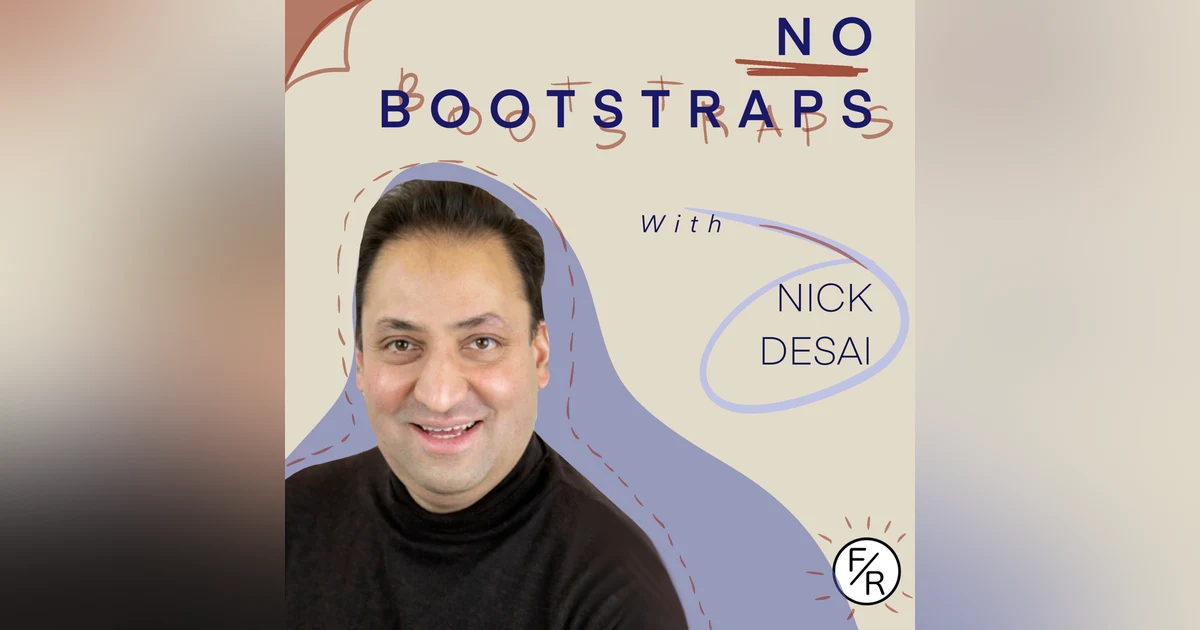


Nick Desai - Founder and CEO at HeyRenee in this episode talks about how he started 5 companies and how many of them actually made it. He also explains why he chose to raise money from VCs for all his companies and how that decision affected the business.
HeyRenee site: https://www.heyrenee.co/
Nick's LinkedIn: https://www.linkedin.com/in/nickdesaiheal/
Can your investors fire me? Here is an episode of Fundraising Radio explaining this question: https://www.fundraisingradio.com/Jeb-Banner/
If you choose to go the other route, check out our course about reaching out to investors! https://www.fundraising-courses.com/
0:05 They're releasing to fundraising video a podcast about fundraising for early-stage startups, the major rule that we follow here is no bullshit on this podcast. No music to relax, you know, advertisements of our sponsors. We only talk about fundraising here and nothing else. So let's jump into the episode. And today's guest speaker, we have Nick decides a founder and CEO of, hey, Renee. And this episode we'll talk About how Nick managed to start five venture-backed companies. How many of those were successful? How many of those did she try to bootstrap? And how many ways his take on bootstrapping versus raising money from institutional investors such as venture capitalist Sonique. A let's kick it off by you giving us some background on yourself and on, hey Renee, thanks Constantine.
0:51 And thanks for having me on the program. I as you mentioned, I'm Nick Desai. I met, my background is I'm a first-generation immigrant. I was born in Mumbai, India, but I'm older than most entrepreneurs these days. I'm 51. And I went to my undergrad and grad school. Both in electrical engineering did grad school at UCLA and electrical engineering and other than an internship at Rockwell Science Center. I am been a Serial entrepreneur. I'm a five-time venture funded technology, entrepreneur, from scratch. Then the first employee, and founder of 5, Esther funded companies, seven years ago.
1:32 I founded a company called he has seven and a half almost a company called heel that dr. House calls and home Centric primary care. That raised two hundred million dollars. I did that one with my wife dr. Renee Dua that company is still around and doing very well and continues to grow based on the foundation that Renee and I created over our six and a half years of working there to change the way Primary Care is delivered from Health Care will never happen in to home to home. Centric Care being thought of as the primary and best way to deliver care. I'd like to you know, think that we were responsible for making that happen Renee. And I particular we left heel a little under a year ago to take a little breather and to do something new and Innovative and earlier sort of middle of last year, we started this new company.
2:24 Hey Renee, which is named after my wife and I started With her, which is a digital care coordination platform, for older and underserved patients to easily manage all aspects of their health care under one simple integrated tool, and that's a background audit. That is quite an impressive background, especially problems for starting to you. I am seeing that you have raised over 164 million dollars. So that is how intertwined impressive over 200 million and we were sleeping, you know, we really, really enjoyed building heal. It was a great experience. We innovated things like we're the first solution was real-time eligibility, verification for insurance first solution with price print. Real for upfront price, transparency, the first in-network doubt, dr.
3:14 House called provider where you could use your insurance, to get a doctor house, called seven days a week. We won the Consumer Electronic Show, Innovation and small business of the Year award. So we really, really enjoyed that and served a lot of With exceptionally high quality care. Which of course is the most important thing. Absolutely. 100% it. So it will start with something you've just mentioned in your introduction, which is the fact that you have just one job outside of being a, actual founder of wishes just one internship, can you tell us a little more why you have decided not to go, the path of, you know, working for corporates for a few years and then starting your own company. Once you have the connections, the finances and more background knowledge in the field, Old.
3:59 So it's a very good question and the answer for me in my case ever, since I distinctly remember, watching TV, when I was five years old and I was watching a TV show called The Dukes of Hazzard, which is a show from the 70s that in retrospect was very racist in. There were Confederate symbols, and whatever, but it had a character named Boss Hogg. Who was a bad guy, but I was five. I don't think I Should that, but he was a boss or this town and I just grew up thinking. I want to be a boss. I want to have my own business, my father had his own business, my grandfather had his own business, and so, ever since I was a little kid, I wanted to have my own business and really the only reason to do the internship was actually to put my engineering training into practice because what you learn in school is very in the school case of engineering, very useful and very applicable, but to see, you know, I learned semiconductor physics and gallium arsenide Electronics.
5:01 In my grad school and I went to Rockwell Science Center and built 1.1, GHz, receiver chips for commercial GPS. And to this day, I worked in a Fab and I we built a really cool semiconductor things. And to this day, that's really important to me. But I always wanted to have my own business. I always wanted to be able to start with a blank sheet of paper and create something from nothing and hopefully build. Actually services that help people or make life easier or make life better in however, big or small away, right? So let's let's move on to my next question. Then the bootstrapping question a lot of founders with a similar background as yours.
5:42 Start, their companies with the major goal off, you know, generating Revenue without an actual plan of selling it. Eventually, in your case, you have started all of your companies and raise money from Reese's, why you decided to go with the way of raising venture capital and Other Equity funding rather than going the bootstrapping way. Well, so there's a couple different things. The first is I did do a start-up very early on that was bootstrapped and it was just very hard to get off the ground. And the second thing is that the second thing is that, I think that a great test of the quality of your idea and the quality of, or my idea and the quality of my preparation to pursue that idea.
6:28 And the quality of the seriousness and financial viability of that idea, is its fund ability, early on right now, there are some incredible companies that have built out of bootstrapping and, and, and that can absolutely happen in credit to those a. But for me meeting that Venture threshold meets means that I've met that threshold of a viable financial model, a viable business, good team early. Eon. Obviously, there's some work that goes in prior to funding, but I've had that opportunity and now with the track record, the ability to raise money that that I think I can go faster. The other thing that I think is sometimes a bootstrap business, sometimes you make better decisions because of it, in the people who've done bootstrap, companies owned a lot more of their companies.
7:20 And some of them are very, very, very, very wealthy and, and do very well for themselves of change the world, and there are a lot of great examples, That. But, but Mark Cuban always talks about it though. Now, he's on Shark Tank, but in investing in other people's ideas, but the point of that is to say that sometimes it forces you to make bad decisions, early, right? I got to take this Revenue deal, I got even being underfunded will do that, right? Very early on in. He'll I agreed to some contracts to deliver our service for an extremely low price that, you know, was I was stuck in for a long period of time and And ultimately, I could have done a lot better than those deals.
8:01 Understood that is quite interesting approach. So let's touch on to that. So raising as early as ideas to each, that's quite a complicated fundraising to pull off, especially for a Founder who doesn't have much experience or Connections in the field. So when would you recommend for Founders to actually start fundraising for their companies? Is that when they start generating first reaction, is it when they start growing their first potential customer interviews? Or when is that moment when you think the founder has enough? What to bring to the investor and actually asked for their money. Yeah, look. So I think that fundraising has gotten easier right now, the market is frothy and we'll see how that holds out, right? The Dow is being choppy.
8:41 The NASDAQ is being choppy, these last few months. So we'll see how that plays out. And ultimately, no matter what, anyone says the public market affect the private markets because if public companies in your space aren't worth as much, then private companies are going to be worth less and so on and so forth, right on how to count and ultimately public private companies, lead liquidity events and IPOs are big liquidity event. So so that you know, that we'll see how long the Frog class but now, you know what, I raised my first round, I was tell their story, it was 1998 and I looked up in a physical book in a physically printed manual.
9:22 Okay. The internet was 34 years old at the time, there was a physically printed manual about the Los Angeles Venture Association. That I bought and I don't even know how it was recommended to me or solid a bookstore. I think it was, I was Barnes. And Nobles to go to before the internet. I've been an avid reader for forever and before the internet, yeah, I subscribe to some newspapers Wall Street Journal LA Times, New York Times, whatever. But I would go to Barnes & Noble on browse all the Business magazines and read them, right? Because I couldn't afford to buy 50 magazine, it's a week. So I think I bought it there. I saw that there was an event. I read This Venture fund called Draper Fisher jurvetson. Dear Tim Draper is famous fund. Hmm.
10:04 He was speaking at the event and so I bought a ticket to the event. I went there, I will listen to him speak. I walked up to him. Afterwards said, can I get your business card? Because I'd like to call your assistant schedule. Time to pitch you, right? That was how I found my first PC. That is how I got in the door and that's how it was done back that, right today, there's websites devoted. Voted to VC's Angel seed, fund precede Angel, incubator accelerator this array, tur that aerator have no money here. First, ten Grand, your first 50 Grand. Your first is there are there so many websites that I think you'd be lost in the options. Write the number of tools available from the y combinator's in the 500 startups and the these kinds of incubator and accelerator models to angels and high net worth individuals and sites like Angel list set up, your phone's I've, to crowdfunding. Right to, you know, the program, missing the name. Now they're probably on Kickstarter and and GoFundMe and all these different things.
11:12 There are so many different ways to get to investors to get your idea out there and to pitch it. So I think Fundraising for an idea, is actually easier now than it's ever been. And and I think that that is, you know, that is where I would. That's what I would say is that, it's easier now and it doesn't mean that you can't do even fundraising for an idea is not never just an idea, right? It's I had developed an idea, I wrote a deck, I developed a financial model, I had a few phone calls to test the viability of the idea.
11:57 I talked to some people through Linkedin. And there's also a great way to find people will called LinkedIn, right? You don't have to spend it, just go and look for people backgrounds. You talk to them old people, if you mess with them and say, did I know this? Because I do this all the time. People message me today. I'm an aspiring Health Tech entrepreneur. I want to learn. I have an idea. Can I pick your brain? I give him. You know? Not, I can't say yes to everybody, but I write three four times a week. I'll take a 30-minute call. What's an aspiring entrepreneur? Give them a little advice, Point him in the direction. So, because of all those Horses. I think that it is not hard to get your head in the game and to get funding early. I would both agree and disagree here. Honestly, I think that's fundraising now became so much easier that a lot of Founders just start fundraising super early on.
12:46 And eventually the investors get bombarded with this kind of, you know, extra extra, early ideas stages startups. But yet you're absolutely correct. That's a good way to starts. If that doesn't work out, you realize that investors just need more from you. Go for it, get more traction, you know, not that's another perk of being in the 21st century. You don't need that much money to start generating Traction. In most cases, of course, in your next case it's Bayou, everything related to the medical field is usually extremely expensive. So yeah, in that case that might make quite a bit of sense and yeah you started your story by saying that, you know, you have raised your first round in 1998. Why reading something in an actual like physical booklet, which is extremely hard for me to imagine, and You literally would after a pitch, you would FedEx your business plan yeah which was printed on paper with with that with that in mind.
13:41 How did this industry obviously transform quite a bit? So Moving forward to the current days which was your approach to fundraising for. Hey Renee. Because one of the reasons why I decided to invite you on fundraising we do is because you have raised from greed, greed investors investors, such as tell painters and more per capsule. Both of those I know personally, absolutely amazing investor. So how did you get in touch with those people? Well, so should I just want to go back to your previous comment, though, just say something real quick, which is being funded. Does not mean having a good time. Company, or a great company or a viable company, right? And one of the Town Ventures told me they look at 2,000 business plans to or 2000 pitches to fund 10 companies in the year, right? Some bigger VC's will look at 20,000 and fund 100 companies but the point is the ratio is still, right? Hey now there's a lot more investors out there. Everyone has to get into the adventure game, and everyone hears about the guy who the first 250 Grand and Uber is worth 2 billion.
14:45 Dollars a year everyone, here's out stories, right? But let's say you get that check that first check that first quarter million half million million to billion whatever. How many of those companies then go to the a round, then go to the be round, then have some kind of exit. You'd have to look at 20,000 up needs to get to 1 right 2. Maybe so just sometimes getting money is put a pressure on you in a way you're not ready for, and you don't deliver it because you when you talk to investors, you say, for this much money, I'm going to do that much. Expect some variants, some problem in some hiccups, any good investor does.
15:29 Yeah. Um, but, but they do, they do expect that. There's, you know, at some point you will deliver right at some point in and if you don't deliver Buck is, they are not going to be happy and you won't get any more money, right? So, in the case of how I raised additional Capital, right, I'm sorry. How I raise capital from those investors. At this point, the answer to that question is, I'm just very, very fortunate in the building of heel in the building of federal bit before that. And the companies have built before that to have gotten a no and thankfully built a favorable reputation with investors as A someone who has, you know, is one of my investors said, I'm a Visionary, right?
16:16 It was Big Ideas that can change the world and be the ability. There was a VC that contacted me recently, that uses some kind of AI based platform to look at a company in the seed stage and decide. If it has the ability to decide the likelihood, that it will get a B round up to the be round stage, and get a funded be around. Based upon it. It certainly performed based upon who the founders are primarily and I was very, very excited when they said you scored a 97 percent in our scale, right? And and and in they take anyone who has 85 percent or higher and I was really excited to know that, right? Only because it's a, it's a reputation I built with Renee and our other co-founder in this company, Alexandra, go and but and sometimes people here, Story and it makes them think so. Let me just start to finish the thought who's extremely happy. I knew Morgan Livermore from quiet Capital when he was at Excel and I wanted him to work with him, right? I knew I'm at the guard from the, The Venture Community, I didn't work with him before but I wanted to work with him because and my curve in mucker capital or La based companies who I knew of and so it was relatively straightforward to get to them to take a look.
17:38 But two things to say. Hey. Those four groups said, yes, and two others, globalfoundries capital and fast Ventures said, yes, but 20 groups had now. Yeah, and that's right. Even that lovely? Yeah, we love you, Nick. We wanted to the next round. You're a little early. We love you. We have an investment, this pace. We it wasn't like, oh, okay, we don't want to invest in you, but regardless of what the reason is, they said no, right, right. So, the thing, for a first time I could rig is sometimes people. When I was a first time entrepreneur, I'll be like, oh, you gotta use your network and you gotta use your back. Ground and you go back to the same DC. Something, what are you talking about? I don't have a network, I don't have a background, I don't know. Anybody sees what the hell am I going to do?
18:19 Yeah, but the easiest term sheet I ever got to this day, is that very first term sheet in 1998. We went to the meeting in person, I pitched by the time I got back to my office, he had faxed me. Literally, it was faxed me in term sheet, right? That day that time, right? So that the point, It is the quality of the idea of the quality of the team. The quality of the work you've done today. And we'll a first time entrepreneur is as much to end repeat entrepreneurs will sometimes make the mistake of assuming just because there are a lot of entrepreneurs who've had great exits, and their second company in their third company, just are duds, right?
19:04 In the same way that great directors, have one root incredible movie and then every other movies are dead because They have that one story to tell right or they sort of lost the fire, you know. So you know those things are also factors, right? So on this note actually want to jump in and ask you the question about that company or about that fund. That invests based on the likelihood of a company reaching Series, be just based on the founders. What's the company name? Because I definitely heard of something like that. And I think I intrude somewhere in that space But I personally forgot the name. Do you have The nerve because I'm higher like, there's more than one be she that might do this. But this one is called 2.12, Ventures, 2.12 and say, it's 100 K, check type of company.
19:52 We were far beyond their stage because we raised eight million dollars. But that process and how that was interesting to me, right? And just knowing that based on what they could tell publicly which is who our Founders are, they scored us at high understood? Perfect for people who are curious to see how much they're going to score there. I'll make sure to leave the link in the, but I don't think he's going to apply. I think, they'll like I didn't apply to their process own to get the score. They came to me and said, when we talk to, you will tell you how we contact you. So I took the call in partner, find out what made them decide to contact me. So I don't know that. That's, that's one that you can, you can reach out to.
20:33 But what I will say, is, if you are going to get your company funded with one dollar or a hundred million dollars, You're going to do it because you are an aggressive go-getter who's not afraid of hearing the word. No. Right. And and and too often the biggest limitation people have is that they limit themselves. Oh my God. What if they say no you don't my other student life is always been that I got to kill you then I got to spit on you. They're just going to say no. So what you know what? I asked seven girls to the prom. All seven of them? Said no, when I was in high school, I'm married to a wonderful woman. In now, and we have a happy family together, three, wonderful kids, and my life has worked out pretty nicely right?
21:16 So what people say, no cares. Yeah, that's right. And most likely investors will not spit on you. That is quite rare. Especially in the covid, 'z scenario. If so, yeah, go for it. Hopefully, they won't spit on you otherwise either. But yes, in the covid sense. Especially won't absolutely. Absolutely. They will not so on this note. So let's touch on to something that you've mentioned. You're in your one of your answers, which is the exits, and some kind of, you know, any kind of exits, either IPO, or an acquisition or merger, from all those five companies that you have started with outdoor Nate, hey Rene, it's going to be for Force, but for those four companies, how many of them have actually reached the exit 12? Well, one is still around, okay?
22:07 You had an exit one. Didn't make it God, Shh. So that is quite impressive with one being well. One was a modest. One of them was a pretty modest exhibit. Was it was better than dying but it wasn't. It wasn't much better than dying. It's better than dying. That's those are still exits. You know what the thing I will say in that process is when you are a Founder, especially, I meant, I'm an immigrant, it's sort of cultural that, that we, you know, think this way is Indian people, I'm in an inversion. But But a lot of people think this way regardless of their cultural background, right? This is not restricted to Indian people, but we give a lot of a lot of of Sort of deference respect in Credence to investors, right? And you should you should to an extent but you should challenge them to write that company and I won't say the name that didn't have the great exit.
23:10 We had an offer to be acquired for triple the valuation of our previous, double the value. Sorry of between two and three times evaluation of our last round four. It's after the round it was a cash offer it would have been a great exit. I personally would have made 15 million dollars and and the investors had no it's not enough. And I would. And and but what they said is Nick, if you're going to leave the company, Because we don't sell, then we'll sell and I should have the guts to say. I will leave the company, right? Instead of saying no, I'm going to be loyal like out of a sense of loyalty, right? That is happened.
23:51 Another time I've had a very, very favorable incredibly favorable offer hundreds of millions of dollars right from a publicly traded company. But that time I stood firm, right? And and ultimately whatever came to pass without getting into details because there's so much company in China and stuff involved turned out to be the right. Thing right. But but investors expect you to be the leader of your company. They're not going to enter, but if you don't step up and lead your company, they will they sure will investors love to do that. And Ali in the company from the passenger seat is kind of very fun for them to do.
24:31 So let's let's briefly back to that and part of the different part of the thing that you have to do. One of the things that is pounded into the minds if you read any Document by VC is fundraising, it's always optimized for the valuation, even on Shark Tank. You can you get the best deal? Can you get the besties? The only valuation that matters is the last one, okay, which is your exit or IPO price? You're early valuations, don't matter nearly as much the terms and the quality of the investors matter. Are you investing in people are people investing in you. That will say I'm investing in Nick and if you make bad decisions, not if I do something crazy or criminal whatever, but I make bad decisions, I'm going to bet on him. And if you make good decisions, I'm going to bet on him right versus I'm betting on this Nick and this idea, but I have my own ideas about how they should go and Whatever and are they going to override your judgment in your opinions, right? Because, and that's important because you might think, oh, this term sheet is out of 50 million dollar valuation, but this term sheets at a hundred million dollar valuation, a hundred million dollars better but if you get an investor who then let you sell the company so you make so much money, right? That later?
25:50 Or you have such great success later or you enjoy the process, more than it was worth it. Right? So it doesn't matter what your first valuation is matters. What your last one is, it's really important to keep in mind, I'm going to slightly disagree with the here. I think that valuations early on do matter, because some Founders go for to high evaluation eventually struggled to raise four years and some Founders go for to low valuation and end up with four percent of their own company at the exit. So something to shout for it for sure. But before you jump in one more question about what you said earlier, which is Investors allow you to sell the company which is very interesting statement.
26:30 So when you say that, whether it industry allows you to sell or not, what do you mean by that? Do the investors in your case have the right to prevent you from doing something, you know? So so I think the two talks are related. Yes, valuation matters. You shouldn't tell too much work, even if you command to high evaluation or I wasn't saying it doesn't matter but the quality of the investor also matters, very, very much. I'm sure you're right. Were, but we're saying sir. Two different sides of the same thing. But the thing the thing about selling is If at some point to company will get big enough that you as a Founder, Renee and I were to bid, you don't have control over your board of directors, right?
27:11 Whether it's me whether it's being a co-founder, you don't have control over your board, right? And if you don't have enough independent board members and if the investors control the board or you've given up a controlling interest in your company, these are things to keep in mind. But also what is there to keep in mind is that You you have to there's some there's some bedding and some guesswork, you're going to have to do because at some point it is very unlikely that you will build a huge company while controlling the board and controlling a majority of the company, right to raise enough cap because investors want to put on good controls because there have been too many examples, some of them criminal like their nose, right? Yeah. And where there's been so much hype in demand that they let the founder have whatever they want. Oh, you can have more control and you can have super majority voting and you can have this and you can have that and you can have whatever and then they end up with with literally a crime on their hands.
28:05 Right? And what do they do, right? So I think that good governance just to, I'll I don't mind that there are board members. I don't mind that I'm not a majority in the ward. I don't mind that I don't own 50%. It's a company 51% of the company. What I do want is people who are in it with me and who will back my play, Will be convinced by Logic and reason it's not right because I said so but it's also not right? Because they said so right, that's a way to look at it. And by the way, for people who are curious to listen more about how the board seats work and how the investors can actually control your company were not control your company. Definitely check out the episode that we've just released by the time this episode, we'll go life. So on this note, let's move on to the very, very last question. If it is episode, we choose a call to action. So the ink would you want to listen to do as soon as? As this episode is over.
28:59 What I want listeners to do as soon as this episode is over, is if you're at all interested in the health Tech space and you're an engineer or product person and could help us with growth and Business Development, visit our site which will be in the links below and we'll be is that hey Rene .c. Oh, it's super easy. Heyy re n Eed T. Oh, right, right, if you are an entrepreneur, Pursue your dreams. Go chase him. Chase some hard. Chase, some smart. And if you connect with me on LinkedIn, and if you give me a passionate reason, why I might take the time to get help you. If I have the time I do my work, I do this full time.
29:41 I have three young kids at home, obviously my wife and and I want to be there for my kids. So I balance my time only. But but I do try to help people. It's my way of giving back. Awesome, lovely. In that case, I'll make sure to include the link to thanks LinkedIn in the description to this episode. Of course, there's going to be linked to hey Rene and probably a few other links, which I'm not sure what they're going to be yet, but that's gonna be my call to action. Check out those Corrections this episode. And as always have a good day,