Raising a Series D. By Sid Viswanathan, Co-Founder at Truepill.
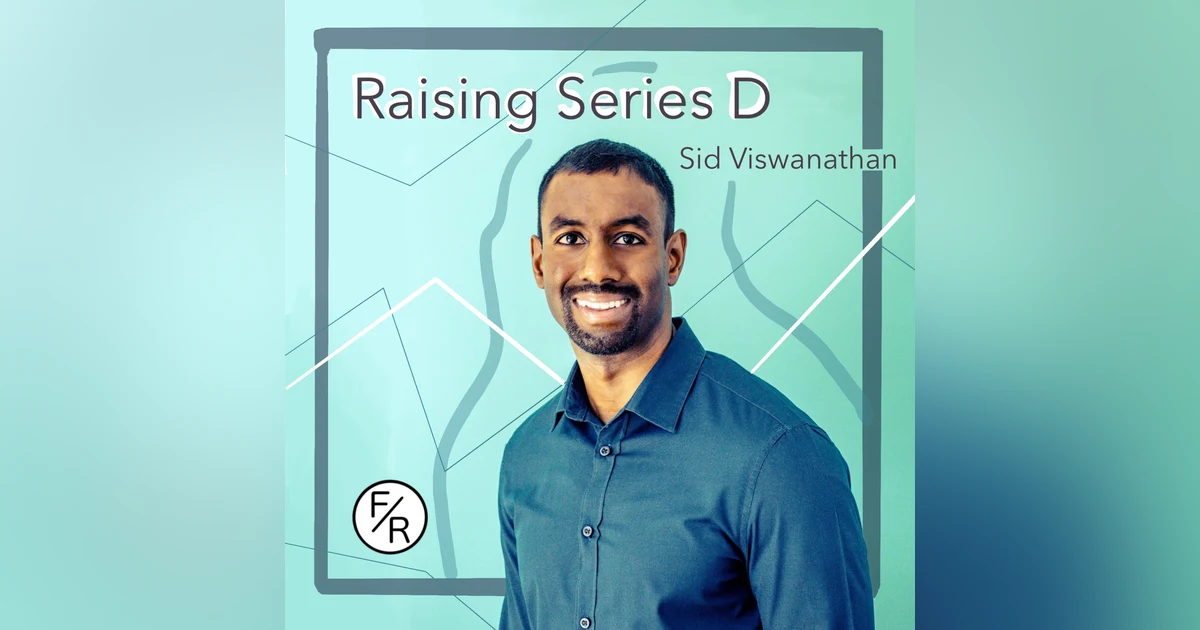


Sid Viswanathan Co-Founder & President at Truepill talks about raising a Series D and how it is different from earlier rounds. We've also touched onto the story of how prior to Truepill, Sid founded CardMunch, a business-card scanning app that was acquired by LinkedIn soon after its founding.
Sid's LinkedIn: https://www.linkedin.com/in/sidviswanathan
Truepill's site: www.truepill.com
And of course, link to our course on fundraising at 70% discount (only until the 15th of January): https://bit.ly/StartupFundingCourse
Questions covered in this episode:
- you've spent 4 years at linkedin, when was the moment when did you decide to start the second company and how did you bump into the idea?
- how did you meet your co-founder?
- you recently raised a round D of 142 million dollars, how did you get there?
- at round D, what's the major problem for a company?
- looking back at your post-YC seed round, what do you think was your major mistake while raising it?
- how much of Truepill's success is due to the fact that it got into YC a year after it was started?
- you've recently expanded into diagnostics, did you raise any money to fund the expansion specifically?
0:05 They're releasing to fundraising video a podcast about fundraising for early-stage startups, the major rule that we follow here is no bullshit on this podcast. No music to relax. You know, advertisements of our sponsors. We only talk about fundraising here and nothing else. So let's jump into the episode. And today's a guest speaker, we have Sid, we sinatun co-founder and president at true pill, which recently closed their series D round of 142 million dollars. And this episode will mostly talk about this round, how they got around Z? Why they keep on raising instead of going public and so on and so forth. So Citta, let's kick it off by you, giving us some background on yourself. And on true pill a Constantine, thanks for, thanks for having me on today.
0:49 Well, I've been doing startups for for a long time now, you're going to age me in this episode. I've been doing it for about 13 years or so. The last company, I started was in 2009. And I sold that business to LinkedIn. I spent about four years at LinkedIn, a different product, and Engineering roles. And so my background is actually not in health care at all. But even before I got into startups, I was a mechanical engineer in college. I would say a mechanical engineer turned software engineer. Once I got to the berry, I started to realize that this was in 2008 2009 timeframe where there weren't as many Hardware engineering jobs and mechanical engineering jobs specifically, so it was either software or nothing and so had to couldn't go. Back to college at that point.
1:31 My dad wasn't going to pay for another degree. So just quickly learned how to build some of the basics from a development standpoint and ended up starting my first company. And after selling to LinkedIn, istent, I stayed for several years and around, 2014/2015 made the decision to leave to go back to the drawing board. Again at that point I didn't really know what I want to do next. All I knew was I wanted to start a company again and along the way I spent Time, exploring different areas in different spaces. And that's when I met Omar, my eventual, co-founder and true pill. And we formed an initial thesis of the company, which was what would it look like to build Pharmacy infrastructure and Omar is a pharmacist by training. And so, when you put a software engineer and a pharmacist in a room, I guess maybe that's how you get true, pillow born and we set out to build Pharmacy infrastructure low 2016, that's perfect.
2:28 Alright so let's first talk about About your experience with LinkedIn and then you hopping off of LinkedIn which has quite interesting. So, you spent their, you said four years. When was the moment when you're like, you know what I'm done here. I'm going to go ahead and fund or create my own company. When was that moments? What what triggered you I think as a Founder, you always have that underlying itch. You just don't know when you kind of have to scratch it and I had a good run at LinkedIn and had several ups and downs trying to figure out where the company that I sold would live within the ecosystem. And finally, we got to the right kind of final resting place for the asset. And that was about three and a half years into my journey at the company and it seemed like a good time to sort of end that chapter and move on to the next next Journey, which was eventually true pill. But even before troop, it was about a year of banging your head up against the wall.
3:18 Thinking about the right idea. I don't, I don't recommend this to other folks and for others that are still thinking about what they might do. I recommend going back to the basics of finding a good problem, if you look at it, Everything from what you read online in terms of how to find the right startup idea, I think we got very fortunate and lucky that we stumbled into the right problem and we were also the right team, but sometimes looking for a problem isn't always the best way to go. It just it just worked out for us in our case 100%. So um let's not focus on find the problem and instead focus on finding the co-founder so you said that you just briefly mentioned that you ran into him. Are some how can you tell us how exactly you met your co-founder and how do You realize that, you know, that's the right co-founder for you. Was it just based on the skill set was it because you've known him for x amount of time?
4:07 Or what was what made you think that that's the right co-founder. Yeah. Believe it or not. This was a cold LinkedIn email that I sent Omar back in sometime in 2015 and I was doing Explorations around Pharmacy that week. It was probably the space of the month or space of the week that I was researching and I look for start-up founder and Pharmacists and Omar's. His name was the first one that came up and I think it's headline at the time was startup enthusiasts and Pharmacists. And so he was the top list on LinkedIn. You happen to be in the Bay Area. I think it was traveling at the UK at the time and I just sent over some questions and he responded back right away. And after several weeks we kept going back and forth on LinkedIn with more and more questions and thoughts. And finally, we said, well, sounds like you want to do something the space.
4:53 Why don't we get together? And we met up in person and two, three, four, five months and we were still spending time. Talking about the space and trying to understand what the starting or entry point might be. And so we actually met for the first time before we started true pill. And I think I would recommend knowing your co-founder for as a long, a time as possible or going into a relationship. But in our case, you know, maybe I hit the lottery and we found each other at the right time and right moments in our career to start the company and it's worked out. Well for now, we've been working together for five years. Nice. That is a great story. And yeah I mean I've seen before Any storms that were started like that and then they fell apart. Just because the co-founders just weren't as lucky as you got.
5:36 So, do you have any advice to those Founders who don't yet? Have a co-founder most likely, they know that they just absolutely have to have a co-founder because going through this alone is just a little bit too hard. So and you recommend recommendations on looking for a co-founder and testing out. If that's an actual good match or not, I would say, definitely think about aligning on some of the value side of things, ultimately, you're going to pick someone that's smart. And hopefully compliments you and has the right skill set for the founding team but I can't understand how important those values are. And sometimes you can't sit there and ask that person. What are your values in life or your cultural values? That's not really how it works. It's more of a Vibe than I think. For Omar on myself, we were sort of the right or similar stages in our life.
6:19 We were in our early 30s. Omar had a kid that was just born of six months old. And for us, we certainly my wife and I wanted to have a family so we were at similar life stages from a An Audi standpoint. I think we we gelled and I think that Vici gives you don't need to find a best friend. Co-founder is not a best friend that you want to hang out with all the time and and we've had a great business and working relationship and we don't have to see each other outside of work to socialize and that's been our relationship and it's worked really well for us. So so my advice is definitely look at the value side of things. Start to anticipate how you might address conflict because you never can simulate conflict and you have to get a sense of well, as your Under going to be level-headed and pragmatic and rational, as you go through different disputes and different challenges through the business. And some of it is a calculated risk in a calculated guess and in some cases, it works out and then sometimes it doesn't. So it's a cross off.
7:16 All the obvious, things are finding the right complementary, co-founder but certainly look at the values and how you guys gelled together and a lot of it is chemistry. And just a feeling and a Vibe time resent that says gives it gets honestly you did. There is no Over before this one, unfortunately. So now let's move on and talk about the subject. That doesn't have a silver bullet either but it's at least more calculated. So let's talk about fundraising and specifically your post ycc drowned. So I forgot to mention the beginning of the episode that true people actually did go through Y combinator and afterwards. They raise their seed round. So said, can you tell us a little more about that sit around and especially how did you manage to get into? I see what stage were you in while you were getting into the Y combinator, That's right.
8:00 We were part of this summer 17, 2017 program and not unlike many other companies. We were a second time. Why see? Applicant we weren't accepted the first time. Our traction wasn't really there and we applied the second time and got in. And really the main difference between application was just more traction. I think YC is getting a lot better at. They can wait and see when you kind of follow through on what you say, you're going to do on the first application, especially when you're just getting started. And for us, we bootstrapped The company for about a year for that first year Omar was still working nights and weekends at CVS. I had left LinkedIn so I was kind of full time working on the startup but I was like, writing code that nobody was using and it wasn't really useful because we didn't have anything to build really. And so you're kind of just going through the motions of starting the company, while waiting for your Pharmacy board approval. And so once we got our Pharmacy board approval then we were in business and we started filling prescriptions and going through the model that we were setting out to do in the market and And we weren't actively thinking about fundraising but we came to this moment of.
9:04 Why don't we apply to YC? There was the summer session opened up again or we were thinking about in the winter we applied and then we didn't get in and then in the summer is it okay? Well, we have more traction now, why don't we just try again? And we got accepted that time and joined and I think one of the best things about why I see is it's really a forcing function to start thinking about fundraising or put that on the Forefront or accelerate that. And I don't think there are many companies. That join YC with the mindset of we're not going to fund raiser. We don't need to fundraise. And so for us it was well, how do we set ourselves to succeed going through the fundraising process and about a month into YC? We raised money from initialized capital and Gary tan, somebody who had known for many years even prior to wisely, use the first call I made. After we got in to say, hey Gary, we got into YC. What do we do now?
9:53 And he said, once you come into my office and eventually made the first bent into the company, and we went on, Ooh YC to raise an additional two point four million dollars in our seed round. That's kind of how it happened. And we went through the entire demo day process and prepped, our fundraising pretty quickly thereafter, a little lie. That's one of the major perks of YC, usually every single company closes their seed round after graduating, from why see in a few weeks, which is absolutely epic and I love it. So, looking back at that round. I've heard few Founders complain about, you know, I wish I did that. Oh, I wish I took. Investors in. Oh I wish I increased the minimum check. Mounted were accepting and so on so forth.
10:35 So looking back at that post y combinator, see ground every worse. Do you think you made any major mistakes that you wish you have changed now? Yeah, that's a great question. I think YC is great. As I mentioned as a forcing function to get prepped up for fundraising but I think one of the things that forever to pick on one regret is you don't really get the time to start thinking about. Well who do you want in your out? Who do you not want in your round? What's the right composition Ian, what's the right dilution? Because you kind of go as quickly as possible to wrap it up. I think, while we ended up on the positive side, in terms of dilution, I believe it or not. If I saw certain folks on our cap table walk by me on the street, I might not even recognize them today. And that's that's unfortunate because they invest and you never hear from them again.
11:19 But on the flip side, I would say an investor that writes you a check and then disappears is is probably better than a metal some investor. And so it's a little bit of a double-edged sword. But if I were to say one thing, we would go I can do differently, is we didn't have the foresight or the thinking around doing a friends and family around and especially something, you can never go back and redo, I always recommend not a found, it's just just create a friends and family. Allocation, these are not necessary. Folks are trying to make money off your startup and it's just folks that want to be well-wishers and supportive of the journey and I always may be thought of it as well. I don't want to take their money if we're going to lose it, I don't feel good about it but in retrospect we ended up doing a friends-and-family allocation much. Later in the company's history but I wish we'd done it from the beginning and it's just a small part of the process, you can do it very easily.
12:05 Now with convertible notes and make sure that those that do want to support you. Not it's not an obligation that somebody has to invest because they're your friend or family. I wouldn't set it up that way, but for those that do want to participate and take a chance on you, I think that's what I would go back and do differently. Is is make sure we set aside some friends and family part of the fundraising versus folks that today I might not even recognize the Very interesting ads the first time in my entire life that I hear this kind of advice. So let's drill down on that a little bit more friends and family around. That is very rare, that someone raises friends and family around after the see ground, why exactly did you decide to do that? Was it just, you know, you felt that trippi was doing great. You kind of wanted to have more promoters of it or true supporters and you're like, you know what, I'm pretty confident. We're not gonna lose money on this, so I'll open up small round for my actual friends and family was that That's, is that how it went?
13:00 Or was it mostly there was certainly a little bit of pressure relieved on. I don't think it's ever. We won't lose your money, we're still a venture company that's always a possibility, but I think after folks kept kind of chiming on hey, why didn't you let me into the seed round or hey are you ever going to do a friends and family? Allocation. It's really more of a testament to just wanting to support you as a Founder. They might not even know anything about the business. They might not care about the business but they want to support you as a founder. And a lot of times that's genuine and I think I see that all across the In valley of just wanting to support your founder friends and your friends that are going on this startup journey. And I think since we missed that boat in the early days we got a chance to create a small allocation I think was that our Series be and I think Angel list also now makes it really easy to set up a Syndicate to do this with a vehicle because you also don't want to necessarily have a ton of small check spread out across your cap table. So now the actual vehicles and instrument to make this easy to do, it's really A no-brainer, whether you want to set up a separate SPV or go through an angel list and and pull together all your even 5, 10, 25 K checks. From people that want to support you, maybe in the early days, that seems like a little bit burdensome to take a 5k check and manage it on the cap table.
14:14 But today it's a lot easier to do that and we get it. We got a chance to do that in a small way at our Series be so Angeles is genius invention. People who work there are geniuses the things that they invent are absolute great. So yes, if you want to do friends and family, Definitely put together in a Syndicate, it costs, very little, I forgot the exact percentage but you're not going to lose much money on Angel list by raising friends and family. And yes, it can be wonderful eventually. Those people can be really useful mentors with some of those folks. Still. Today, Constantine are the some of the, the loudest advocates for us. Yeah, champions of us, they become your biggest cheerleader. So it's not just your board, that's cheerleading. It's anyone that wrote a 5k check or 25k to, they become your loudest.
14:59 Supporters and I think that's really important. Sometimes individual angels, and your friends and family that support you, they tend to play an outsized role in how much they support you relative to even a million dollar check from a VC where you're one of many bets that they're making absolutely having this one person, you know, continuously commenting on your updates and stuff like that does just as feels nice. We at this podcast as of, yeah, we all need some of that, right? Exactly. It just keeps you go, you know, you're like, oh, Known this guy for two years. We've never met in person, but I've known him for two years. He has been supporting us for all this time. So yes, having such supporters is just amazing. So now, let's jump from the friends and family around to your current series D round those are pretty rare even for the fundraising Radio podcast.
15:50 So, let's talk about how you got there. Can you tell us just briefly brief overview of that. Rounded, you've just raised over 142 million dollars. Sure, we just raised a series D of 142 million dollars, and we raise that in relatively short period time where now are completing our fifth year of operating. And I think for us our philosophy has always been around fundraising trying to find as best you can like the right inflection point in the business and whenever we've looked at our different rounds of fundraising it's never been about, we have 12 months of Runway left or 18 months of Runway. We need to start thinking about fundraising It's always been about.
16:30 Let's see to the best of our ability, at least two time the right inflection point. And for our series, a, it was about we had proven some initial product Market fit. Now we have to scale to 50 states and build more capacity across multiple facilities in the country at our Series. Be, it was about expanding from One customer segment and now service payers or a broader customer segments and get deeper into Healthcare and and expand a business unit as well. We were just Pharmacy when we started and we expanded from Pharmacy to Telehealth. With, and by the time we got to our series, see it was a continuation of that story wanted to do more in the, in the deeper Healthcare Market, working with more customer segments, and continuing to expand the business footprint of not just Telehealth.
17:13 But now adding on our Diagnostics business unit and then come full circle to our series D, it was now, okay, we are seeing the repeatability, we are clearly in the growth side of the business, I think you're by the time you get to the series D, hopefully, you're well past product Market fit. At least for a, a revenue-generating type of company and you're on some some spectrum of that growth story and every company needs to get to different stages or types of repeatability. And for us, it's about trying to find out what are those levels of repeatability for our business at this series D. And I think a VC once put it best for me said at the stage when you get to a series D, you want to feel like you're putting a dollar into a vending machine and you're getting two dollars out and so how does every business start to operate that way?
17:59 At the series D. Well, every business is different, very different. Our business is very complex. So we need to understand what those motions and mechanics of repeatability look like for us. Hmm, so let's talk about durability a little bit. That is a common thing for earlier stages. And usually when founders get to that stage, they get comfortable. There is a certain level of predictability. It's not as much of a star by anymore. And in that these Founders get sometimes creative with their fundraising and starting Debt financing start working with banks and so on and so forth. Have you started doing that yet? Or do you just stick with pure VC money? I think we've stayed pretty traditional in terms of equity Capital, but certainly, when you look at our data, the fundamentals of our business, we spent a lot of money on inventory whether that's Diagnostics or Pharmacy products. And so, we have your normal operating lines of credit which now are pretty common vehicles and managing your cash flow especially when you're dealing with a high inventory costs in your business.
18:57 And so we've certainly had credit lines. And various vehicles of that sort. We've never raised debt but our credit line is now the rates on credit lines are quite effective that it can you can put your money to work that way. And other than that, we've been fairly straightforward on our Equity financing as an approach for capitalizing our company. Hmm, one last question that I forgot to ask you is actually about your inflection points as you just curbed up. So you said that you tried to time your new rounds based on you or you know, You tragic trajector, check Therese. I was struggling with that word for the company and I think you mentioned, our Prince recalled that you have recently expanded into the Diagnostics field.
19:42 Do you raise money for that expansion? Specifically or was it just, you know, part of one of the inflection points of the company? Yeah, it was one of the main inflection points for the company that led us to raising. We actually raised twice during the pandemic, which oh, it was uncommon. We raised in the early. Part of the pandemic. And then in September of the pandemic year, we raised our series C. So, our B and C was actually quite closely timed. And I think that that speaks to we were we were at the right time and place for building the type of company. We were through the pandemic. It's we were talking about virtual Healthcare, we were talking about infrastructure to move to Telehealth for many years, leading up to the pandemic and then all of a sudden, the pandemic hits and it's nothing you can ever plan for. And it's kind of, its kind of your i-told-you-so moment. This, what we've Talking about for a while and you see ya. Now, the pandemics here and everyone needs this type of infrastructure and so that gave us some wind in our sails to go back to the market to raise and continue to grow on our ambition.
20:39 But I think this is probably pretty common for many Founders as you get to every year of operating and continue to maybe hit your goals and grow in your business, your Ambitions get a little bigger and you start thinking about what else can we do, how else can we continue to grow? And it's hard. Once your Revenue numbers, get larger and bigger. Compounded growth on a larger base gets harder and harder each year. So you need to continually start thinking about how to reinvent yourself each year and now start thinking about well what's to come to fuel the growth two years from now or three years from now? And in the first couple of years of your business, you're just trying to stay alive from quarter to quarter and keep growing as you as you continue to call. You still have a mind for. Okay, what could go wrong in the business?
21:21 How do you D risk? That becomes your primary job function as a Founder is D? Risking the business but then trying to set yourself up For future growth, maybe two, three years out into the future. Absolutely. And that's, that's the fun part of the growth. And also not fun part of the growth because the levels of anxiety still Skyrocket as they were in the beginning. So let's talk about the beginning. Just one more question before we jump off to the very last question of today's episode, the majority of our listeners are early, see founder. So looking back at your experience of building, your previous company, that you eventually sold to LinkedIn and looking at the True pill. Do you have any advice for those people who are currently at their precede stages? Sledge seed stages?
22:06 For sure, I think I'm a big believer in founder market fit. I think a lot of folks, talk about product Market fit, and how to achieve product Market fit. But for us, it was about, having the right founding team to build this business. I still look back. Now, if I were to try to go back five years in time, and hand-picked to better, Founders to build this. I'm sure you could find them but where the odds that you can put them in the same room together in the same area, the same stage in their life and the same ambition to want a big build. A very interesting company in Eventually became a broader industry Trend around Telehealth, or virtual care. It's hard to hard to do. So I'm a big believer in the Serendipity of Silicon Valley and the way startup startups, get started in general. But at the same time, you look at our founding skills, we had everything in our founding team to build everything from setting up.
22:53 Pharmacies running the pharmacy to building all the technology assets and infrastructure. And so my advice always is, make sure you have. It's a simple concept. You have all the skills on your founding team. To build your first version of your product and hopefully first several versions of your product. Because as soon as you have a hole there, I can guarantee you that the capital efficiency of your startup will be very different. You'll you'll see teams that maybe get started without Tech Talent on the team and where is their. Number one drainage of resources goes to paying for a development shop or development team to build it. And in the early days, when you're trying to reach this, This promised product Market fit in this elusive concept of product Market.
23:34 Fit, you want to make sure you can stretch your capital for as long as possible. And the best way to do that is have all the skills in your team to build your first versions of their product. And I think that's something that I would recommend. Everyone think about, are you not only the right team to build this? Are there any gaps on the founding team? And it might be okay where you might need a third co-founders. Not a bad thing to have a third cone founder that rounds out. The skill set on the team, but certainly start thinking about about where those gaps are on your founding team. Perfect. That is a great advice and yet having sizable teams that can cover. Most of the needs of this tarp when it's building out, its MVP, definitely get called on this. Optimistic positive note, let's move on to the very last question of days episode, which is a call to action. So Sid, once this episode is over, what do you want to listen to do?
24:24 Right, as soon as they hit stop or pause or jump on The next episode would you want them to do? Oh, that's a great question. I mean, if you're looking to start a company, feel free to reach out always happy to share advice and feedback. And if you're not sure if you want to start a company yet, then I've always been an advocate for the best way to learn. Whether you want to start a company is come join, another early stage startup or medium stage startup, whatever you want to call it and if true pill and Healthcare something that's interesting, definitely drop me a line. I'm on Twitter at Sid viswanathan or on email, sit a true pill.com. So we'd love to chat with You. And if Health Care is at all in your future, in terms of wanting to maybe even start a company and Health Care definitely reach out because I'm invested in seeing Healthcare Tech and the broader ecosystem. Continue to grow a lovely.
25:14 Perfect. On this notes, my call to action is as usually extremely simple. Check out the description fits episodes. I'll include sins LinkedIn. I'll include his email that he just said, how are you forgot it? For people who have memories as short as mine is going to be all in? The description of this episode and also include a few links to troop Bill and of course Shameless personal plugging off. Our newly developed course on reaching out to investors and as usually have a good day.