Finding a co-founder by CEO of Opal
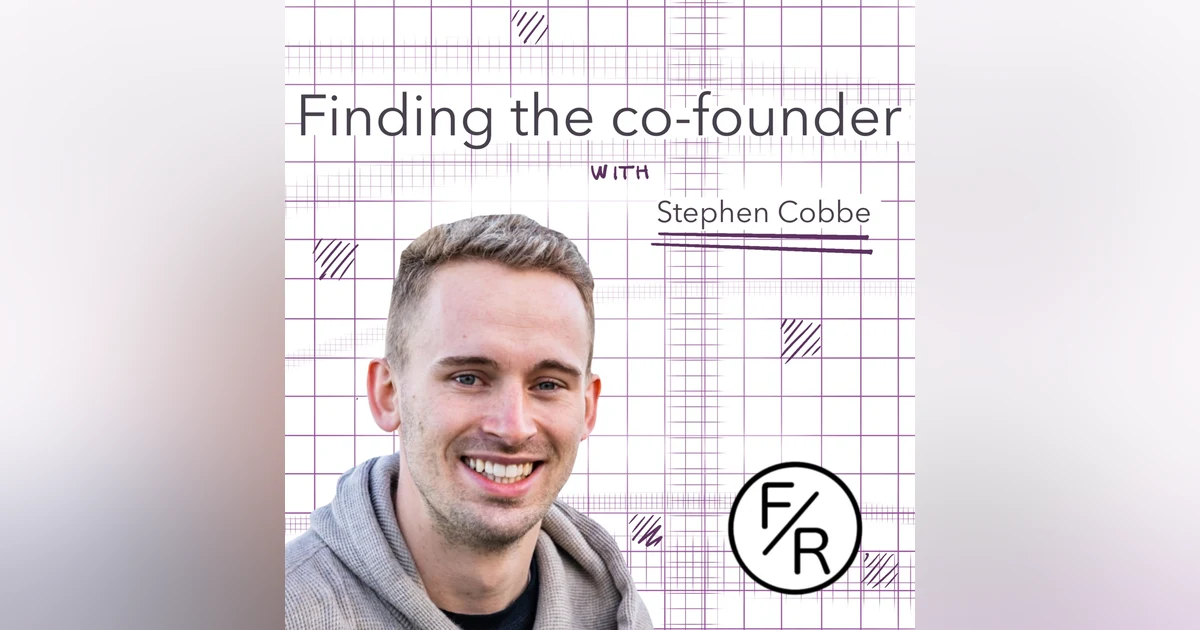


Stephen Cobbe, co-founder and CEO at Opal talks about his journey with Opal, ups and downs and how to handle them. He also shares some recommendations on how to find a good co-founder and shares his personal experience in that field along with two great books.
Stephen's LinkedIn: https://www.linkedin.com/in/scobbe/
Opal's website: https://opal.dev/
Two great books in question:
1. Never Split the Difference: https://www.amazon.com/Never-Split-Difference-Negotiating-Depended/dp/0062407805
2. The Founder's Dilemmas: https://www.amazon.com/Founders-Dilemmas-Anticipating-Foundation-Entrepreneurship/dp/0691158304
The course on reaching out to investors that Fundraising Radio's team is developing: https://bit.ly/FRpodcast101
0:00 You're listening to the expansion Chronicles and podcasts about expansion of steps into the us. On this podcast, will talk about the main mistakes, that Founders make, while trying to move from their home turf and build divisions of their companies. In the US, we try to explain how to avoid these pitfalls and what tools can be helpful in this complicated process. So if you are found your located outside of America and think of growing your company in the states, these podcast is definitely for you. So let's jump into the episode and Today's a guest speaker, we have Steven Cobb co-founder and CEO at old pal. And in this episode, we'll talk about numerous things. One of which being how did Stephen found a pile, and how did he stumble? As he says upon this idea and what are his plans for their series Aid?
0:47 That they're raising right now. So Steven A, let's kick it off by you, giving us some background on yourself and on old pal. Yeah, totally constantly. And thanks so much for having me super happy to be here. Yeah. So you know, I studied computer science and I was a developer at Dropbox for several years and when I left Dropbox, I knew I wanted to do a start-up and basically what you know, I ended up connecting with my co-founder who is sort of a friend of a friend and we basically took about a month to just sort of found her date where he and I would spend a lot of time together just like working out of a co-working space. Doing a combination of like researching ideas and also kind of like doing a lot of like value or values oriented exercises like, for instance, we read, you know, a bunch of books.
1:42 Like, you know, the founders dilemma or, you know, some of these other like negotiating books and we had a lot of conversations about them, get a sense of what was important to us and how we kind of just gelled together and you know in parallel to reading His books and learning sort of just about startups generally, we were also like researching a bunch of start-up ideas and you know, this was you know my co-founder Nasim. He's he's awesome. He's a really start up oriented person and so we had a really systematic way of trying to figure out what we wanted to do. We basically like you know, picked about 10, you know investors institutional firms in angels that had like really really good performance over the last like five years and basically Just looked at everything they had funded on crunchbase the last six months. And from there that's sort of like, you know, generated a lot of like, ideas for us and one space that came up a lot was like just software security.
2:43 And so, we are sort of, you know, go we were talking to a lot of people and someone suggested that like, you know, we look at basically, you know, SSH key management and you know this instantly triggered a lot of like firsthand. And like Memories for from me and the same, you know, the same used to work at mule soft. I worked at Dropbox and we had both dealt with like a lot of access management pain. And that Dropbox, we had a tool for access management and that tool is pretty good but you know, no one wanted to work on it. It was like you know, constantly like under maintained and so it felt like going into sort of the access management space based on the fact that we had had first-hand pain with it based on the fact that, you know, Dropbox had this internal To land that was like sort of a good starting point from a product perspective that was sort of how you know, I met my co-founder and ended up in sort of the access management space. Lovely.
3:41 I love your approach of founder dates, that sounds awesome. That sounds super interesting and that sounds like a structured approach to learning about the being a start-up founder. That is really interesting, any advice to other startup Founders here who are maybe just in the beginning of the journey who maybe have not read as many books as you did. Any advice there, any of your favorite books that he would just like to recommend on the spot here? Yeah, I mean so I think you know my biggest Piece of advice. I mean, just a based on my own experience and so you know, it's a data point of one but you know, so much of the last year and a half for me has been much more of. I'd say an emotional struggle than necessarily a technical struggle, or like a product or business struggle. Like, you know, those are all, you know, all those categories of problems really hard, they're really important. But you know, there's just so many ups and downs to doing a startup that, you know, picking that, that person that not only Has like a, you know, a complementary or reinforcing skillset to you but also someone that is that you're like, very emotionally on the same page with and you shall with well interpersonally.
4:51 I think it's incredibly important you know as far as books. Yeah. I mean I think that the founders dilemma is honestly the one that that stands out the most. To me that was just such a great, like, such a great overview of all the sorts of Of like decision points that you're likely to reach as a founder. And you know, the biggest one of which is like, you know, are you sort of like control oriented or value-oriented? Namely are you are you trying to you know preserve as much control or startup as possible or basically you know, in Rich the shareholders as much as possible?
5:32 And I really liked that sort of Framing and yeah I thought that was just a really really great overview. Never split the difference by you know Chris Foss is kind of a classic, the classic negotiation book. I thought that was good, you know for just like everything from life to like just leadership to, you know, sell it like sales. Like you know, this idea of basically, you know, having a very empathetic but firm approach to negotiating you know where you you hope you know you You basically ensure that the other person feels that you are hearing them and understand them, but you also kind of like maintain your own stance, very. Yeah, very, very firmly.
6:21 I thought that was a very useful book as well. We would title of the book is that again, it's called Never split the difference. It's by this. Like, this is a book that Elsa, Naseem recommended to me. Yes, by this FBI, I think a hostage negotiator and So, his sorts of negotiations were much higher Stakes than most people. And so, he's got a very interesting perspective but he takes you through all these different scenarios. Whether you're negotiating with your, you're like romantic partner, or your negotiating with like a used car salesman, like so many of these different interactions like require the same Foundation of like, you know, the other person feeling hurt by you, you know, and how important that is in negotiation. I really like that a lot.
7:08 Lovely for people who have extremely short. We like, I do, I'll include those books in the description of this episode, so check them out. If you think it sounds applicable to you, let's go back to talking about early, see Founders, who are listening to this episode, right now, Founders who just come up with ideas like you did with a pal, they frequently struggle with the early stages. Like, first year, two years especially with testing out /. Billy old idea, I've seen both Founders who have just failed to test it and just decide. That, you know, by default, it's viable. And I'm going to put a year and a half into development and then they just fail and sad. So, in your case, how did you test out the viability of the idea that you came up with, with your co-founder? Yeah, that's a great question.
7:54 So, our investor Greylock from the very beginning was like, look, you need to find design Partners to, basically iterate with as early as possible. And so, we rushed out some, some mocks you. I must say, we were funded kind of product, right? And so we You know, we only had kind of a rough sense of the product that we wanted to build the space. We wanted to be in. So we rushed out basically not designed mocks, I guess a UI, we built a UI and UI would know back it and basically the idea was you know we started like soliciting a lot of companies to basically give us a sense of whether or not if this product were fully implemented, would they want this?
8:38 And you? No, there's no substitute for just building the product, there really isn't. Because initially, one thing that we had is, we had a lot of, really big companies that were interested, this in the set, like a theoretical level, like they like, you know, it's a pretty low bar to agree to be someone's like, design partner. And so we had a lot of companies be our design Partners, but then when we finally like had built it out which took, you know, it honestly took us probably about eight nine months. A lot of it was a lot of it was focused on. I mean, I probably three or four of those months were spent on Discovery and then probably four months spent on building.
9:19 We hired two people. And so there's, you know, between my co-founder and me and the two people we hire there for developers. It still took a while our products is like fairly complex and and then what we had. What we had happened was we just got a bunch of knows, you know, which was like, honestly, that was the lowest point, was we have been? Riding on the startup for, you know, ten months. Now, nine months, we finally were in a position to get in people's hands and when push came to shove, you know, it's one thing to be someone's design partner. It's another thing to like, you know, actually use the product and so, I don't know. I don't know what we could have done differently. I think we just I think we could have built a product sooner and just run like the the sorts of the sorts of like business relationships that have worked, the best for us is where we have. Company that is basically iterating with us. And so they're interested enough where they have like, created a list of like, features on a spreadsheet and every week, we build, like, you know, a few of those features and then have them test it out and then you know, see if they like it, see if they don't like we're at that point. Now, of course like, you know, we're doing that sort of iteration on top of a foundation of, like a already built existing product, but I'm looking at those relationships, and those are so productive and they're so grounded in reality. And so, basically, the sooner you can get to that mvp the better and then you can find a couple customers that aren't interested in a high level.
10:48 But are interested in very specific features. And one other thing I'll say, is just the, you know, everyone's going to say this. But buyers very important, right? Our product has a lot of appeal for for compliance folks, but you know, compliance budget is usually not as big as like Eng budget. And as a result, you know, compliance is clout is usually not as big as ngos and We would have Champions on the compliance team that, you know, really wanted to see our product adopted with the users. And the people with the most budget, the Eng teams. They're often pretty happy with their internal tools and so making sure that you get the all the kind of stakeholders and decision makers involved in the process was kind of a, that was a lesson that we learned, because we made that mistake by not involving engine enough, because compliance where the sort of the Champions.
11:37 Yeah. Hmm. God it to be There, I didn't understand quite a few words there. So let's get back to the subject that I do personally understand which is fundraising and let's talk about your the thing that you mentioned earlier in this episode. Which means I lost my voice there, which was that you raise money pre products. How exactly did that happen? How did you get to know that investor? And why were they so eager to invest? And my voice is gone. Yep, hang in there Constantine. yeah, so I think we got lucky, I think, you know, I think my co-founder and I are like a strong team and so you know, part of the bat was on a team, the investor that invests in us like is a partner Greylock that I actually knew from from school and so that helped certainly there's a, you know, a personal Foundation there but I think the overriding reason is, you know, our Sir wanted and I we saw this from other investors to they like want to bet on the space, you know like space first and foremost I in some cases you know, at least in this case it felt like the the access management space was a space, that people a lot of investors.
12:56 Like in a lot of people just think is sort of broken and so placing a bet on the space first and foremost and then about on the team and then, you know, in sort of a almost as an afterthought or tertiary part of it. This is, it would be the, we came up with some like design marks and things like that for the product and we interviewed probably like 50 companies. And so we had a like, a pretty good idea of the product we wanted to build, but it wasn't built at all. So I would say we got lucky and it was like good timing and you know there's like a personal connection the investor. And but also just yeah, the the team, I think our team was strong. 100% definitely think that investors first of all investing the teams and then you know, hopefully Team Works in the right space but might go both ways. So let's talk about the round that you're raising right now and specifically, what is the major difference between raising your precede and series a, how from your personal perspective right now?
14:01 What are the major differences there? Yeah, so I mean, the difference between the seat and the series a so one thing is so much My, my co-founder Naseem. Actually, he actually left the company about six months ago and he basically like, you know, had an amazing opportunity come up and kind of the cryptocurrency space his brother, you know, created a coin that as you know, are in a protocol is very very valuable. And so he basically wanted to build a company on top of his brothers protocol which is really cool. So the big difference is that, you know, soon as He was the CEO of for and basically you know, when we were fundraising during the seed like he was the one pitching and so the biggest difference for me personally is that, you know, I was, I've been pitching, you know, the series a in terms of what investors are looking for you know the emphasis you know I mean see it is like you know really about like that team and that potential and you know it might in our case it was pre product. So obviously Revenue numbers weren't Kind of factored into that decision whereas now I mean it's still I can't speak for I'm no like expert on the space as a whole with the sense that I've gotten you know, for the investor landscape in, you know during series AIDS you know the emphasis is is a little bit more on traction.
15:29 Narrative is still a big part of it, where what is the vision you have for the product is the team strong who are the sorts of customers? You've Closed. Yeah. But you know but it's still also a bad on the space to and so I think that the sorts of conversations are like our are a lot more focused on, you know, go-to-market strategy and the like underlying business metrics. Whereas in the seed it's for us. It was just very, I was all very hypothetical and much more on the product Vision itself. Absolutely hmm and my voice is not coming back so just ignore it.
16:11 So let's talk about the bitching. You said that you started patient in your series a and advice for Founders who have never pitched before and maybe their earlier on in the process. Any advice there may be two fighting xiety or you know every single founder who is who has their first page in front of a real investor. That's going to be pretty scary. So any advice there for them Yeah, it's a good question. I mean, you know, of course, all the standard advice around, you know, practicing a lot. I mean, it's your slide deck. I think the slides are really important to just like straight like anchoring and structuring your yours talking points. And so really, you know, investing a lot of time and making the pitch deck, really simple as simple as possible. It's clear as possible.
17:05 It's just a really high Leverage. Investment of your time. And so I think focusing on that the thing that was maybe more specific to us. Is that basically you know our product is it's a very technical access management product and the space that we're in is there's a lot of competitors and it's a really complex space as well. And so I think for us the key challenge was you know we were never going to come up with it like a shark tank pitch, you know? We're like Like you could pitch literally anyone on this and they would totally understand. Oh, that's exactly the problem you're solving an access management. Like that's not the sort of like doubt that we wanted, we wanted to to like have some amount of technical explanation in the pitch so that the sort of investors were pitching would feel like they appreciate what we were doing.
18:00 But we wouldn't go so into the weeds that we would just totally lose them. And so striking that balance for us was like, one of the core challenges, I think of like, crafting the series a narrative, Right? So at this point, I think I just have to ask this question about old pal because you mentioned that you have multiple other competitors. And I had a question about the name of the company and specifically the choice of the name of the company. When I was looking you up on crunchbase, I had to double check with your LinkedIn to see the logo of your company to make sure I'm clicking on the right of hell because there were like 15 of them. Literally evening. Why did you choose the name?
18:40 Oh pal. What was the reasoning behind it? Yeah, this is. Yeah, I did have a philosophy on this obey. Okay? Yeah, yeah. So a lot of our competitors have names that, you know, sound like some, you know, like geek basically came up with the name and they're very, very sybers sounding and I think a lot of security tools, you know, the sort of like, you know, consumerization of sass. That's like happened. You know where people People started by using Facebook, and then they would go, you know, use like their workplace software and that workplace software was did not offer as good of a user experience. And so that drove a lot of like, you know, a lot of the things that we learned in consumer Tech kind of came over to Enterprise SAS, but I think security like has been, you know, kind of one of the last holdouts of that.
19:34 And a lot of security tools are still like very clunky. And so we wanted a name that like, you know, connoted like some Out of Elegance and also you know, like just didn't want a name that sounded like too much like a tech company. And so what I actually did which is Sue random, you know, so I think a lot of a lot of the words in English that sound really good are words that are like derived from basically like Latin and so I and like specifically like French and so I basically pulled up a Wikipedia page of like all the English words that were like had a French Origin or Latin origin and just from that list just like, you know, my co-founder and I picked like 10 that we thought sounded nice and and and then kind of just filter down to opal.
20:23 But yeah there are some definitely some like SEO challenges of like having a pretty generic name and there being a lot of different like Opals in a lot of different spaces. So yeah, that's definitely a challenge but I've actually been really happy with the name all in all I like how its Sounds like, simple. It doesn't sound too much like a tech company in. It sounds like nice and elegant. So, okay, fair enough, fair enough. I just my approach to create names is so different. I just come up with a name. I Google it. If there are too many of them was just like not he know what that that's taken does taking. I'm just gonna move on and see what would mind from day one on this note, let's move on to the very last question of today's episode, which is a call to action.
21:10 So, Stephen Why would you want to listen to do? As soon as the episode is over? A set, one more time, Constantine. Once the episode is over. What do you want to listen to do? Yeah, I think. So, you know, I spent a lot of time at a big company and, you know, I have to say my life is definitely more stressful as a start-up founder. But you know, I definitely feel a lot more fulfillment. I would say in general. And so to the extent that like yeah, anyone's on the fence about, you know, like taking the plunge like, you know, everyone says this, but you'll never feel ready to do it. And so it's kind of I feel like for most of us, it has to be A leap of faith that we just take and do it. And I think one thing that really helps is just like, you know identifying someone in your life that could be like a really good co-founder.
22:05 And I think that in the same way that having a gym, buddy helps motivate you to go to the gym like having a co-founder can really help make this like really big life decision to go into startup World a lot easier. So finding that person I guess would be the call to action for those who Considering entering startup world and haven't yet. Absolutely solo Founders. Very frequently are extremely sad. So definitely go for it. Even Founders who are doing great together. Horrible stories have heard my ears. So be careful there. Take your time. You know think about it. Think about going through some tough times and yeah, go for it then. That's that's a very optimistic call to action. I love it.
22:51 Thank you for this. They've been on this note. We're gonna rip it up. Up my call to action is going to be extremely simple as usually check out the description of this episode. I'm going to include a bunch of links in there. There's can be linked to. Oh pal of course, there's gonna be linked to two books, that Stephen mentioned Founders, dilemma and never split the difference. So if you're curious about those definitely check it out. And of course, there's going to be my Shameless personal plug-in, which is the course that fundraising radio team is developing right now. So if you're looking to fundraise, if you're looking to start your company, Check out the beginning of the the beginning, the description of this episode. And as usually have a good day,