SPACs, how they work and where is the consumer space headed. By Joe Tonnos
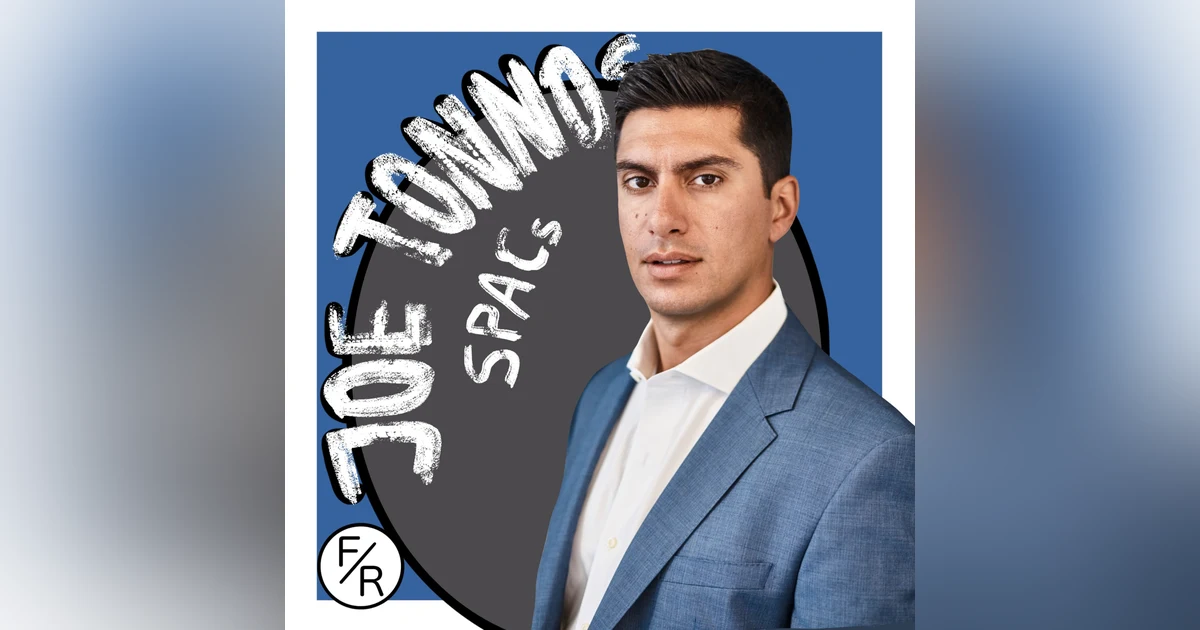

Joe Tonnos, principal at Mistral Equity Partners and Co-Founder at Ketch Ventures talks about his experience of creating SPACs and how founders can benefit from them. We also spoke about the general structure of SPACs and how they differ from other options of going public. We also discussed the future of consumer startups and how it looks like with the new vaccines being distributed.


Joe's LinkedIn: https://www.linkedin.com/in/joetonnos/
Mistral Equity Partners: https://mistralequity.com/
Ketch Ventures: https://www.ketchventures.com/
0:05 They're releasing to fundraising video a podcast about fundraising for early-stage startups. The major rules that we follow here is no bullshit on this podcast. No music to relax, you know, advertisements of our sponsors. We only talk about fundraising here and nothing else. So let's jump into the episode and today is a guest speaker. We have joked on as principal at Mistral Equity partners and under at catch adventures. And today we'll talk about specs because that's one of the things that Joe does and also about what is happening in consumer, facing startup fields and where it is going with the first vaccines being distributed right now.
0:46 So Joe, let's kick it off by here, giving us some background on yourself and on maistro' Equity partners and catch Ventures. Sounds good concertina, and thanks so much for having me on. I'm excited. So a little background on myself. I actually grew up in Canada and went to school in Upstate New York. I started my career in Investment Banking working at both Lazard and Bank of America Merrill. I worked in the consumer and Retail groups, which I was just kind of throwing into when I was at Lazard, and that's kind of turned into the path. For my career. After spending about four years, in Investment Banking. I joined a group called Mistral Equity Partners as you Mentioned which is traditionally focused on Middle Market by oats and growth Equity of consumer and Retail businesses where I've been for about four years or so.
1:41 In parallel to that. I co-founded a group called catch Ventures with a former colleague, for my investment-banking days and catch was really formed because we had a desire, the two of us to invest in some early stage consumer-facing businesses. We were both working in consumer and Retail investment banking. And Advising all kinds of large cap global companies. And we saw some of these startups and early-stage businesses, as the consumer landscape was starting to shift and we just became very interested in getting involved with some of those high growth businesses. And so, as the consumer Behavior started to change and going towards better for you product offerings and direct-to-consumer and things of that nature.
2:29 We felt That we wanted to get involved with some of that. So we formed Tech Ventures. It was initially just a way for the two of us to pool our own personal Capital together, and make investments as a team, and it quickly evolved to becoming a Syndicate group. We've now made about 12 Investments on the platform and, and we will Syndicate each of our deals now from friends and family. And those, those Investments are still relatively on the small side in the grand scheme. The things we've made Investments as small as about $50,000 is a Syndicate and as large as about, 350 as a Syndicate and in soaked.
3:11 Yeah, it's it's all consumer facing businesses that we focus on and in we try to get involved with the management teams and founders of those businesses to be able to add some value, to those companies beyond beyond just writing a check. Nice, that's really interesting. But I'm really I really really want to move on to the next topic which is discussion off spec Vehicles. Because one of the the business developer on fundraising radio team, he told me about specs I know like 10 times, maybe so I really want to cover this topic because it was never covered on fundraising video before. So first question is you've done a few deals through spec vehicle. How do those words?
3:56 So how do those things look like? Yeah, certainly. We've we've successfully done to SPAC deals as a sponsor through through Mistral, Equity Partners in, an affiliate that we created called Haymaker acquisition Corp and inspect our unique vehicle. They become very popular over the last year or so. We started our stack strategy back in 2017. But essentially that's back is a public vehicle. Inspection is for special purpose. Acquisition company, by the way. This pack is a public vehicle where you go out and raise funds from investors. The first back we did was 330 million and the second SPAC was 400 million.
4:37 We sell shares to investors at a $10 share price and attached to that a warrant and the it is sexually a public pool of cash. Think of it like a public checking account that kind of sits there, the cash goes into trust and into a trust and it's invested in US Treasury securities. We so that there's some some interest being collected and not just sitting there checking account and it is up to the management team and sponsor of that SPAC to go out and find a Target company. Usually, if you have a spak, you're looking to do a transaction with with a Enterprise Value or Equity value somewhere north of two or three times, the size of your stack capital and Trust.
5:25 So in the case of Using an example of 250 million dollars back. You're probably looking to do a deal at a minimum that's 500 million of value, but probably closer to 750 or a billion to minimize any type of dilutive effect. And so that company when you do find that Target and you structure the deal and obviously there's a whole bunch of nuances to getting to the point of a deal, which I'm happy to answer questions on. But once you get to that point, And you close the deal and so on and so forth. That company becomes a public company. So you're essentially merging that business with your public pool of capital that you have, and it's almost like a reverse merger or a reverse IPO, and, and that company is a standalone.
6:15 Once the deal closes. It's essentially a standalone public business at that point and, and we remain shareholders in that business. And in many instances, the you'll see the spa. Answer team take a couple of board seats, but it's usually not something where they're taking over the actual operations or anything like that of the business itself that that's run by the existing management team, which is now just a public company as opposed to being a private company. Nicee. Yes, and that's exactly why specs are so interesting. So basically, you raise money, you make the company public. There's basically a shell company with a promise that you will buy out actual Stirrup, right?
6:59 Yeah, I mean, it's I would tell you splashed typically are seeking companies with that are a little bit more mature. I would say, the traditional stock model. Is that where you might see businesses that have you know, stable cash flow, more of almost like a private Equity by out characteristics to a business. That being said as facts have grown in popularity and there's a number of news facts. And if you look at the speck Market in 2019, there is about 50 or 60. Backs that I poed in 2020. We had 248 SPAC IPOs in sir, the the number of businesses going public via a SPAC is obviously increased but that's also opened up a broader gate for the number of the number of excuse me, the types of businesses that that would go public dies back.
7:51 So you're seeing a lot earlier stage. High-growth businesses that don't have a some of those mature characteristics. There's been In an influx of electric vehicle deals going public vs Pac. And many of those businesses are pre-revenue companies, but they've done a considerable amount of R&D and have raised money in the private markets at pretty high valuations. And in the public market investors have an appetite for those types of deals right now. And so they continue to be successful in the in exiting vs pack. Nice. So let's talk a little bit about the founder perspective because no survivors. Is our Founders were other than investors. So from a Foundry perspective, what's the difference between going public vs. Pac or versus going public?
8:37 Via standard IP? Oh, yeah, I would say that the there's a few different things that are highlights to aspect transaction versus a regular way IPO. I think one is a little bit more from a structure side of things. So everyone knows how a traditional IPO works the with this pack. It's a little bit more of a major own. Sunday. And so, for existing shareholders of whoever that Target is, there's opportunities to structure that deal. Whether you want to take some cash off the table, whether you want to roll some of your Equity, you might have to raise a pipe to fill an equity Gap, to get to the valuation in the public markets with additional with additional Public Market investors, but I think really it's a little bit more of a flexible structure is one thing for the Existence.
9:28 Holder's number two is, there's a little bit more certainty around pricing of the transaction. So, you you're working a little bit more collaboratively with whoever, the SPAC sponsor is in the investment bankers, and advisers. And so, it allows you to go and figure out what the right valuation is by using other Market comps, in existing Public Market, companies in really collaboratively, figuring out what the right valuation is to go public, and in your Stuck at that $10, share price that I referenced before and so well, well, yes, it is a public stock and obviously that's driven by market demand and what that share price ends up being the way you think about structuring.
10:11 It is that that $10 share price. So it adds a little bit more pricing certainty, think about an IPO scenario, which everyone's seen in the news where somebody goes out to raise Capital at a, make it up, 14 to 16 dollar, share price range and you end up writing at $12 or something. Because the demand wasn't there. You're able to kind of figure out what that demand is ahead of time. And in you have that fixed $10 per share price before you announce the deal to the public markets. There's a little bit more pricing, certainty around it as well. And then the other point that I would mention is you have this SPAC sponsor team who could help support the transaction. And that might mean relationships with public market investors.
10:57 That might mean the bertie's of the of the SPAC sponsor team, many of which have someone who has a long tenured operating career, and as well, someone who has a long tenured investing career. And so they they're there is potential board members and other points of support really to help the founders and in running the business, and getting it to where it needs to be as a public publicly traded company. So there's a, there's a number of other kind of key points. That we can run through, but I think those are a couple of the highlights that I like to think about that are advantageous to Founders thinking about various ways to tap the public markets, hundred percent in Greek, comparison of love it. So one more question on The Foundry perspective. So in case of the IPO, the foundries have to be like, okay, we're rolling right into company for like eight years and it seems like we are at the right stage to go public. In case of specs do this pack sponsors reach out to Founders asking them if they're open to this kind of deal. Or is it Founders reaching out to a bunch of different spike managers?
12:03 Yeah, I think generally you're seeing it where the sponsors are reaching out to the to the Target companies. But that shifted a little bit, especially as spax have become a hotter, topic, over the last little while, I think I think back to 2017, when we raised our first back and we spent usually the first meeting with it's hard to company and/or, its shareholders explaining, what his back was. And how the Sure worked in so on and so forth. And that that's no longer. The case. We were all too often times, the only spec, they were talking to. And I think about when we did our seconds, back transaction or we were sir. I should say, we were searching for our Target with our seconds back.
12:46 There was SPAC starting the comic become a little bit more popular. There was more of them in the marketplace and everything. And so people started to understand what the facts were how they work. And all of that and they were talking some more of the ones back. And whether those were inbound to, to the founder or whether it was for the relationships that the founder had, maybe with an investment banker, who knew this fact, sponsor or whatever. The case it might be. I think you're starting to see a little bit of a shift from because of the popularity of the of the instrument itself. Hmm, great. Very accurately again, perfect. So now, let's move on and talk about something more relevant to most of our The ones who are at their early stages appreciates life since ages, so you mostly focus on growth stages.
13:36 So the question is, what do you think is the major difference for the founder between the early stage versus late stage? So what is something that's an early stages? Like no one, even cares about that thing with that on layer stage of because it becomes absolutely vital. Yeah. So I think that's a bit of a tough question, but there's there's something called The Thing. I think obviously at an early stage Founders or you were worried about making sure they have a good product getting it to Market, getting it in front of as many people as they can and really just kind of driving driving as much awareness and growth as possible. And I think that that's obviously super important, but I think that making sure that well you're doing that you're building a solid foundation is very important.
14:23 I think whether that's a matter of building the right team so that you have the right. The right Personnel in place to help execute on your strategy whether that's ensuring that you're with the right. If you're selling a consumer product that you're with the right retailers, you know, one of the things that we always look for is having an omni-channel strategy as opposed to just being direct to consumer or just being at retail or something like that, you know, eyeballs in the aisle or very important still, is it because it relates to consumer product there. But yeah, really. Only knowing that you're building that foundation and that it's being built the right way and it can support you for future growth.
15:04 I think there's a lot of businesses that we see where they get out of the gates. They're doing exceptionally well, and they maybe get to be a two or three or five million dollar Revenue business in. They were Scrappy to get there and it was just kind of, you know, drinking from a fire hose and it's all good and great, but the foundation wasn't built. Well, instead of getting from that three or five million dollar Revenue Mark to grow to a 15 or 20 million dollar business is going to be much more challenging. And so, I think making sure that you're building that solid foundation and thinking about, what it's going to take to get to that next level. And I know it's always hard because it's so important to think in the moment and you have to do it best for your business at that time, but knowing, you know, thinking about the future and all of that as well is very important as As Founders build their business.
15:59 Because when when we like to call me in and, you know, on the Mistral side catch Ventures is obviously more at the safety equipment, whether it's Mistral or some of the other Investment Partners of ours that like to invest in a series a or later stage having that Foundation is super important in knowing that for us to know that the next stage of growth is possible for this business and I think as you look at it, especially in Where we focus on the fragmentation in the marketplace is increasing considerably and so knowing that or not knowing but figuring out what is is best for your business to be able to win and beat the competition is is pretty critical.
16:50 Hmm. One other thing that you mentioned in our print recall, that you think is really important even for early-stage startups, which I kind of disagree with. But at the same time, I kind of agree with this but he said that, you know, drafting accurate, five-year plans, especially Financial plans for the company even early stages is very important for the company. So what do you think that? Yeah, I think it really comes down to what I was saying around building a foundation in thinking about your You're right. And I mean, everyone's worried about Revenue right now in building the company as best you can. I think if you if you can try to plan though, for the medium to long term, and maybe it's not five years, but maybe it's two or three years and you think about how you're going to get to that growth. And if it's a consumer product, maybe it's becoming omni-channel.
17:40 And having that omni-channel presence in growing. If you're DTC, you start to open up retail opportunities in which retailers are going to be best for your product in. Thinking about that build and how that can build over time. I think is important and as an investor, we know that you're not necessarily going to hit those numbers and every number doesn't have to be perfect and everything else but to know that you know, the founders thinking about that in building the plan the right way I think is important as to how you think about achieving that growth as opposed to just saying hey, we're going to do 3 million this year and we're going to do seven million next year. How are you? Get to that 7 million. What is that plan look like and what does what does the model look like to say that you're actually going to be able to achieve it.
18:28 Are you doing all of the things necessary? And what does it look like from a cost standpoint? Can you afford to do that based on the margin profile that you have in? Obviously margin comes with scale in many instances, I on a gross basis, but to drive some of that demand, you're going to have to spend more and marketing. So just thinking about how that model comes together. How you're going to be spending the money that you're raising. So on and so forth, I think is critical to think about not just in what is this next year? Look like but oftentimes a two, three and maybe even it is up to five year plan. And how you think about executing on that plan is is important to investors, nice.
19:09 He assumed full of question on long-term plans for early stage startups. When do you think is a time for a company to start thinking about the acquisition or an IPO or Essentials back. Yeah, that's always talk. And I think it's very much a case by case basis. I do believe that there's there's a right stage for every company. One thing that I always like to think about, and I heard this a few years ago from Mark Cuban. He said, if a Founder is focused on an exit. I don't want to invest with them, because they're more passionate about the exit than they are about building your business. And and that's stuck with me for the last few years. Since I first heard that too, I think it is. I think about consumer, right.
19:57 Most businesses are an acquisition candidate until they're probably at least 25 million dollars of Revenue, maybe even a little little more than that depending on the on the substructure within consumer. Infill really just focusing on building that business. One of the things that I hate to see is when a Founder who's early stage, and we get so many of these seed stage to exit that catch. Teachers and they have a teenager too focused on who the potential acquirers are in, what the exit is. And I think that that's great when you might be talking to friends and family about investing and writing small Shacks, but when you're, when you're getting in front of investors, VC investors or anything like that, who know how the marketplace Works.
20:41 They know, investors making an investment to be part of a potential exit down the road. That's part of what we do. That's what our job is. And so We're pretty good at being able to figure out who those acquires potentially could be in and things like that. And so giving are time to exits and saying, hey these six amazing deals exited at 10 times revenue on 20 million of Revenue or whatever it is. That's that's awesome. And I think that's something amazing to Aspire to, but if that's something that's Founders, should be focused on and giving are time to and so that kind of went off a little bit there, but You think that building the right foundation building the business?
21:25 That way that you believe is the right way to build it as a founder and maybe that's leaning on your investors and part of an Investor's job is to be able to advise and in guide you on the right path as a Founder, but thinking about prepping for an accident certainly is in something that should be even remotely. Top of mind. I believe until a business has either been approached by a potential acquirer. Or is of stable size and still growing where they might be a 1520 plus Million Dollar business on a revenue side and going from there. So that it's a bit of a top answer.
22:05 But I do believe that Founders, sometimes are a little bit too focused on what an axe that could look like and you spend more time on executing and because you're not going to get to that extra opportunity. If you don't execute, You know that efficiently. So part percent. Yeah, that's very accurate response again, and yes, there is no real like right answer to that question. It's everything is based deal by dealing with some investors. Love to see that slide in a deck that shows other companies in your field that had successful Acquisitions. Some really don't care about it. So, you know, again it's a game. It's a numbers game. So just keep trying, try different options, see what resonates with investors and then just master that. Page.
22:49 So on this point, I'm always a big fan to of saying, like, looking at a broader set to, I mean, highlighting five or six deals which had phenomenal exits. I mean, that that's great. But what about the other brands who actually did and it maybe wasn't as good of a multiple in, showing a little bit more broad-based set of cons. I mean, everyone's obviously aspiring to be the best and that's what everyone should be doing. But, you know, if you're A bunch of em, a valuations of businesses that were acquired, not everybody in is going to be the next star, X bar, or constantly goes tequila or whatever. The case may be, seeing these huge exit multiples. So, being a little bit realistic about about what can exist is important to.
23:41 And, you know, you think about ass pack or IPO exit to the public markets. I mean, you need to be Be probably at an absolute minimum a business worth a hundred and fifty or two hundred million dollars for that to be the even the thought. And so what does that look like? And how does that company trade relative to the existing Public Market comps. I mean if you're a 10 million dollar Revenue business, I don't think a public market exit is in your near future because those companies trade more at a at a vast, probably like a five times. When you or seven times revenue and you've seen some of these earlier State businesses go public strive Foods, just had a had a SPAC announcement last week Laird superfood had a had a great IPO last year and has traded exceptionally well, but those are those are special situations that you don't see happen. Very often and, and I think you need to be focused on what's most realistic for your business and Think a little bit more about averages or medians, as opposed to the the top three or five percent.
24:58 So a hundred percent perfect answer once again, and yes investors. Do you like to see when you were kind of self-critical? You know, and he you seemed like you were taking into account even not the best option possible. So yes, that's very right try to include something not you know, top one percentile of Of the field that you're working on. Anyhow, let's move on and talk a little bit more about consumer-facing deals and where it is going. Now, we do first vaccines being distributed in the United States and all across the world. So, what do you think about that Fields? Where is it going now? Yes, I think consumer Behavior continues to change all the time and obviously.
25:40 So we saw a big change over the last year or so since since covid has been part of everyone's life. There is a huge uptick in direct to Consumer through 2020 in just Ecommerce generally e-commerce grew in 2020 about five years worth based on what projections were prior to covid shift in consumer Behavior. People were trying new products and shopping based on what they would see on their Instagram feeds and so on and so forth. And I'm a little curious to see how that plays out over the next 6 to 12 months, as you mentioned, the vaccines now. Rolling out and as consumer Behavior, kind of, I don't want to say returns to normal necessarily because I think that covid has been a real reset and it's more of a post covid consumer Behavior as opposed to a return to preach covid and How are some of these these businesses going to continue to perform?
26:38 Can that lift that they saw some of these direct to Consumer businesses? The lipid is so in 2020, cannot be sustained in 2021 and Beyond and I think that's going to be interesting for Consumer investors to look at. I think that you're going to see a lot of companies continue to raise capital in investment. Funds are flush with capital right now. There's a lot of dry powder, but I think investors are going to start to grow a little bit weary of Raise money on a 20/20 number that was exceptional growth and the want to see Ken that growth rate, be sustained or can those sales be sustained on a go-forward basis? And so that's a little bit. What we're focused on right now is we think about New Opportunities is trying to follow this, this new consumer behavior and see what's going to be on top of mind for consumers, as we come out of the pandemic and have some level of a return to normalcy in terms of behaviors and activity and so on and so forth.
27:39 That being said, I think that if as I mentioned his kind of changed the general behavior of folks, simple things like going to the office five days a week, I don't think foremost is going to return to that at all. I think people are going to have a much more flexible work schedule and as that kind of takes shape and everything like that, you're going to start to see that those changes in consumer behavior, and I think, Going to take a little bit of time for for folks to settle into that and see see what's of importance to folks, and, and those companies and Founders are going to have to adapt to those new shifting behaviors as well. Hmm, again, very accurate, and they seem pretty, pretty optimistic as well.
28:23 So on this optimistic note, we're moving on to the last question of today's episode, which is a call to action. So, Joe, what do you want the listener to do right after the episode is over? Yeah, I think that I think, you know, the as listeners take a thought as to what you think, consumer Behavior might look like going forward. Kind of what I was just touching on in what's important to the consumer these days. And how are you going to make your brand product service, whatever it is resonate with consumers. And so, one thing that I think about that's on Trend right now with with consumers to sustainability and whether that's as simple as having Recyclable or biodegradable zero-waste packaging all the way down to a product that's cleaner and better for the environment.
29:14 One of our portfolio companies ether diamonds is making lab-grown diamonds from air pollution right now and it's a carbon negative business and part of our thesis and making that investment was the fact that we believe that the consumer is Very focused on sustainability and it's going to continue to be very focused on sustainability and making the planet a better place. And so I would challenge all of the founders out. There might be a little bit more expensive to to make a recyclable packaging or something along those lines, but and I'm probably not saying something that folks haven't thought about but but just taking a seat back and thinking about what you're putting to Market and how that's going to resonate with consumers.
29:58 And And why consumers should be coming to you to buy your product or service right here? And that's very eager. And also the investment in a carbon negative Solution. That's really cool. Good choice there. Yes. My call to action is probably going to be go to the description of this episode. As usually, I'll leave a bunch of Link's there. Probably one is going to be about facts and how those works. So if you didn't understand the whole thing, you can read an article on that. And also, I'll leave a link to Jose LinkedIn and probably a link to catch Ventures as well. So you might go through it, see what the investing and if you're a good fit, definitely apply to them.
30:42 And also Link to something else. Maybe most likely know they're going to be three links there. And yes, my call to action is going to be. First of all listen to Joe's call to action and then check out the links. I'm going to leave in the description of this episode and as usually have a good day.